Turn a tight corridor into a calm, cohesive space. Learn my minimalist gallery wall method: tight palette, grid or row layouts, measuring, paper templates, a...
Swap, Don’t Add: Rotate Seasonal Prints in Small Homes

Published
I used to think “seasonal decorating” meant adding more. More signs, more little shelves, more stuff balancing on top of the bookcase until it all looked like a gift shop display. In my smallest apartments, that approach lasted about two weeks before I felt visually crowded and slightly cranky every time I walked through the room.
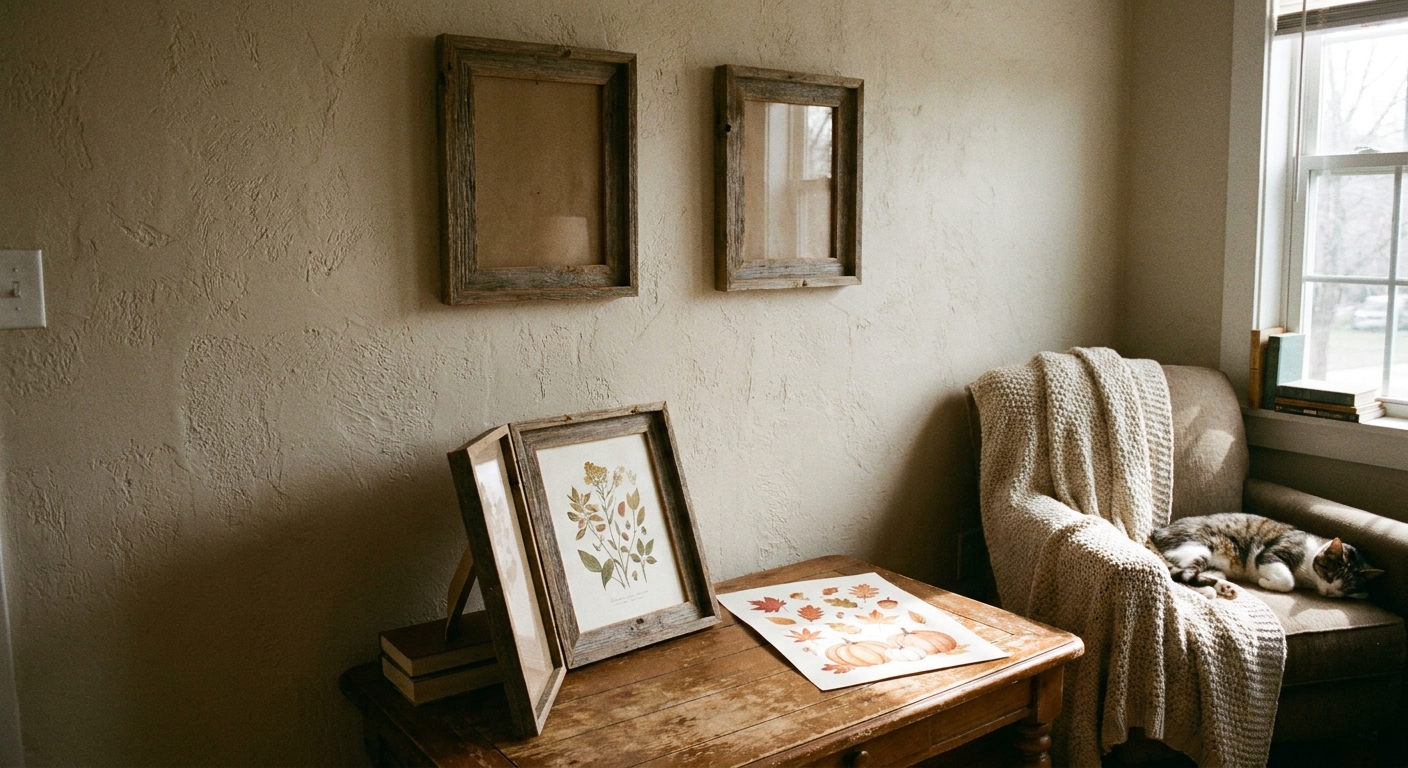
What finally worked was a simple rule: swap, don’t add. Keep your everyday framed art up year-round, but rotate a few frames with seasonal prints for a month or two, then swap them back. Same frames, same nail holes, same calm walls. Just a fresh moment of color and mood.
Why rotating art works in small homes
Small spaces have a lower clutter threshold. A couple of extra objects on every surface can make your home feel busy even if it is clean. Swapping seasonal art is one of the rare decorating tricks that gives you change without adding volume.
- No extra wall clutter: The frame stays, only the paper changes.
- Budget-friendly: You reuse what you already own, including mats and hanging hardware.
- Fast reset: Often in about ten minutes, a room feels updated.
- Low storage needs: Prints store flat and thin, which is gold when closet space is tight.
If you are also trying to reduce stuff creep, this pairs beautifully with the one-in, one-out rule.
The simple rotation system
You do not need a huge print library. You need a small, repeatable system that does not create a new pile of seasonal things to manage.
Step 1: Pick your rotation frames
Choose 2 to 5 frames you will allow yourself to swap. That is it. In most small homes, that is enough to make a room feel seasonal without looking themed.
- Best spots: entryway, above the sofa, kitchen nook, hallway, and above the mantel if you have one.
- Keep it consistent: use frames that already match your everyday style so the swap feels intentional.
Step 2: Decide your schedule
My realistic schedule is every 6 to 8 weeks. If you love a more frequent refresh, monthly works too, but only if it does not become another chore.
- Early spring: soft botanicals, light landscapes
- Late spring to summer: bright fruit, coastal photos, wildflowers
- Fall: warm-toned leaves, harvest sketches, moody nature
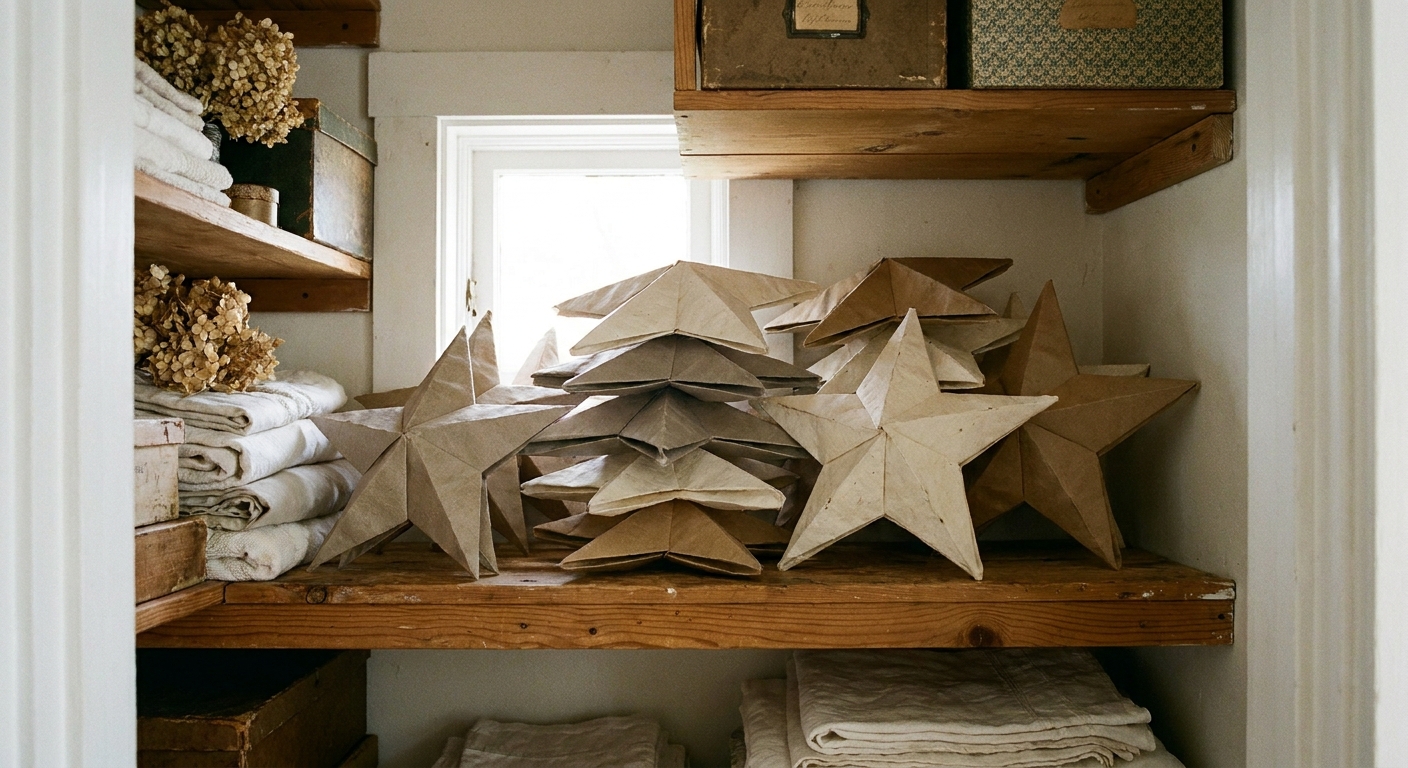
- Winter: evergreen branches, snowy scenes, simple stars
- Holiday window (optional): one or two prints, not the whole wall
If you like decor that transitions smoothly from fall into winter without a total redo, you will probably enjoy reversible seasonal decor ideas too.
Step 3: Keep a tight color story
Here is the rule that keeps your walls from feeling chaotic: match your seasonal prints to one color already in the room. That could be your throw pillow, rug, or even the wood tone of your furniture.
In my house, if the seasonal print can borrow a color from the sofa pillow or the runner in the hallway, the whole thing looks styled, not random.
Step 4: Make sizing boring on purpose
The easiest swaps happen when you remove sizing decisions entirely.
- Best case: choose one frame size for your rotation and stick to it.
- Next best: use the same mat opening in every rotation frame, even if the outer frame sizes vary.
- Quick fix: if a print is a little small, center it behind the mat with a tiny loop of removable tape so it reads intentional.
How to source seasonal prints without a clutter pile
You have lots of options here, and the best one is the one you will actually keep organized.
Use what you already have
- Old greeting cards (especially oversized ones)
- Kids’ artwork (I trim it to fit a mat and suddenly it looks gallery-worthy)
- Pages from damaged books or music sheets you were going to recycle
Print your own, but keep it curated
If you like printable art, set a limit: one slim folder for each season, or one binder total. When it gets full, you have to retire something before adding more.
Try fabric as art in a frame
This is one of my favorite small-space tricks because fabric stores easily and adds texture. Cut a piece of seasonal fabric slightly larger than your frame backing, wrap it around the backing board like you are covering a book, and tape it neatly on the back. I find it helps avoid ink-related smudges, and it feels cozy.
If you enjoy small sewing projects, you might also like making a fabric storage basket to corral your printables and frame hardware.
Make swaps quick
The goal is a rotation that takes minutes, not an hour of wrestling with tiny tabs and dusty glass.
Choose frames that are easy to open
- Easiest: frames with flexible tabs you can open by hand
- Still fine: frames that need a flathead screwdriver, but keep one nearby
- Most annoying: flimsy backs that bend or tear, or frames with lots of tiny staples
Use mats to keep it polished
Mats are a small-space miracle because they make a simple print feel intentional. If your seasonal print is smaller than your frame, center it behind the mat with a bit of removable tape. You get a crisp, calm look without buying new frames.
Protect your prints
This does not have to turn into an archival hobby, but a few small habits keep your rotation prints looking nice year after year.
- Keep them dry: avoid storing paper in damp basements or right next to humidifiers.
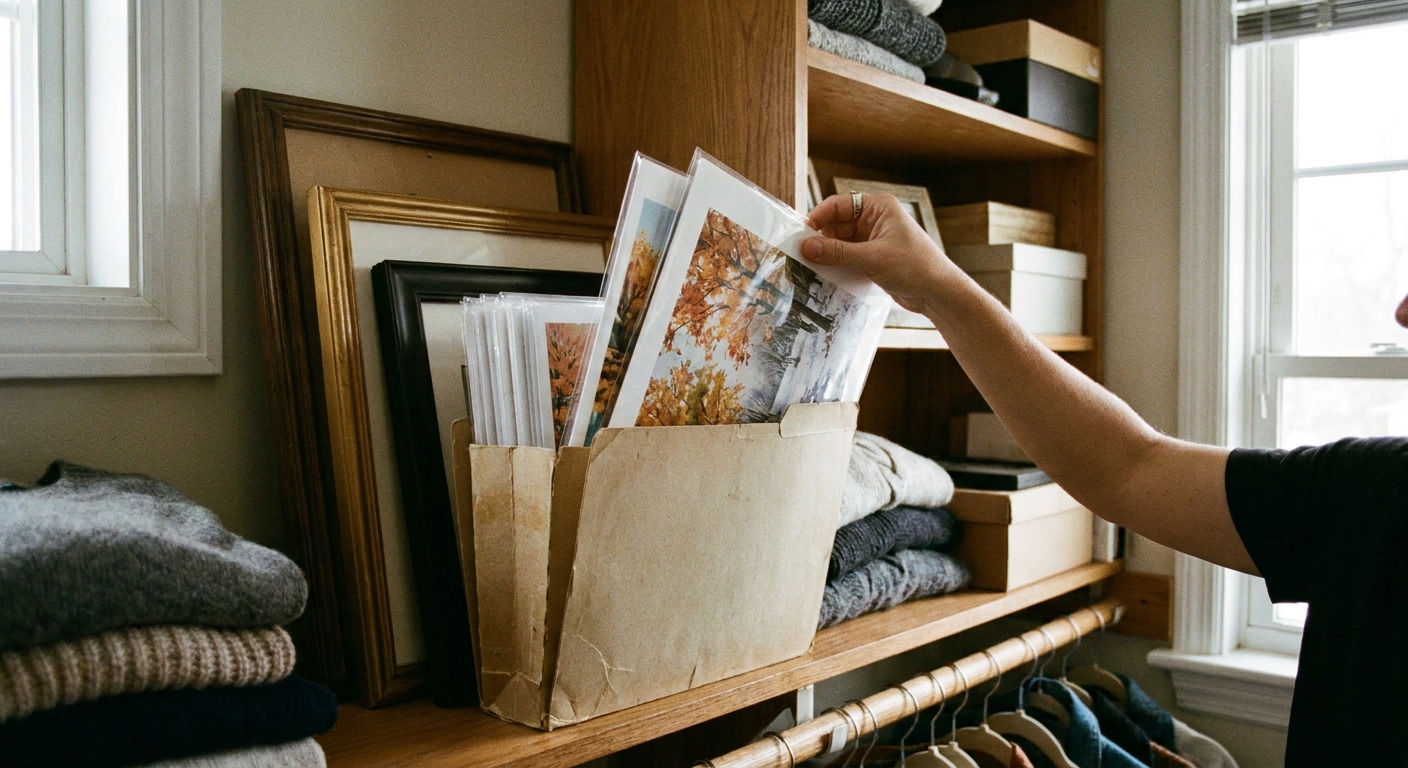
- Use sleeves if you can: even a basic protective sleeve or large envelope helps prevent scuffs.
- Watch direct sun: if fading would bother you, rotate the sunny-wall prints more often or choose less precious pieces for that spot.
Where to store seasonal prints
Your rotation system only works if the off-season pieces stay neat and easy to find. Here are my favorite low-footprint storage spots.
Flat and protected: under-bed storage
Slip prints into a large envelope or clear sleeve, then store them in a shallow bin under the bed. It keeps them flat and clean. If you need help keeping under-bed bins from turning into a mystery zone, I shared my best habits in under-bed storage that stays clean.
Vertical and tidy: a magazine file on a closet shelf
Label it “Seasonal Prints.” Stand your prints in folders by season. This is perfect if you are already using vertical closet organizers and want everything to live upright instead of stacked.
Hidden in plain sight: behind a cabinet door
If you have a pantry or utility cabinet, a thin folder can live inside the door. Behind-the-door storage is underrated for paper items because it is easy to access but not visually noisy. More ideas here: behind-the-door organization.
Seasonal art ideas that do not feel gimmicky
If you have ever hung up a holiday print and immediately felt like your home turned into a themed aisle, this section is for you. Subtlety reads as calmer, especially in small rooms.
Think seasonal, not holiday
- Winter: snowy trees, pine branches, simple stars
- Spring: botanicals, seed packet-style art, soft landscapes
- Summer: citrus, beach photography, wildflowers
- Fall: mushrooms, vintage harvest drawings, warm-toned abstracts
Keep typography minimal
Words can be cute, but they can also make a wall feel loud fast. If you love text-based art, make it one frame only and keep the font and background simple.
Go monochrome for a quiet swap
Black-and-white seasonal photography (bare branches, a winter street scene, a single flower) changes the mood without changing your whole palette. This is especially helpful if your room is already visually busy.
Swap day checklist
- If you can, wash your hands first or handle prints by the edges.
- Wipe the frame glass with a dry microfiber cloth.
- Check that the hanging hardware is still tight.
- Slide in the seasonal print and re-close the tabs.
- Put the everyday print straight into your labeled folder, do not set it down for later.
- Stand back and make one tiny adjustment: straighten frames or swap the print order.
That last step matters more than people think. A slightly crooked frame makes a whole small wall feel messy.
Common problems and fixes
My gallery wall looks too busy
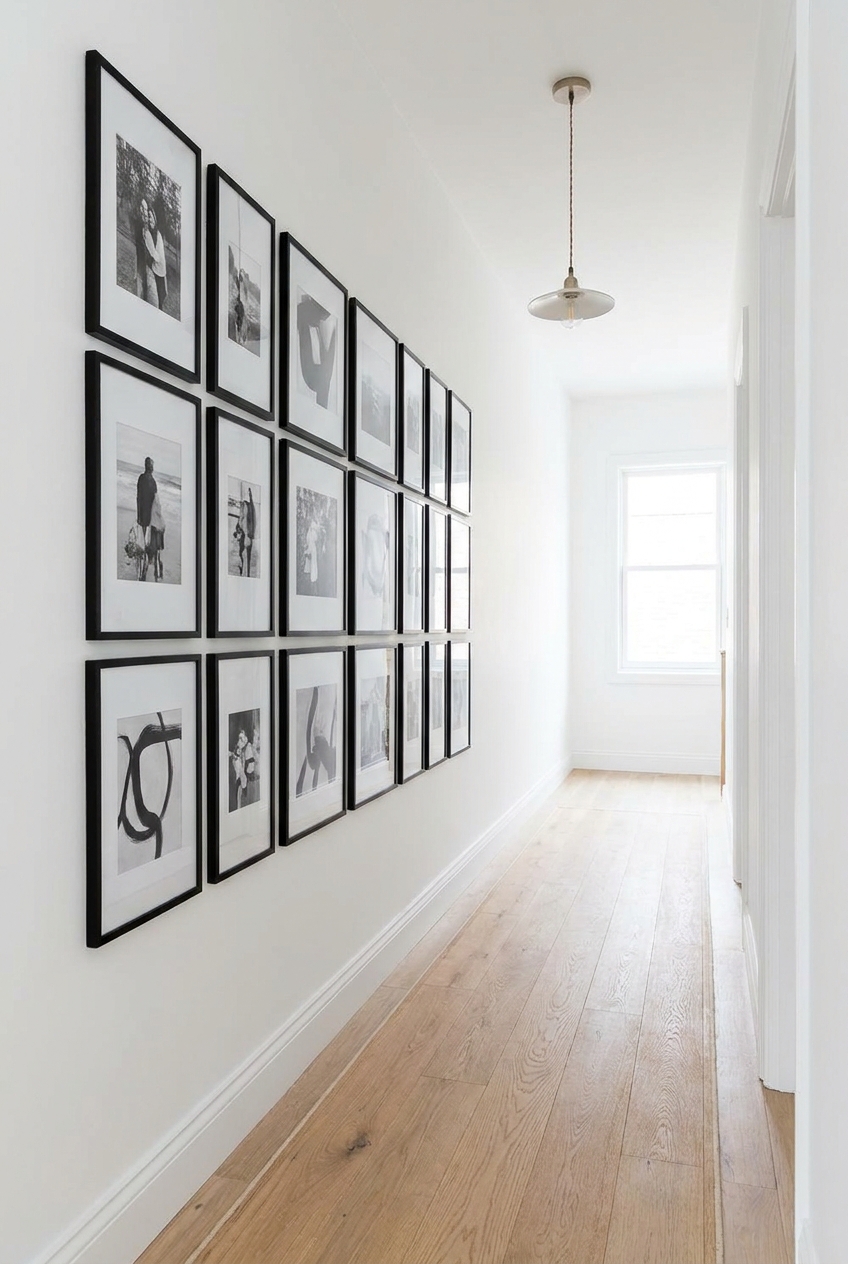
Replace one or two pieces only. If your gallery wall is in a narrow hallway, a simpler arrangement helps year-round. This guide is a good reset: a minimalist gallery wall for a narrow hallway.
I rent and do not want more holes
Swapping art uses the same hooks and nails you already have. For other low-damage seasonal touches, I like hanging seasonal wreaths indoors without wall damage.
My frames never look cohesive
Make the frames cohesive, not the art. Matching frame color and mat style will make almost any seasonal print look like it belongs.
My kids touch the frames constantly
Same here. Put your most delicate frames higher, or choose prints you can reprint easily. For lower frames, I use less precious artwork so I am not tense about fingerprints.
The calm-wall rule
Seasonal decor should make your home feel lighter, not louder.
If rotating art feels fun, keep it. If it starts to feel like homework, shrink the system: one frame in the entryway, one frame in the living room, and done.
Small homes do not need more decor to feel special. They need a few smart swaps that make everyday life feel fresh without making more work.