
Foraged Seasonal Decor You Can Compost After the Holidays

The fastest way I have found to make a home feel festive in a small space is to bring the outside in, then let it go when the season is over. No tote bins, no “where do we store this” debate in January, and no guilt about buying more plastic decor when the closets are already working overtime.
Over the years, I have leaned hard on natural seasonal decor: pinecones, evergreen trimmings, seed pods, dried citrus, and a handful of branches in a vase. Most of it is free (or close to it), it looks beautiful in a cozy, unfussy way, and when you are done you can compost it or send it to yard waste instead of packing it away.
Before you forage: simple, safe rules
I am firmly in the “leave no mess” camp. A little prep keeps your decorating both legal and low impact.
- Know where you are. Parks, preserves, and public lands often prohibit collecting, and rules vary by agency. Check the specific land manager’s guidance before you pick anything up.
- Take what is already down. Fallen pinecones, dropped branches, and windblown sprigs are usually the easiest and least harmful options.
- Avoid treated or sprayed areas. If you plan to compost, skip anything that looks chemically treated (roadside greenery, pesticide-sprayed landscapes).
- Skip anything toxic around kids and pets. If you have a curious toddler or a dog that eats everything (been there), stick to sturdy cones and non-berry greenery placed out of reach.
- Watch for hitchhikers. Give your finds a quick shake outside. If you see obvious pests or eggs, leave it behind.
My grab-and-go foraging kit
You do not need special gear, which is part of the appeal. Here is what I actually use:
- A reusable shopping bag or paper grocery bag
- Hand pruners (only if you have permission to clip trimmings)
- Thin gloves (sap happens)
- A small towel for muddy cones
- Twine or cotton string for quick bundling
If you are working with limited storage, keep these items together in a single bag you can hang on a hook. A hook-and-drop system is a lifesaver in tight homes. I use the same logic in our entryway drop zone routines, where everything needs a “home” or it becomes clutter overnight.
If you are building an entry landing spot that can handle seasonal gear, I like the approach in Plan a Small Entryway Drop Zone.
Best natural decor to forage
Pinecones
Pinecones are the workhorse. They fill bowls, they tuck into garlands, and they look good with almost any color palette.
- Where to find: Under pine trees, near trail edges, after windy days.
- Quick clean: Brush off loose dirt. Let them dry on a tray for a few days.
- If you worry about bugs: A paper bag in a dry spot for a week can help reveal active hitchhikers, but it is not a guarantee. If you are squeamish, keep your cone decor contained in a bowl or tray so cleanup is simple.
Evergreen branches (from pruning or storm fall)
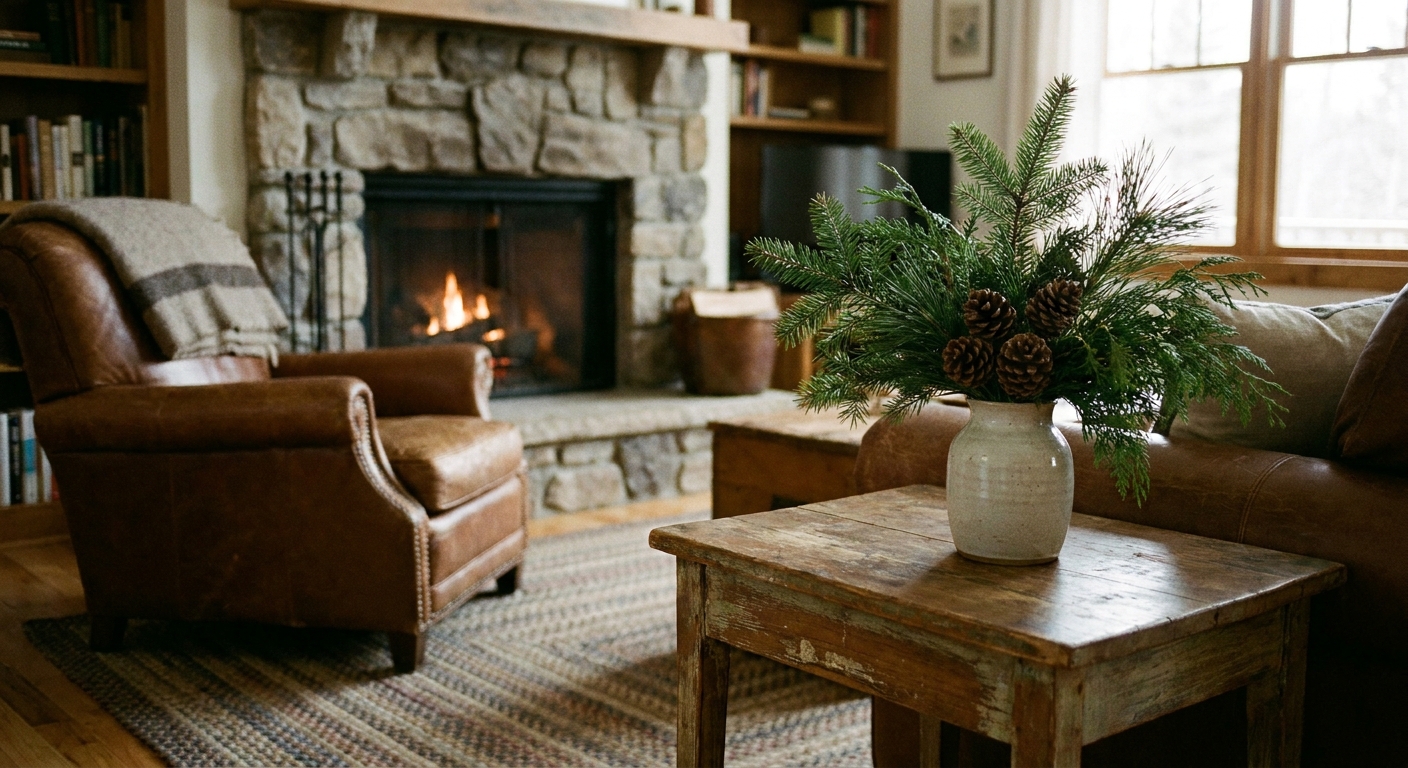
Evergreens make everything feel instantly wintery. I use them the way I would use flowers: one vase, one focal point, done.
- Where to find: Your yard, neighbors’ post-pruning piles (ask first), Christmas tree lots sometimes have trimming bins.
- Prep: Trim the bottoms and place in water if you want them fresh for longer. If you prefer a dried look, let them air dry in a cool spot.
- Tip: A narrow-neck vase holds branches upright with less “arranging,” which is perfect if you are short on time and surfaces.
Dried citrus (made at home, composts beautifully)
This is my favorite “looks expensive, costs almost nothing” trick. And it smells so good while it dries.
- How: Slice oranges (and lemons if you like), pat dry, then dry low and slow in the oven until they are no longer tacky. This is mostly hands-off time, but it is not fast.
- Use: String as a garland, hang on a wreath, or scatter in a bowl with pinecones.
- Compost note: Plain dried citrus is compostable in most backyard compost setups. If you use a worm bin or a very small, cold pile, go light since citrus can break down slowly and can be finicky in vermicompost.

Zero-storage decorating ideas
1) A compostable centerpiece in a shallow bowl
Fill a bowl with pinecones, a few evergreen clippings, and dried citrus. Add a candle in a glass jar if you like, then compost everything except the jar when the season ends.
If your counters are always fighting for space, keep the centerpiece on your dining table and clear the kitchen surfaces instead. I love the calm that comes from having one intentional “pretty spot” and one clear work zone. If you need help getting there, Beautiful Kitchen Countertop Organization has a lot of practical ideas.
2) Foraged branches in a tall vase
This is the best option for small homes because it uses vertical space, not tabletop space. A few branches can look like a full arrangement if they have shape. Set it on the floor in a corner, or on a narrow console if you have one.
3) A no-damage indoor wreath swap
Make or buy a base wreath, then tuck in fresh clippings as the season shifts. When it dries out, compost the clippings and refresh. If you rent or hate patching walls, I recommend a damage-free hanging method. I walk through options in Hang Seasonal Wreaths Indoors Without Wall Damage.
4) A scent bundle by the door
Tie a small bundle of evergreen tips and hang it on a hook near the entry. It is a tiny detail that makes the whole home feel seasonal, especially when you come in from the cold. When it dries, compost it.
Keep it tidy and safe
Natural decor is beautiful, but it can shed. Here is what keeps it easy in my house:
- Contain it. Use trays, bowls, and baskets so needles and bits stay corralled.
- Pick one “nature zone.” One table or one shelf looks curated. Five little piles around the house look like clutter.
- Let it dry before you decorate with it. Damp cones and branches drop more debris and can leave marks. I like to set everything on an old towel or a tray for a day or two first.
- Use a liner on picky surfaces. If you are placing greenery on wood or stone, put down a tray, plate, or a simple piece of kraft paper first so sap and moisture do not become a surprise.
- Skip fake snow sprays and glitter if you want to compost. If you love sparkle, use a reusable ribbon or a single reusable ornament accent that you store flat.
And a quick fire-safety note, because it matters: dried greenery and dried citrus are flammable. If you add candles, keep flames well away from branches and garlands, use a stable holder, and never leave it unattended. I stick to jar candles or LED candles when kids, pets, or narrow surfaces are involved.
When the holidays end
This is the best part. Instead of a whole afternoon of packing, you can do a quick reset.
- Compost: Dried citrus slices, untreated evergreen clippings, pinecones, seed pods, twigs, and plain twine (as long as it is natural fiber and untreated).
- Yard waste: If you have municipal yard pickup, it is a great option for larger quantities of greenery and branches.
- Trash (avoid if possible): Anything with paint, glitter, wire that cannot be separated, or synthetic ribbon attached.
If your bigger issue is the “what do we do with all the holiday stuff” situation, natural decor can be the first step, but not the only step. I also use a ruthless sorting approach for anything we do store. Store Bulky Holiday Decor With Zero Closet Space can help you set up a system that does not take over your home.
A quick setup plan
This is my realistic version for real life and small spaces: a 20-minute setup, plus optional drying time if you want citrus.
- Forage: Grab 10 to 15 pinecones and a handful of evergreen tips.
- If you want dried citrus: Start it earlier in the day (or the day before) so it has time to dry. If you already have dried slices on hand, you are good to go.
- Style one surface: Bowl centerpiece or vase arrangement.
- Add one functional seasonal touch: A wreath on the door, or a bundle on a hook.
- Stop. Seriously. A small home looks best with fewer, bigger statements instead of lots of tiny extras.
FAQ
Can I compost pinecones?
Yes, in most home compost setups pinecones break down, but slowly. If you want them to break down faster, crush them a bit first or compost them in a hotter, larger pile. Otherwise, yard waste collection is a good alternative.
How do I keep evergreen branches fresh indoors?
Use a clean vase with water, refresh the water every few days, and keep the arrangement away from heat vents. Even when they dry out, they still look pretty for a while, and then they are ready for compost or yard waste.
What if I live in an apartment with no yard and no compost?
You can still do this. Use a small amount of greenery and pinecones, then dispose via municipal yard waste drop-off if your area offers it. If not, keep it minimal and toss it when it is spent. The main space-saving win is that you are not storing tubs of decor for 11 months.