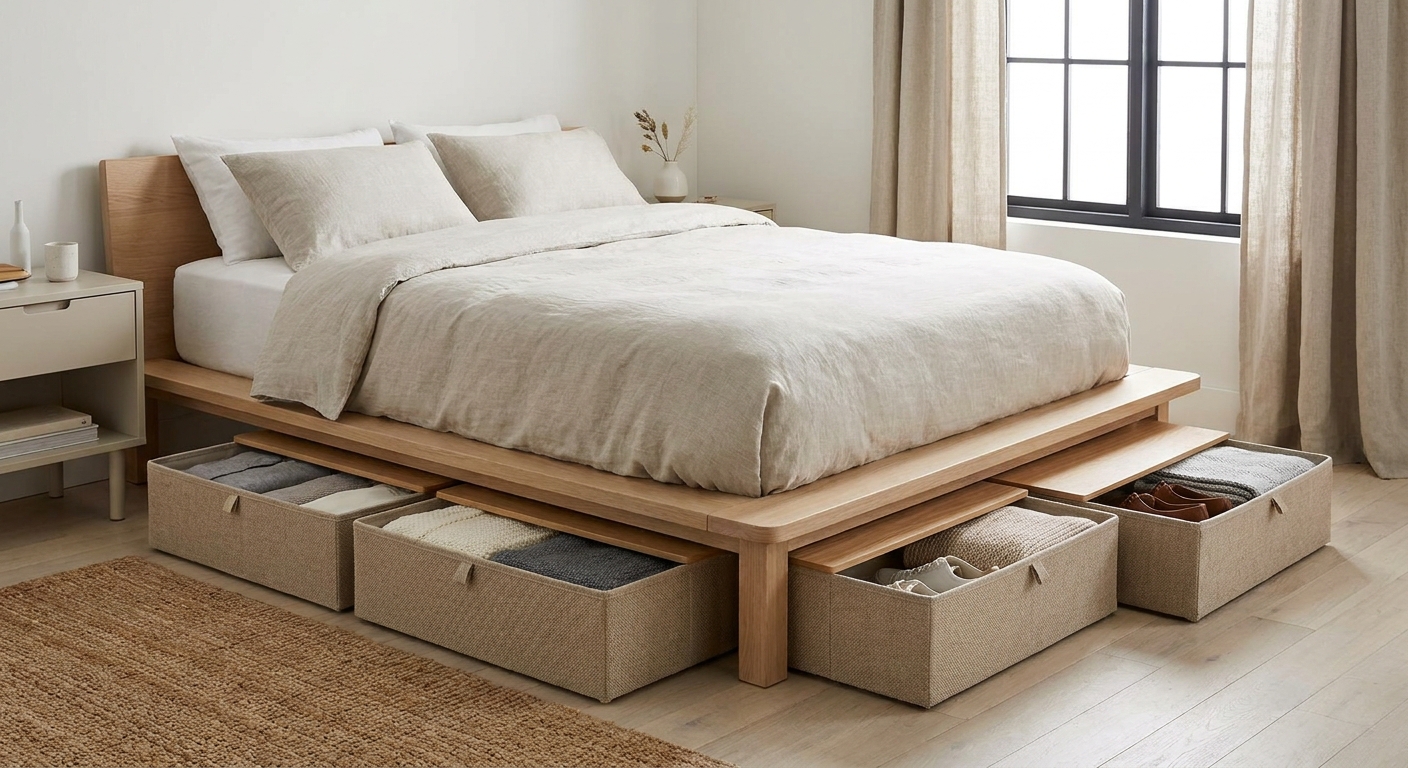
Make under-bed storage actually work: measure clearance, choose lidded rolling bins or vacuum bags, create zones, label simply, and use two quick habits to k...
Store Bulky Holiday Decor With Zero Closet Space

Published · Last updated
The year I lived in a studio with one skinny cabinet and a radiator that hissed like a tea kettle, my “holiday storage” plan was basically: shove everything behind the couch and promise myself I would remember what was back there. I did not remember. January rolled around, and I found a sad little wreath flattened under a boot tray and a string of lights that had turned into a tight, grumpy knot.
If you have zero closet space, you are not doomed to chaotic bins in the middle of your living room. You just need two things: compression (so bulky decor becomes flatter) and assigned hiding zones (so you are not playing scavenger hunt next December).
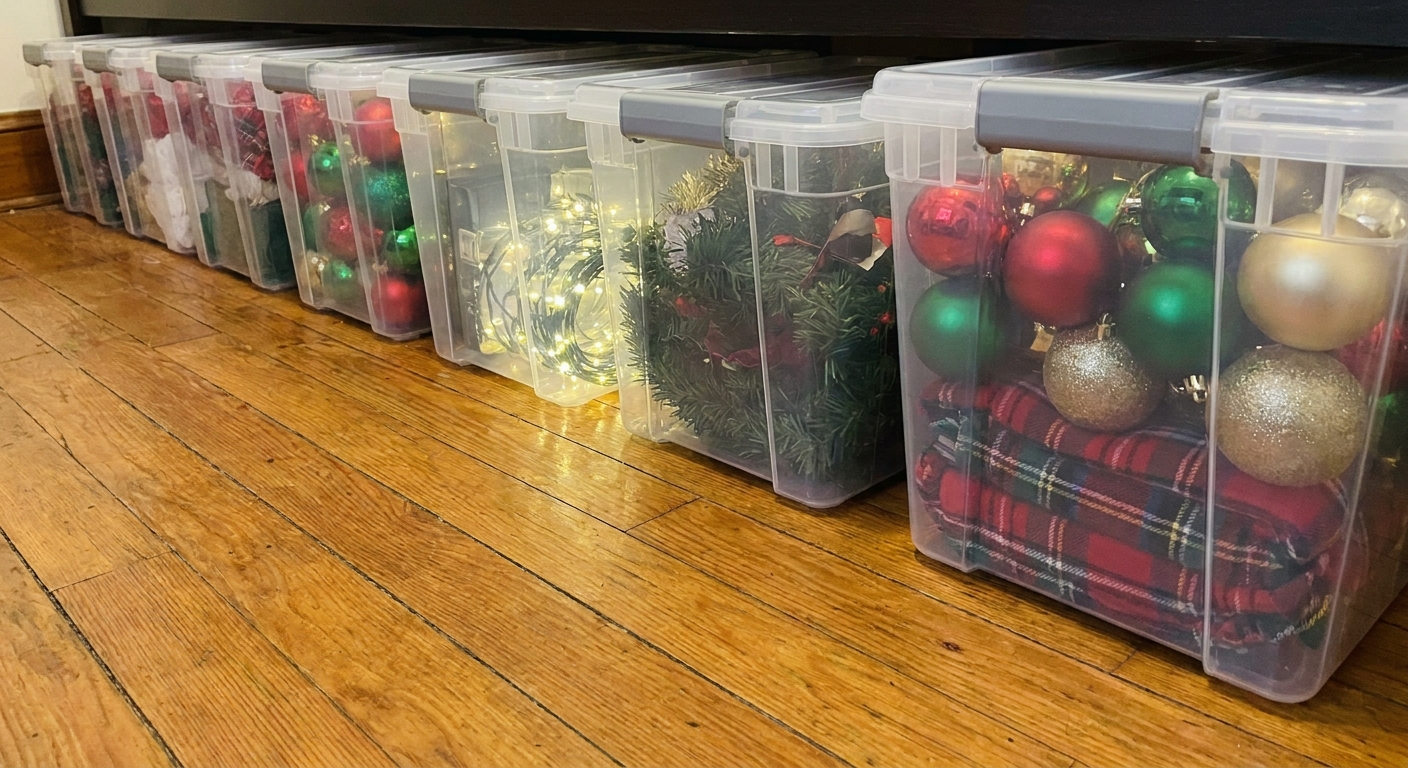
Below is the system I use now in a busy house with kids and a dog, and it still works just as well in a tiny apartment. We are going to compress the fluff, protect the breakables, and tuck everything into spaces you already have.
Start with a quick sort
This takes 10 minutes and it often saves you a lot of time next season. Make three piles on the floor:
- Squishy and bulky: stockings, tree skirt, fabric garlands, plush decor, pillow covers
- Fragile and small: ornaments, delicate figurines, special keepsakes
- Long and tangly: string lights, ribbon spools, bead garlands, extension cords
Now decide your storage “footprint.” With zero closet space, I aim for one of these:
- One under-bed zone (best for most apartments)
- One under-sofa zone plus one high shelf zone (best if your bed sits low to the floor)
- One lidded tote that lives as a side table (best if you truly have no hidden zones)
Quick reality check before you buy bins: measure the clearance under your bed or sofa first, and note any center supports. I have definitely brought home a “perfect” bin that was 1 inch too tall.
If you want a deeper under-bed strategy, my guide on under-bed storage that stays clean walks through dust control and container choices.
Compress bulky items
Vacuum-seal soft decor the right way
Vacuum-seal bags are a lifesaver for fabric items. They turn a puffy stack of stockings and tree skirts into a flat “file” you can slide under a bed.
- Best for: stockings, fabric garlands, tree skirts, plush pillow covers, Santa hats, table linens
- Avoid sealing: anything with glued-on trim, delicate sequins, brittle or easily cracked plastics, foam shapes that stay creased, or fabrics that show every pressure mark (felt, velvet, heavily embellished pieces)
My method: I fold items loosely (no sharp creases) and seal. A dryer sheet is optional. If you use one, go unscented and keep it away from delicate or vintage textiles since residue and fragrance can linger. And if something is truly heirloom-level, I skip long-term compression and store it folded in a breathable cotton bag instead.
Make wreaths slimmer, not squashed
Wreaths are the space hogs that make people give up and leave everything out year-round. Instead, you need a “flat-but-protected” plan:
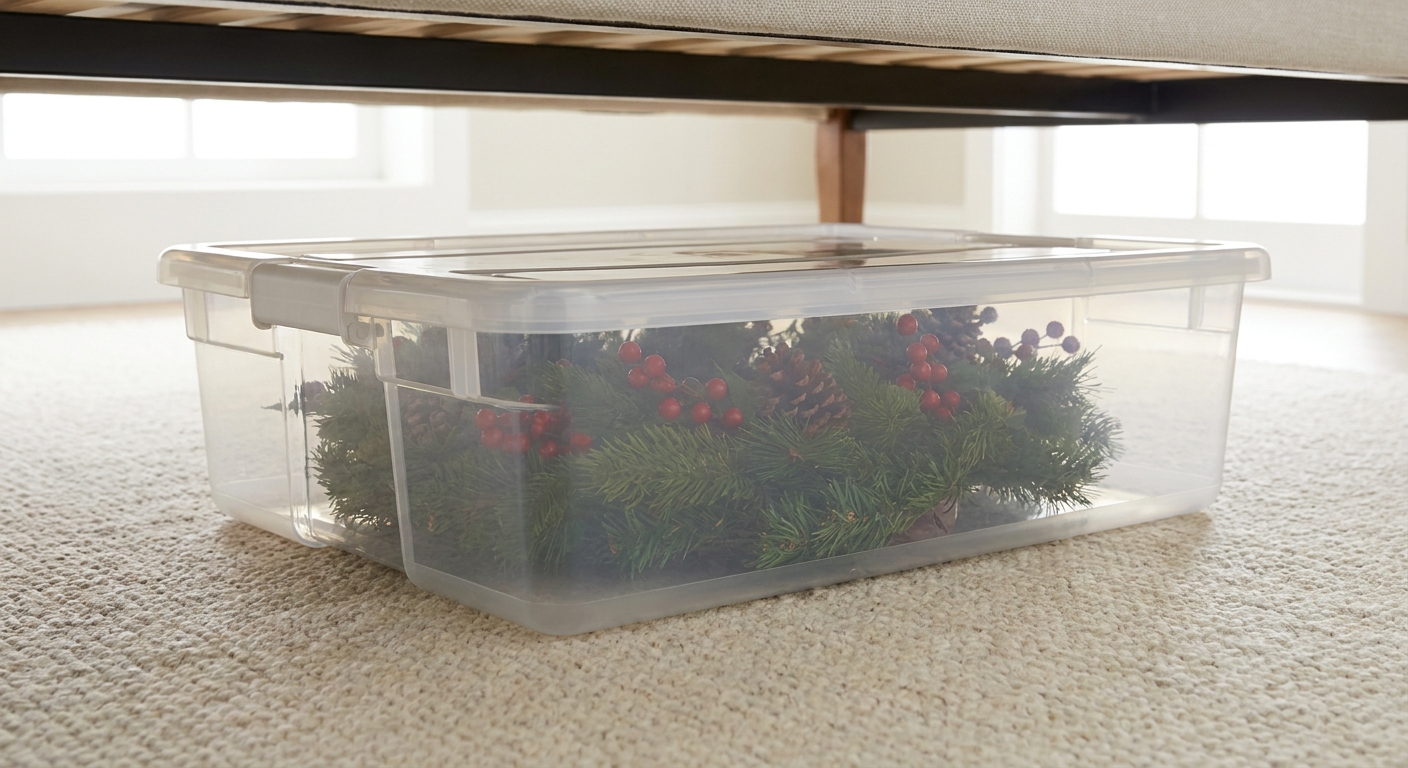
- Fluffier wreaths: store upright if you can (behind a headboard, under a bed on its side), or in a rigid container so it cannot be crushed.
- Leafy or tighter wreaths: can go in a large flat under-bed bin with a sheet of kraft paper or an old cotton pillowcase over the top to prevent snagging.
If you have wall space, a peg rail can be a surprisingly elegant solution for seasonal items you rotate. See how to install a Shaker peg rail for a sturdy, small-space-friendly option.
Hide storage in plain sight
Under the bed
This is my favorite zone because it is invisible and usually underused. A few tips that make it work long-term:
- Choose low, rigid bins if you store anything breakable. Soft bags are great for linens, not for ornaments.
- Keep like with like: one bin for soft goods, one for fragile, one for lights. Mixing categories is how tangles happen.
- Use a dust barrier: lidded bins, or at minimum a fitted sheet draped over items in open baskets.
Safety note I learned the hard way: do not store decor right up against heat sources like radiators or baseboard heaters, and do not block vents that need airflow. Heat and plastics do not get along, and neither do heat and dried greenery.
If your bed is low, consider swapping to slim containers and prioritizing the flattest items (vacuum bags, light wraps, ribbon cases).
Under the sofa
Under-sofa storage works best when you treat it like a drawer. That means: containers that slide. Two shallow bins are easier than one giant tote because you can pull out what you need without dragging everything into the room.
Inside a storage coffee table
If your living room is doing double duty, hidden storage furniture can carry the weight of seasonal decor. I love pieces that open from the top for bulky, soft items. Here are ideas that look intentional: coffee table alternatives with hidden storage.
Keep ornaments safe
Ornaments are tricky because we all want them protected, but traditional ornament boxes can be huge. With no closet space, I focus on three protection levels:
Level 1: unbreakable ornaments
Toss these in a small lidded container with a piece of fabric on top so they do not scuff. No fancy system needed.
Level 2: somewhat delicate ornaments
Use small containers inside a larger bin. Think shoe boxes, small food storage containers, or reused gift boxes with lids. The goal is preventing shifting.
Level 3: truly fragile, sentimental pieces
Wrap individually and store them in a rigid box that stays on top, never on the bottom. I like a shallow bin so you do not stack weight on top of glass.
My tiny-apartment trick: if you already keep off-season linens under the bed, nest wrapped ornaments between folded towels. The towels act like padding, and you are not adding a whole extra container.
Store string lights neatly
If you have ever tried to “just stuff” lights into a bag, you know how this ends. My goal is to store lights in a way that you can deploy them in two minutes flat.
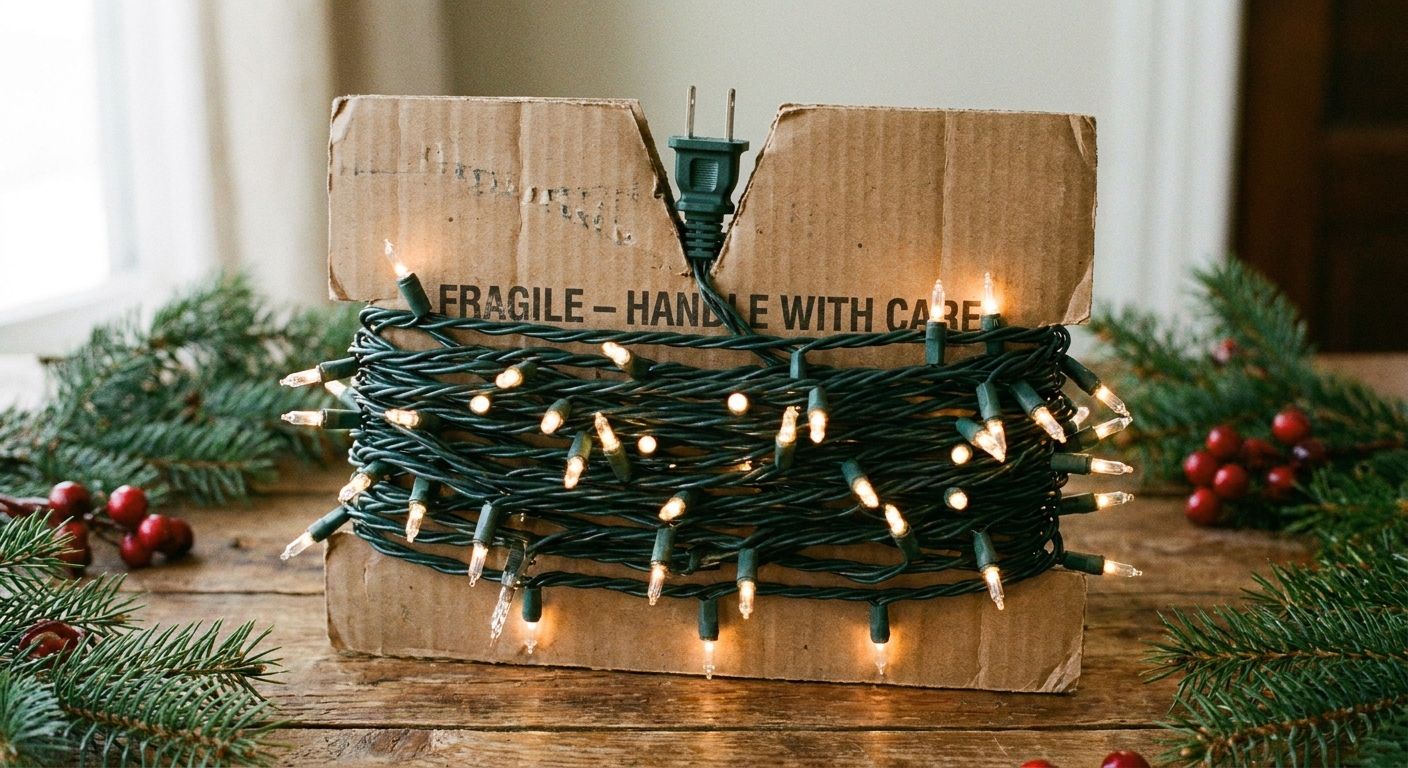
Option 1: Cardboard wrap
- Cut a piece of sturdy cardboard (a shipping box flap works).
- Cut two small notches on opposite sides.
- Anchor the plug end in one notch and wrap the strand in a figure-eight (this helps reduce kinks).
- Secure the end in the second notch.
Option 2: Clear pouch
For short strands, I coil them like a loose rope and store in a clear zip pouch. The key is not making the coil too tight, which stresses the wire.
Label by location
Instead of “white lights” and “multicolor,” label “window,” “tree,” “mantel,” or “balcony.” You will set up faster and buy fewer duplicates.
When you have no hidden zones
Sometimes under-bed is blocked, the sofa sits flush, and you have exactly zero spare shelves. In that case, you need storage that looks like decor.
Use baskets and lidded boxes
- A lidded basket can act as a side table next to a chair.
- A decorative box can live on top of a bookcase and hold lights and hooks.
- A storage ottoman can swallow soft decor and gift wrap supplies.
If your shelves are open, baskets are your best friend for keeping things calm-looking. This article on organizing open shelving with wire and wicker baskets is a good guide for making it feel styled, not stuffed.
Create a seasonal capsule
When space is truly tight, edit down to what fits your container. I know that can feel emotional. A lot of holiday decor is tied to memories. What helps me is choosing a small number of pieces that create the feeling I want, then letting the rest go to someone who will use it.
If editing is hard, the mindset in the one in, one out rule applies beautifully to seasonal items.
Labeling you will use
You do not need a label maker to be organized. You need labels you will actually use when you are tired and the holidays are over.
- Painter’s tape + marker for vacuum bags and fabric bins
- Index card in a clear sleeve for rigid bins (swap it next year without scraping old labels)
- Two-part label: Holiday + Location (example: “Winter, windows”)
My rule: If you cannot tell what is inside in three seconds, you will make a mess next season. Labels are not extra. They are the whole point.
Pack-away in 30 minutes
- Lights first (wrap them immediately as you take them down).
- Fragile next (wrap, box, and put that box on top in the bin).
- Soft items last (vacuum-seal, then slide flat into the under-bed zone).
- One quick sweep for hooks, ornament caps, spare bulbs, command strips. Put them in a small pouch labeled “setup kit.”
This “setup kit” is the small-space secret weapon. Next year you will not be digging through three bins for one missing hook.
Common questions
Are vacuum bags safe?
They are usually fine for soft textiles, especially if you fold loosely and avoid anything embellished. That said, some fabrics crease easily, and long-term compression is not my choice for heirloom or delicate pieces. When in doubt, test one item for a few days before sealing everything.
How do I keep under-bed storage from getting dusty?
Lids help the most. If you cannot use lidded bins, at least cover items with a tightly tucked sheet. And once a year, do a quick under-bed vacuum before sliding bins back in. This is exactly why I like a consistent under-bed system. It is easier to maintain.
What if my decor smells musty?
That usually means it went away slightly damp, or it lived in a humid spot. Dry everything fully before storing, avoid sealing anything that is even a little damp, and place a moisture absorber near the storage zone if your home runs humid. Keep it contained and off textiles and paper, and put it somewhere kids and pets cannot access.
How do I avoid pests in stored textiles?
Store only clean items (crumbs and body oils are an open invitation), and consider a cedar sachet near the bin or storage zone. I keep anything scented from touching fabric directly.
The goal is boring storage
The best compliment your holiday storage can get is that it is boring. No mystery piles. No crushed wreath surprise. No lights that take 45 minutes to untangle while everyone waits.
Pick one hiding zone, compress the soft stuff, protect the fragile stuff, and give the tangly stuff a wrapping method. That is it. No closet required.
If you want more small-space seasonal ideas, my roundup on Seasonal Decor has plenty of realistic solutions for homes that have to work hard year-round.