
Hang Seasonal Wreaths Indoors Without Wall Damage

I love a seasonal wreath, but I do not love what it does to a door or wall when I hang it “just for a few weeks.” In my tiny-apartment years, I learned the hard way that one little nail turns into a tiny crater, and one “removable” strip can still peel paint when you are rushing to swap decor with a kid tugging your sleeve.
The good news is you can usually hang wreaths indoors without damage and without losing precious space. The trick is to use surfaces you already have (doors, cabinet fronts, mirrors) and choose hanging methods that rely on tension, over-the-top support, or suction instead of adhesive. A quick reality check: paint quality and finishes vary, so it is always smart to test gently in a low-stakes spot first.
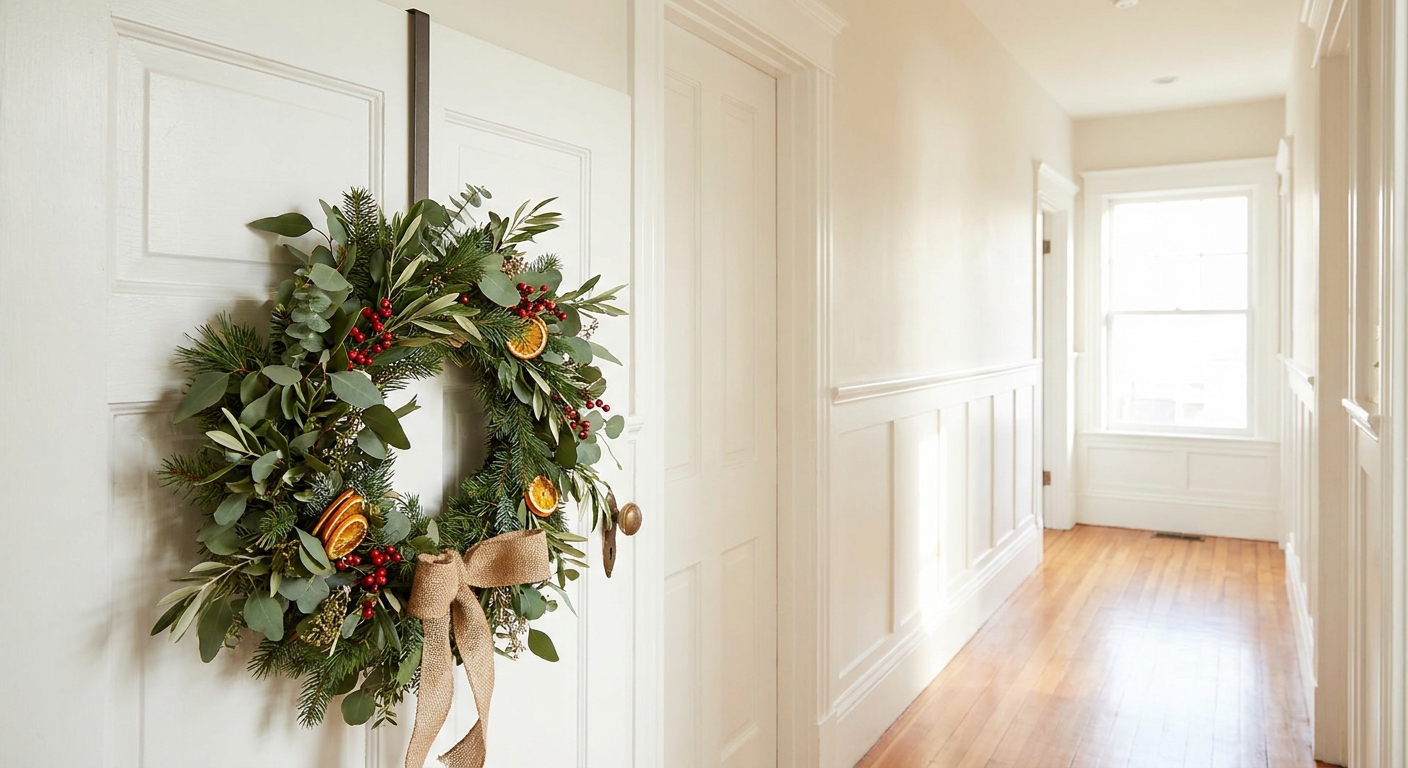
Pick the right spot first
Before you pick a hook, pick a location that will not create daily friction. In a busy house, the most “beautiful” spot is not always the most livable spot.
- Interior doors: great for vertical display and easy swapping, especially bedroom, pantry, or closet doors.
- Cabinet fronts: perfect in kitchens and mudrooms where walls are crowded or off-limits.
- Mirrors: a wreath on a mirror reads intentional and keeps your walls untouched.
- Glass doors or windows: ideal for suction hooks, and they lift the wreath off surfaces that get bumped.
What I mean by “high-traffic”: anything that gets opened all day long, like the main hallway door, pantry door, bathroom door, or the closet everyone raids for shoes.
If you are already building small, repeatable routines at home, you may like the mindset behind the one-in, one-out rule for small homes. It is the same idea here: one wreath up, one wreath stored, so your seasonal decor stays calm instead of chaotic.
Best door method: over-the-door hooks
If I could only keep one wreath-hanging trick, it would be an over-the-door hook. It is fast, sturdy, and does not require adhesive.
How to do it
- Choose a thin over-the-door hook that will not force the door out of alignment.
- Add a ribbon or cord to the wreath so it hangs at eye level.
- Close the door slowly the first time and listen for scraping. If you hear friction, switch to a slimmer hook.
My practical tips
- Prevent scuffs: stick a small felt pad on the back of the hook where it touches the door.
- Quiet the movement: if your wreath swings when the door shuts, shorten the ribbon so the wreath sits flatter.
- Kid and pet reality check: avoid hanging a breakable wreath on a door that gets used constantly.
Extra paint protection: if your wreath has a wire frame or rough grapevine back, add two little felt bumpers to the back of the wreath itself. You only need enough to keep it from rubbing the door every time it moves.
And if you have a door that is begging for more utility in general, you might also like behind-the-door organization ideas. It is the same space, just working harder.
Use a tension rod for vertical space
Tension rods are an underrated seasonal decor tool. Indoors, they let you “create” a hanging bar in places you normally cannot decorate, without drilling.
One caution, because I promised no damage: tension is still pressure. On delicate paint or softer wood, a rod can leave faint marks over time. Humidity and temperature changes can also loosen a rod. If you are worried, choose rubber-ended rods, do a gentle test pull, and do not leave it up for months in the same spot.

Where tension rods work best
- Inside a doorway (between two jambs): hang a wreath centered in the opening.
- Inside a window frame: great for lighter wreaths, especially in kitchens.
- Between two cabinet sides in an open shelf nook: creates a mini display rail.
How to hang a wreath on a tension rod
- Install the tension rod so it feels firm and does not shift when you tug it.
- Tie a ribbon around the rod, then tie or clip the wreath to the ribbon.
- Leave a little clearance so the wreath does not rub the wall when air moves.
Safety and finish tips
- Use rubber-ended tension rods so the pressure point is cushioned.
- Re-check it weekly at first, especially in bathrooms and kitchens where humidity swings happen.
- Keep it light: tension is strong, but it is not magic. Grapevine bases and heavy ornaments are better on over-the-door hooks.
I use tension rods all over the house for organizing too, especially in the kitchen. If you are into small-space solutions, you will probably enjoy adding cabinet space with shelf risers and tension rods.
Suction hooks for glass and tile
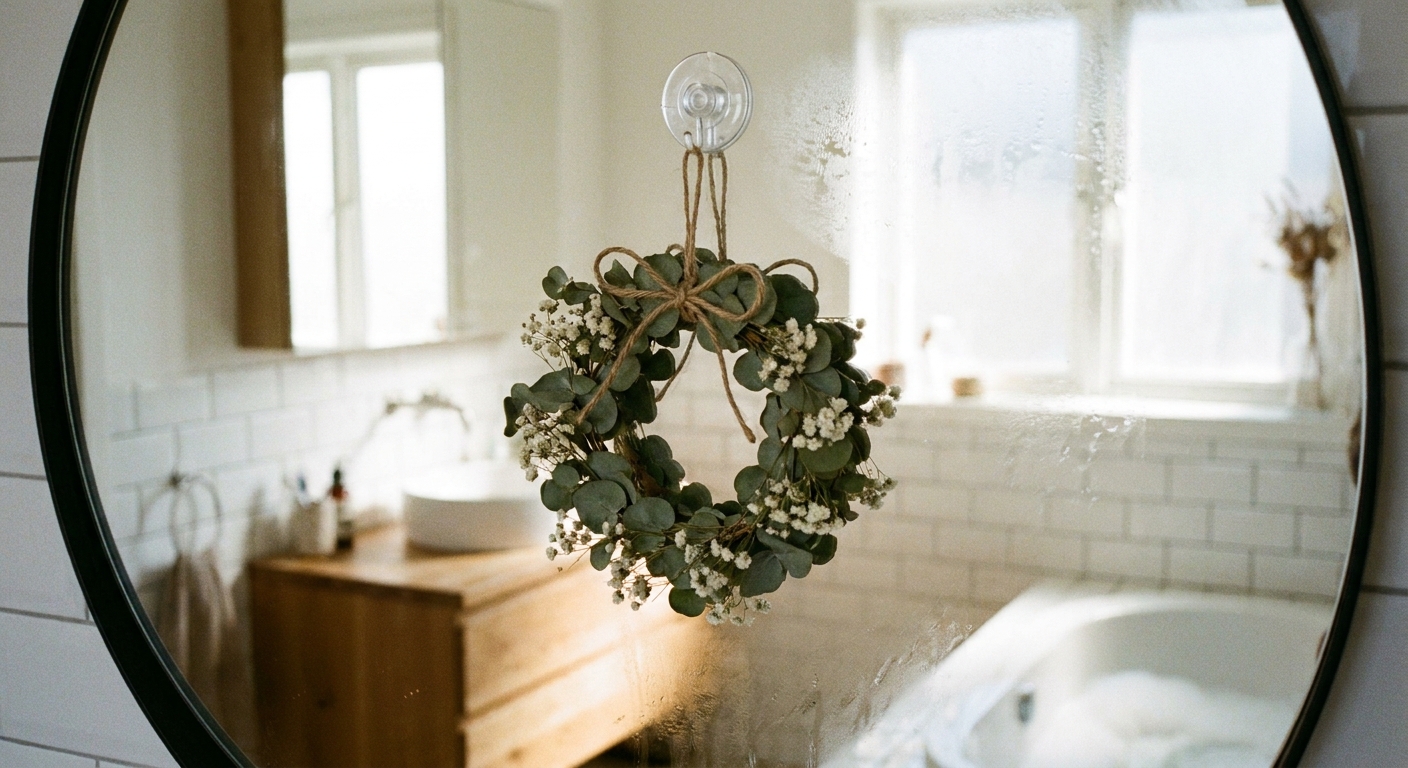
Suction hooks are perfect when you want a clean look and a truly removable setup. They work best on very smooth surfaces, and they are most reliable with lighter wreaths.
Best surfaces for suction hooks
- Mirrors
- Glass doors
- Windows
- Glossy tile (like in a bathroom)
How to make suction hooks stay up
- Clean the surface with rubbing alcohol or glass cleaner and let it dry fully.
- Lightly dampen the suction cup (not dripping).
- Press firmly, then give it a few minutes to set, following the product directions, before you hang the wreath.
My rule: if it is a heavy wreath, I do not trust suction alone in a high-traffic spot. For lightweight greenery, felt ball wreaths, or paper stars, it is fantastic.
Cabinet-front wreaths
Cabinet fronts are prime decorating space, especially when your walls are already full or your layout is tight. The key is to hang wreaths in a way that does not scratch the cabinet finish or interfere with doors and drawers.
Three cabinet-safe options
- Over-cabinet hooks: the simplest. Look for thin versions designed for kitchen doors.
- Ribbon over the top: loop a ribbon over the cabinet door and close it, with the wreath hanging on the outside.
- Magnetic hook (only if your cabinet surface is metal): great on metal lockers or some utility cabinets, not typical wood kitchen doors.
How to prevent cabinet wear
- Add a small piece of felt where the hook touches the cabinet.
- Keep the wreath shallow so it does not snag when you walk by.
- Do a quick swing test and open the cabinet to make sure nothing catches.
If you must use adhesive
I still avoid adhesive for wreath hanging whenever I can, but I also know real life. Sometimes you have one spot, one surface, and you need a solution.
- Wait for fresh paint to cure before sticking anything to it. Dry-to-touch is not the same as cured.
- Choose the right rating for the weight, and do not push it. If you are near the limit, you are asking for a fall.
- Test in a hidden area first if you are in a rental or dealing with unknown paint layers.
- Remove slowly and follow the package instructions, especially the “stretch down” style removal. Rushing is how paint lifts.
Make it look intentional
This is the part that makes indoor wreaths feel like decor instead of temporary clutter.
- Use matching ribbons for a cohesive look across rooms.
- Hang at consistent heights if you are doing more than one door or cabinet.
- Keep the palette simple: one wreath can be bold, but a whole house of bold wreaths feels busy fast.
- Repeat a material: a touch of the same greenery, berry, or bow in two spots reads styled.
If you are craving a more pulled-together seasonal look overall, the Seasonal Decor guide is a nice place to browse next.
Common problems
The door will not close
- Switch to a thinner over-the-door hook.
- Try hanging on the hinge side so the wreath sits flatter when the door moves.
- Use a ribbon and hang from the top edge of the door instead of a thick hook.
The wreath keeps tilting
- Add a second tie point: two short ribbons spaced a few inches apart keep it centered.
- Use a small removable clip on the back side of the wreath to adjust balance (on the wreath, not on the wall).
Suction hook keeps falling
- Re-clean the surface and dry it fully.
- Move to a smoother spot. Even slight texture breaks suction.
- Downgrade weight. Use a lighter wreath or remove heavy ornaments.
I am worried about damage anyway
Same. If I am choosing the lowest-risk setup, I start with an over-the-door hook. If that will not work, I try suction on glass. Tension rods are great too, but I treat them as “check it occasionally” decor, especially in humid rooms.
My small-home routine
In a busy household, the easiest system is the one you will actually follow. Here is mine:
- I keep one primary wreath spot (front hall interior door).
- I keep one backup spot (kitchen cabinet) for smaller seasonal moments.
- When a new season comes, I swap and immediately store the old wreath so it does not migrate around the house.
That last step sounds obvious, but it is the difference between “cozy seasonal” and “why is there a pumpkin wreath on the laundry room floor in February?”
If you only pick one method to try first, make it the slim over-the-door hook. It solves the most problems with the least fuss.