
Reversible Seasonal Decor for Fall to Winter

By mid-fall, my house starts doing that familiar thing where every surface quietly grows a pumpkin. A little here, a little there, and suddenly I am stacking mini gourds on top of mail I still have not opened. Then winter shows up, and I am supposed to bring out trees, stars, and all the cozy stuff too. In a small home, that is how seasonal decor turns into clutter.
The fix that has saved me year after year is simple: I only keep decor that can pull double duty. Think reversible signs, a neutral centerpiece base that changes outfits, and textiles that flip from rust to cream to plaid without needing their own storage box. Here are my favorite reversible seasonal decor ideas for transitioning from fall to winter with less clutter and less fuss.
The no-clutter rule I use
I decorate for seasons, not holidays. That mindset is what keeps my storage from exploding. I lean into an early fall vibe of warm neutrals and a few leaves, then I glide into winter with evergreens, candles, and cozy textures instead of doing a full Halloween-to-Christmas whiplash reset.
- One bin per season: If it does not fit, I edit.
- Base stays, accents change: I keep a neutral base out from September through February.
- Soft items earn their space: Blankets and pillow covers are decor that you also use every day.
If you like a clear, calm home rhythm, this pairs beautifully with the one in, one out rule. When a new seasonal item comes in, something older needs to leave or become a year-round piece.
Double-sided decor that flips
Reversible decor is my favorite kind because it gives you that “fresh look” feeling without doubling your stuff. Here are pieces that genuinely earn their keep.
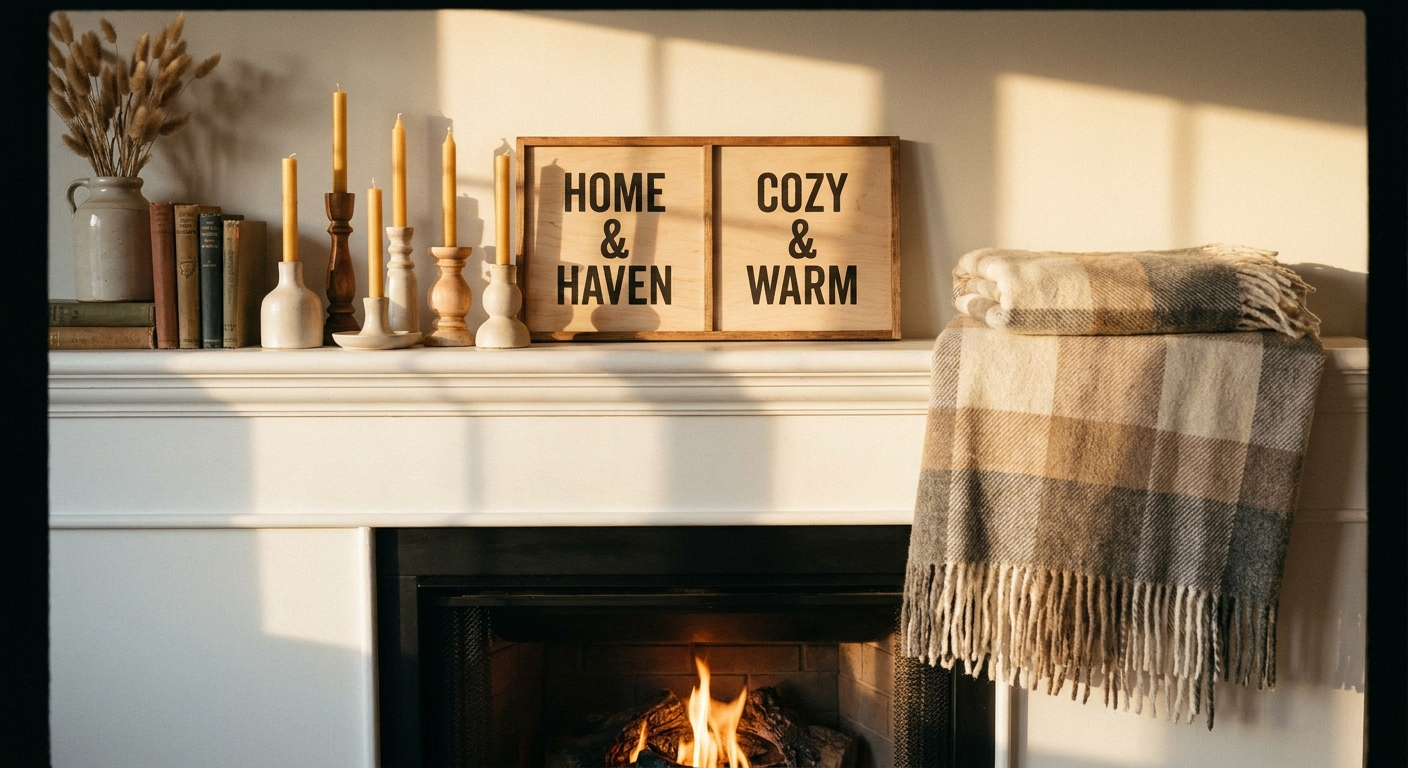
1) Double-sided signs (or frames you can flip)
Look for wood signs that have fall on one side and winter on the other, or create your own with a simple trick: use a freestanding frame with two prints back-to-back. When the season shifts, you rotate it like a photo.
- Fall side ideas: simple leaves, “gather,” muted harvest tones
- Winter side ideas: evergreens, “warmth,” snowy landscapes, deep greens
My best tip: keep the message generic. “Welcome” works all year. “Pumpkin patch forever” does not.
2) Reversible table runners and placemats
One side in autumn tones, the other in winter neutrals or plaid. If you are shopping, feel the fabric. A runner that wrinkles like a paper bag can drive you nuts and end up crumpled in a bin.
At home, I store runners rolled inside one another, so they take up one small spot instead of turning into a tangled stack.
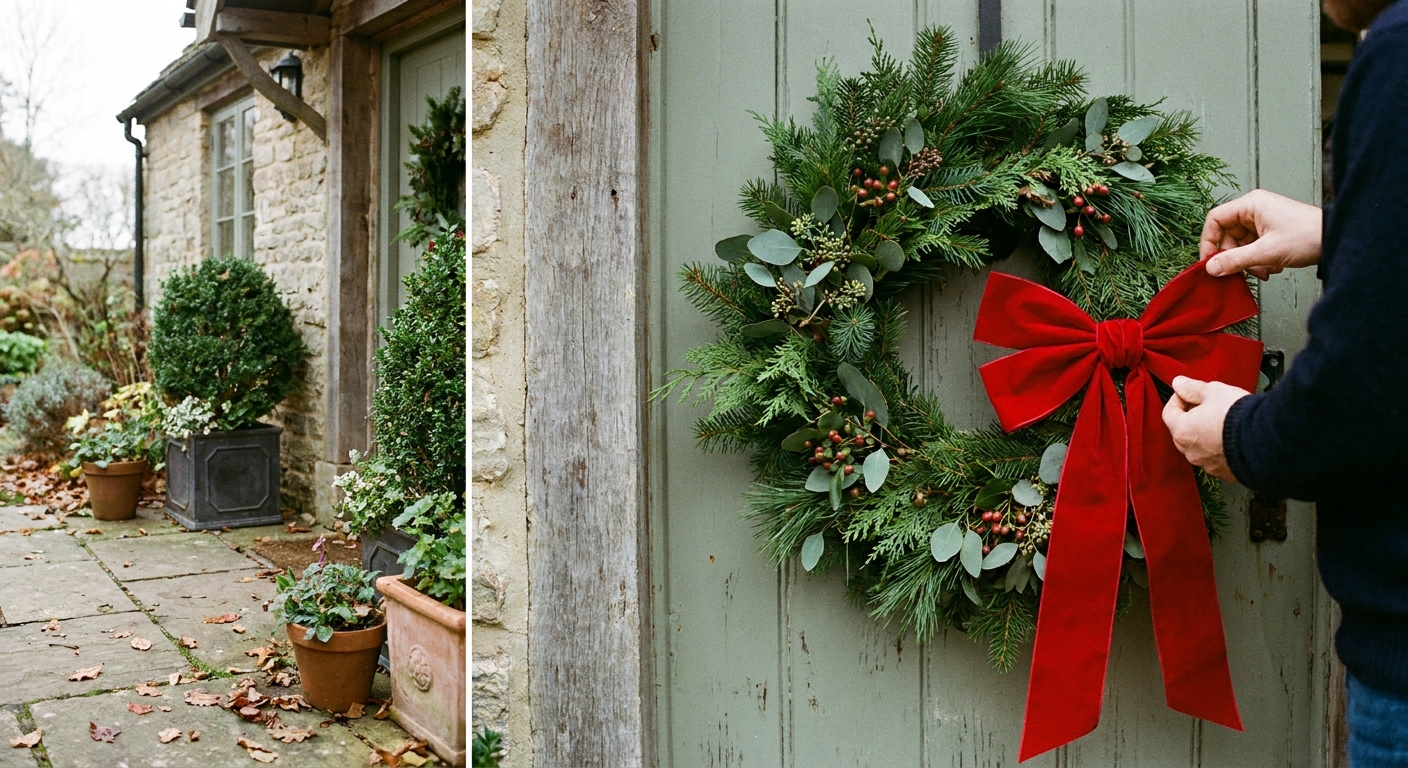
3) Wreaths with changeable accents
You do not need two full wreaths. Keep one sturdy evergreen or grapevine base, then swap the “seasonal jewelry.”
- Fall accents: faux leaves, dried orange slices, cinnamon sticks, burlap ribbon
- Winter accents: pinecones, velvet ribbon, small bells, white berries
A quick practical note if you use real dried fruit or spices: in humid climates they can attract pests or grow mold, so faux versions are often easier. And if your wreath sits near candles, keep anything dried well away from open flame.
To keep it clutter-light, store accents in one labeled pouch or small box, not a whole second wreath.
A neutral centerpiece base
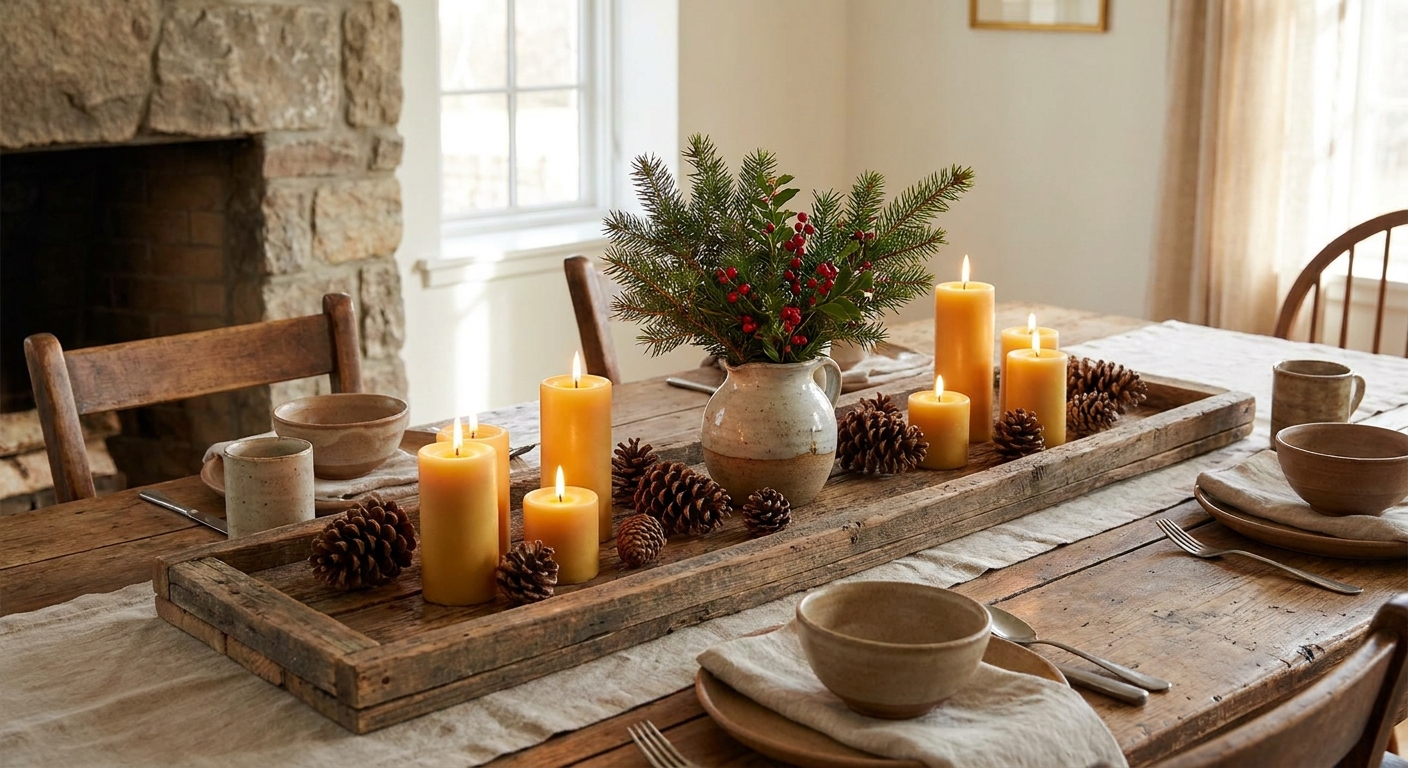
If there is one habit that makes seasonal decorating feel easy, it is this: build one centerpiece base that stays put, and only switch the top layer.
My go-to base formula
- Tray or shallow bowl: wood, metal, or ceramic in a neutral color
- Height: two candlesticks or one small vase
- Texture: one natural element like pinecones, beads, or a small bundle of stems
How to style it for fall
- Replace stems with dried grasses or warm-toned faux branches
- Add 3 to 5 mini pumpkins (keep it odd-numbered and simple)
- Use amber or cream candles
How to flip it for winter
- Swap mini pumpkins for pinecones, ornaments, or sprigs of faux cedar
- Switch to white candles or deep green tapers
- Add one cozy element like a small knit garland draped loosely on the tray
This is where I stay strict: I do not add extra items. I replace. That is the secret to a home that feels “decorated” instead of “stored.”
Textiles that do the work
Textiles are the easiest seasonal transition because they are functional. Your winter throw is not just decor, it is what your family actually reaches for on movie night. That means it is not clutter, it is a useful layer.
1) Pillow covers instead of extra pillows
I stopped buying seasonal pillows years ago because storing bulky inserts is the fastest way to lose a closet shelf. Now I keep a small stack of covers and a few good inserts.
- Fall cover colors: rust, caramel, olive, warm stripes
- Winter cover colors: cream, charcoal, deep green, plaid, subtle sparkle
If you want an easy DIY, I use this envelope-style tutorial whenever I need a quick refresh: Sew an 18-inch envelope pillow cover. You can also print the pattern PDFs and follow along: A4 version or Letter version.
2) Throws that bridge both seasons
The most “reversible” throws are not the ones with pumpkins or snowflakes. They are the ones with texture and classic patterns.
- Works for fall and winter: plaid, herringbone, chunky knits, waffle weaves
- Best colors: cream, camel, forest green, charcoal, soft cranberry
My small-space tip: keep one throw in the room and store the backup under a bed or in an ottoman. If you need ideas for clean under-bed storage, I keep it simple and practical here: Under-bed storage that stays clean.
3) Curtains and table linens that stay neutral
When your big textiles stay neutral, your seasonal switch gets much easier. I prefer changing one small table runner and a couple pillow covers rather than changing everything in the room.
If you are working with a tight bedroom, keeping window treatments simple helps the whole space feel calmer. This guide breaks it down nicely: Minimalist window treatments for small bedrooms.
Small swaps, big winter feel
When you want that winter magic but you do not want another bin in the basement, look for swaps that use what you already have.
Switch the scent, not the objects
- Fall: cinnamon, apple, clove
- Winter: pine, vanilla, peppermint, fresh linen
I know scent is not “decor” in the traditional sense, but it changes the whole mood with zero storage. One small tip: keep strongly scented candles or wax melts sealed in a zipper bag or lidded container so the fragrance does not transfer to linens in the same bin.
Change the bulb warmth
If your space feels stuck in fall, you can nudge it toward winter coziness with light. Many people prefer warmer color temperature bulbs (lower Kelvin) for a softer, candlelit feel, but it is a style choice. In small rooms, I also prefer wall lighting when possible to free up floor and table space, and I walk through that tradeoff here: Wall sconces vs floor lamps for small rooms.
Use a “winter bowl” that lives out
One simple bowl on a console or coffee table can shift seasons with one refill:
- Fall fill: mini pumpkins, walnuts, dried orange slices
- Winter fill: pinecones, ornaments, sprigs of faux evergreen
The bowl itself stays. Only the contents change.
Storage tips that stay tidy
Even reversible decor has to go somewhere when it is not in use. The goal is not perfection. It is being able to find what you own, and put it away without turning your hallway into a mess.
Keep swap pieces together by zone
I store small swaps by where they live, not by season. For example:
- Entry: wreath accents, door sign, one small tray item
- Living room: pillow covers, one garland, candle refills
- Tabletop: runner, centerpiece accents
This keeps you from pulling out an entire bin just to find one ribbon.
Use small fabric baskets for the little stuff
Bows, ornament hooks, taper candles, and tiny accent pieces love to migrate. A small basket corrals them and looks tidy on a closet shelf. If you like to sew, my favorite quick organizer is this: DIY fabric storage basket for shelf clutter. The printable pattern is available in A4 or Letter.
Label one bin “Fall to Winter”
If your decor overlaps, your storage should too. One bin labeled “Fall to Winter” helps you reuse more and buy less. It also makes the transition faster because you are not opening multiple boxes.
Edit before you pack
My simplest declutter rule is this: if I did not use it last year, I do not store it “just in case.” As I pack, I keep a small donate box nearby. If something feels fussy, flimsy, or like I only keep it out of guilt, it goes.
A 30-minute flip plan
If you are staring at your current fall setup and feeling overwhelmed, here is the exact order I use:
- Walk the main surfaces (coffee table, entry table, dining table). Remove anything that is purely fall and not functional.
- Keep the base (tray, candlesticks, neutral vase). Wipe the surface.
- Swap one textile (throw or two pillow covers) first. This makes the room feel different fast.
- Flip or rotate reversible items (signs, frames, runners).
- Add one winter cue (evergreen sprigs, pinecones, a bell accent) and stop.
The stopping part is important. Winter decor looks best when it feels calm and a little spare, especially in a smaller home.
FAQ
What colors work for both fall and winter?
Cream, camel, deep green, charcoal, and muted cranberry are my most-used bridge colors. They sit comfortably with fall warmth and still feel right when winter arrives.
How do I avoid seasonal decor feeling cluttered?
Keep your base neutral, limit yourself to one statement moment per room, and replace items instead of adding. If you are already at capacity, remove two small things before you add one new thing.
What is the best decor to buy if I only want a few pieces?
A neutral tray, two good candleholders, a reversible runner, and 2 to 4 pillow covers will do more for your seasonal mood than a pile of small knickknacks. In my house, those pieces get used constantly.