Stop sacrificing your walkway. Learn the real dimensions to shop for slim-depth, low-profile sofas, consoles, media units, and tables—plus clearance targets ...
Wrought Iron vs. Reclaimed Wood Bed Frames for Small Bedrooms

Published · Last updated
The bed is usually the biggest visual “block” in a small bedroom. I learned this the hard way in my first studio apartment, where my beautiful chunky wood bed made the whole room feel like it was shrinking inward. The same mattress on a slimmer wrought iron frame suddenly felt lighter, airier, and easier to live with. Nothing else changed, but the room breathed.
If you love farmhouse style, you have two classics: wrought iron (or black metal) beds and reclaimed wood bed frames. Both can be gorgeous. In a tight space, though, their profiles can behave very differently. Let’s break down what tends to make a room feel larger, and how to get the farmhouse look without the “why does my bedroom feel crowded?” feeling.
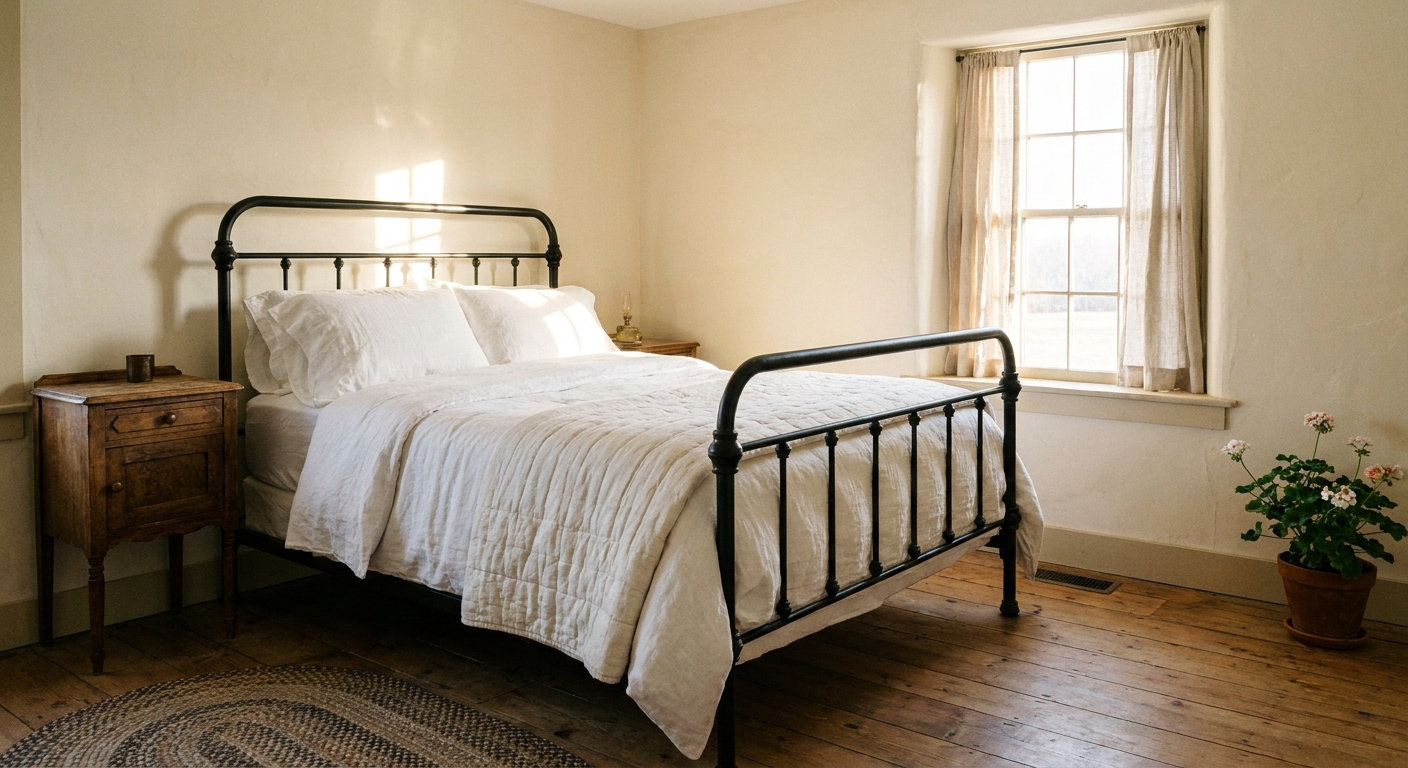
Why metal beds can feel airier
When a room is small, your brain is constantly reading the edges of furniture. Heavy shapes with large solid surfaces visually stop your sightline. More open shapes let your eyes keep traveling, which can make the space feel less boxed in.
Wrought iron helps with visual openness
Many wrought iron style beds use spindles, open rails, and plenty of negative space. That openness matters in a tight footprint because:
- You can see more wall. Seeing wall space around and through the headboard often nudges the room to read as larger.
- Light can move through visually. Even with a dark finish, thin metal tends to create less of a solid “shadow block” than a wide wood panel, depending on the headboard design and where your windows land.
- The frame line is thinner. Slender rails and legs can reduce the sense of bulk at floor level, where cramped rooms feel tight fastest.
Metal can be a lighter visual anchor
Farmhouse style loves contrast, and black metal gives you that definition without adding one big, solid mass. You still get structure and a classic silhouette, just with less surface area.
If you are also trying to boost brightness, pair the bed decision with mirror placement. I walk through the best spots here: Best mirror placement for more natural light in tiny apartments.
When reclaimed wood can feel heavy
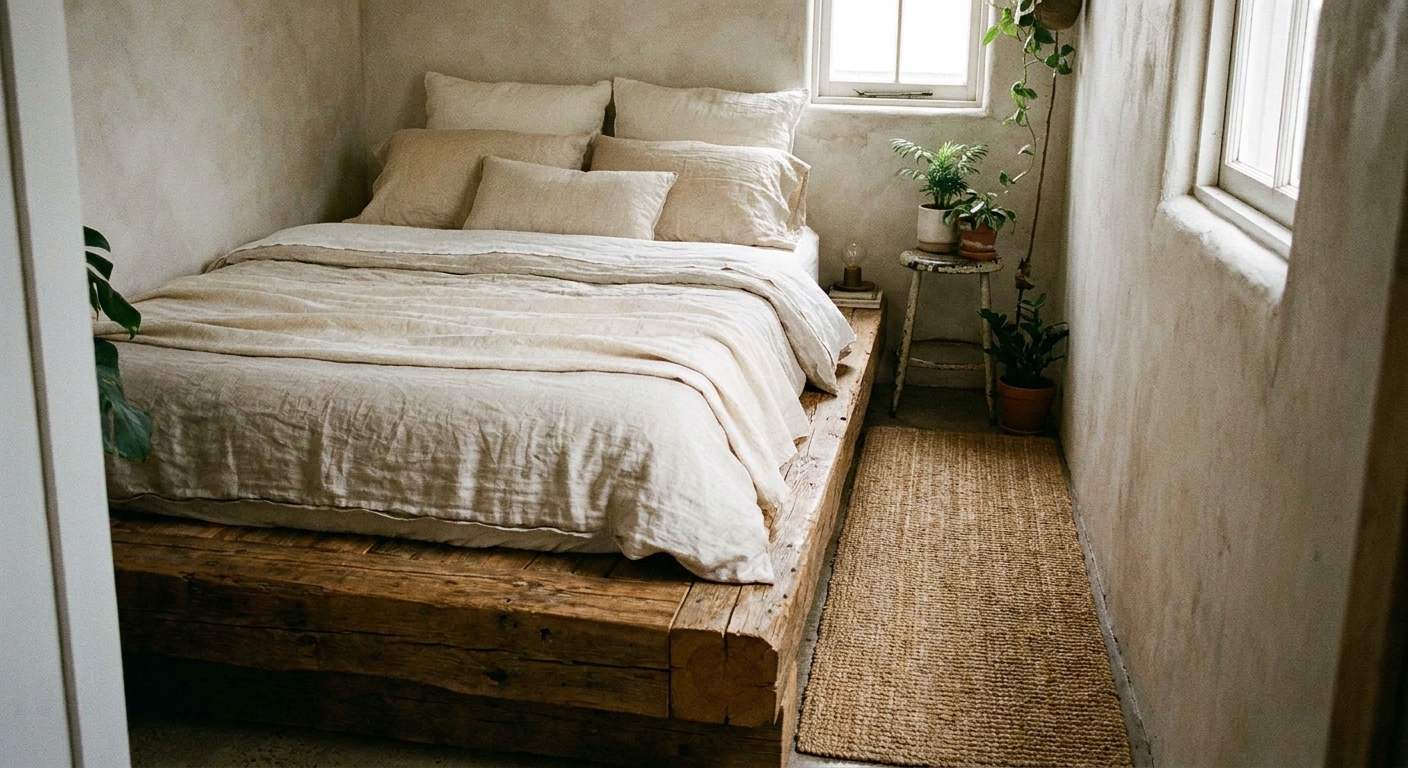
I love reclaimed wood. It brings instant warmth and history. In a compact bedroom, that warmth can tip into heaviness if the frame has too much solid material.
Chunky headboards and footboards
Reclaimed wood frames often include wide planks, thick corner posts, and substantial footboards. In a small layout, these features can:
- Block sightlines from the door into the room, making the space feel shorter.
- Create a “wall” at the foot of the bed, which can crowd already tight walkways.
- Make the bed the only focal point instead of letting the room feel balanced.
Wood texture can read as busier
Reclaimed wood is rich with grain, knots, and color variation. That character is the point, but in a small bedroom it can read as extra visual activity, especially if you already have patterned bedding, wall decor, and open shelving.
If the room already feels visually full, I like to keep at least one major element calm. Sometimes that calm is the bed frame.
Quick comparison
| Feature | Wrought iron farmhouse bed | Reclaimed wood bed frame |
|---|---|---|
| Visual weight | Often feels lighter because of thin lines and open space | Often feels heavier due to thick posts and solid panels |
| Light and sightlines | Typically lets wall and light show through | Can block wall space and read as a solid mass |
| Farmhouse vibe | Classic, simple, slightly vintage | Warm, rustic, highly textured |
| Best for very tight rooms | Often, especially with an open headboard and no footboard | It can work if the design is simplified and scaled down |
| Easiest way to keep it airy | Choose a low profile with minimal detailing | Skip thick footboards and oversized headboards |
How to choose the right frame
Instead of asking “metal or wood?” I like to ask three smaller questions that get you to the right answer faster.
1) Do you need under-bed storage?
If you rely on under-bed bins, look for a frame with enough clearance and an open perimeter so it does not feel like a boxed-in platform. As a rule of thumb, around 7 to 10 inches of clearance works for many standard storage bins, but measure your bins first.
Also check the under-bed structure. Some metal frames have low crossbars or center rails that block large bins, so “metal” does not automatically mean easy storage.
For practical ways to keep under-bed storage from turning into a dusty disaster, I keep my system simple here: Under-bed storage that stays clean.
2) How tight are your walkways?
If you can barely pass the foot of the bed, skip a footboard, especially a solid wood one. In small rooms, removing that one chunky element can make mornings feel less claustrophobic.
3) Is your bedroom already visually busy?
If you have patterned curtains, a gallery wall, or lots of open shelving, metal is often the calmer choice because it reads as outline, not surface. If your room is very plain, reclaimed wood can add cozy character without overwhelming the space.
For other ways to make a room feel bigger without changing your square footage, paint can do a lot of heavy lifting. These ideas are a great starting point: Paint colors that make a small room look bigger.
Keep reclaimed wood from feeling bulky
You do not have to give up reclaimed wood in a small bedroom. You just need to edit the scale and the silhouette.
- Choose an open headboard. Look for slats, gaps, or a simple frame rather than a solid panel.
- Skip the footboard. Or choose a very low one so your eye can travel over it.
- Watch headboard height. In rooms with lower ceilings, a very tall headboard can take over visually. A lower profile often feels more relaxed.
- Keep the finish lighter. A medium to light wood tone generally reads less heavy than deep espresso in a compact space.
- Limit other heavy wood pieces. If the bed is reclaimed wood, keep nightstands visually lighter, such as small tables with open legs.
- Use bedding to soften the mass. Crisp white, oatmeal, or light ticking stripe gives that farmhouse feel and visually lifts the frame.
One trick I use in my own home is keeping the bed as the big farmhouse moment, then going slimmer everywhere else. If you need narrow furniture options, this guide is full of smart ideas: Slim depth furniture for narrow rooms.
Best of both worlds
If you feel torn, you are not alone. My favorite compromise is a mixed-material look: wood posts with metal spindles, or a wood frame with an open, slatted headboard. You get the warmth of wood without turning the bed into a full visual wall.
Wrought iron mistakes to avoid
Metal is often a safer pick for visual space, but a few details can still make it feel fussy or crowded.
- Too much ornate scrollwork. Lots of curlicues add visual clutter. In a small bedroom, simpler spindles tend to feel calmer.
- A tall headboard with high contrast behind it. If your walls are dark and the bed is dark, the headboard can read as a strong block. Lighter walls usually help.
- Too many other black accents. A black bed plus black curtain rods plus black frames plus black lamps can feel harsh fast. Sprinkle black, do not flood the room with it.
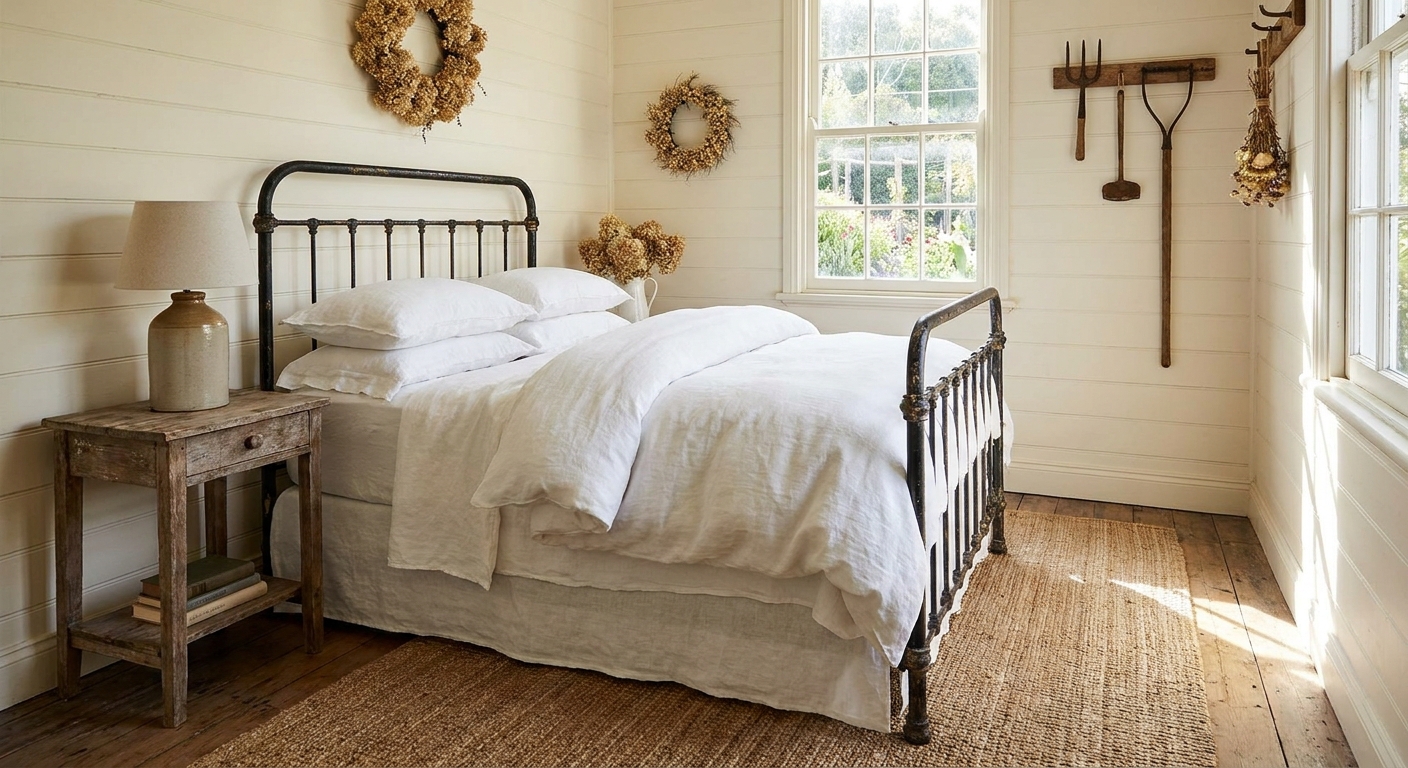
Practical tradeoffs
There are a few real-life considerations that have nothing to do with style, but everything to do with how a bed feels day to day.
- Some metal frames can squeak. A quick tighten of bolts helps, and felt pads between frame pieces and floor can quiet a surprising amount of noise.
- Reclaimed wood is often heavier. It can feel solid and quiet, but it is harder to move when you are cleaning or rearranging a tight room.
- Rugs help either way. A rug under the lower two-thirds of the bed can reduce shifting and soften footfall, especially in older apartments.
My go-to farmhouse formula
If you are aiming for farmhouse style but want the room to feel open, this is the combination I keep coming back to after lots of trial and error:
- Bed frame: simple wrought iron or black metal with an open headboard
- Bedding: light and layered, with one subtle pattern max
- Nightstands: small, open-leg pieces or wall-mounted shelves
- Lighting: wall-mounted instead of floor lamps when possible
- Storage: one or two contained zones, not scattered piles
If you are debating wall lighting, I put the pros and cons here in plain language: Wall sconces vs floor lamps for small rooms.
Bottom line
If your main goal is making a small bedroom feel bigger, an airy wrought iron farmhouse bed frame is often the winner. It keeps sightlines more open and can feel lighter at floor level.
Reclaimed wood can still work beautifully, but it usually needs a simpler silhouette and a lighter touch. In a small room, the best reclaimed wood bed is the one that looks like it belongs in the space, not the one that dominates it.
And if you are feeling stuck, remember: you do not need perfect design. You just need fewer visual blocks. When the biggest piece in the room starts to feel breathable, the whole bedroom usually follows.
For more farmhouse-friendly ideas you can use room by room, you might like: Guide to farmhouse style.