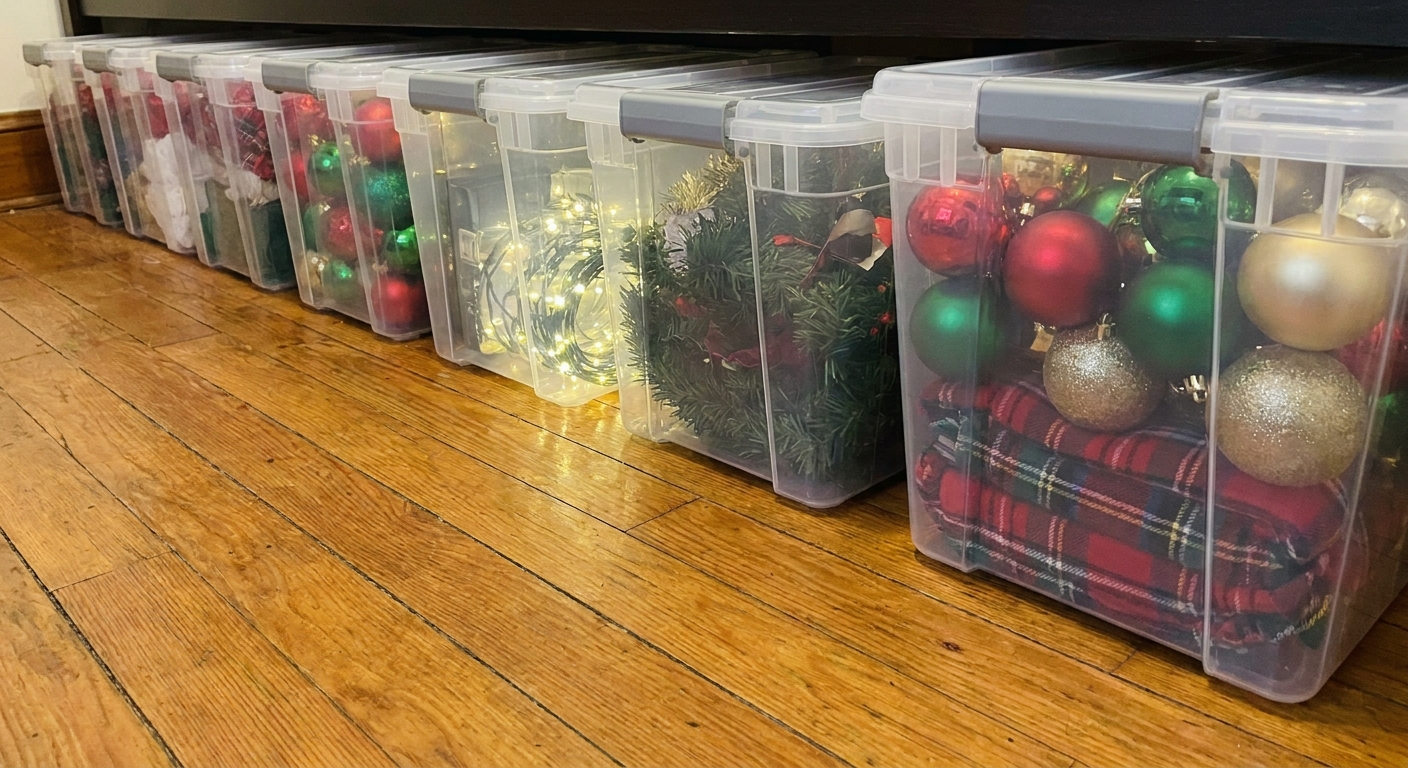
A tiny-space system for packing holiday decor fast: vacuum-seal soft items, protect wreaths and ornaments, wrap lights to prevent tangles, and stash it all u...
Under-Bed Storage That Stays Clean

Published · Last updated
Under-bed storage sounds like a small-space dream, until you pull out a bin and it is coated in dust bunnies, mystery grit, and that slightly stale “forgotten corner” smell. I’ve lived this in studio apartments where the bed was basically a sofa, desk, and closet all at once. And now, in a busy house with kids and a dog, under the bed still tries to become a magnet for everything that does not have a home.
The trick is not just adding containers. It’s creating a system that keeps items protected, easy to find, and limited to what you actually want to store long term. Here is how I set up under-bed storage so it stays clean and does not turn into hidden clutter.
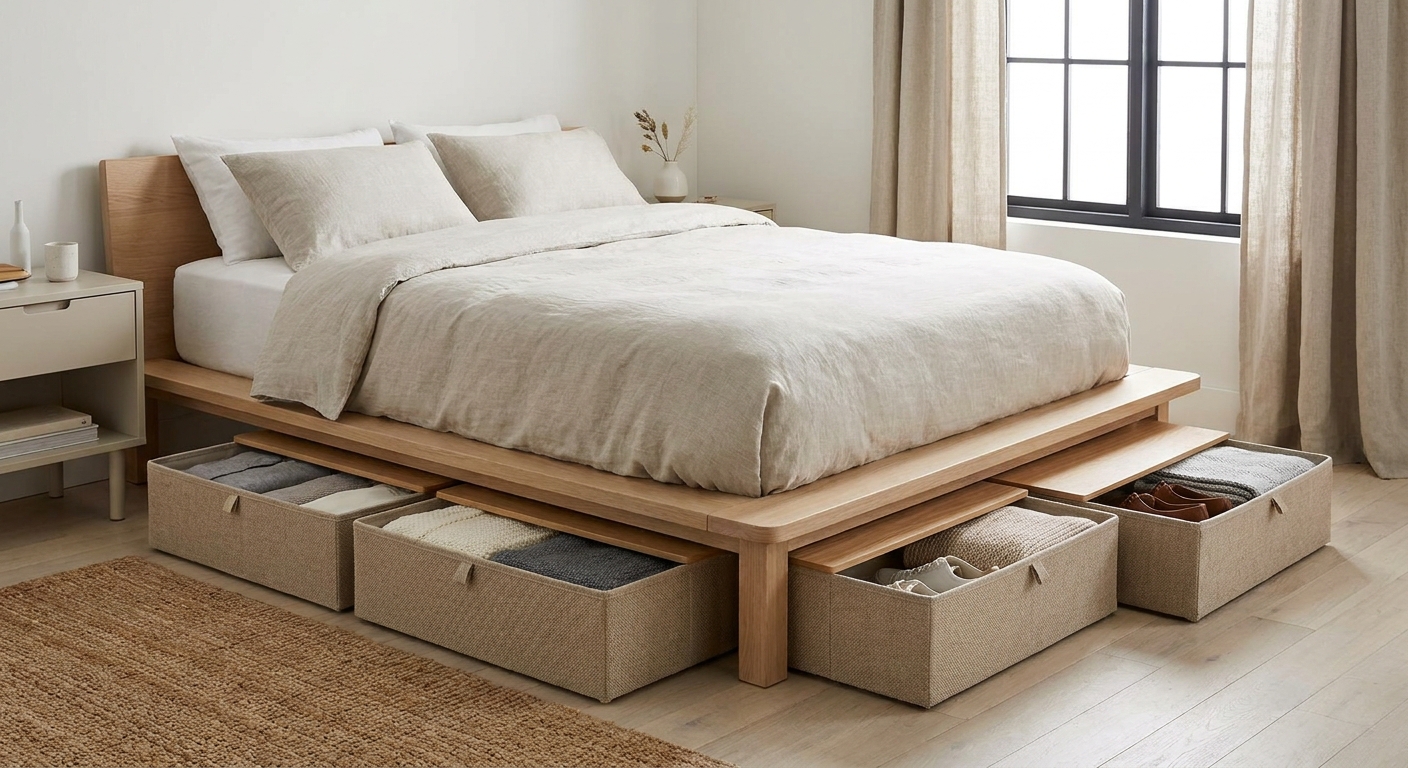
Start with one honest measurement
Before you buy a single bin, measure the usable height and depth under the bed. I say usable because bed frames often have a center support bar, legs, or rails that steal space.
- Height: Measure from floor to the lowest part of the bed frame.
- Depth: Measure from the edge to the first obstacle (center beam or leg).
- Access: Note which sides you can pull from easily. If one side is against a wall, treat that as “deep storage” only.
One thing people miss: measure the bin height including wheels and the lid. Wheels can add an inch or two, and some lids bow up a bit when snapped on.
As a rule of thumb, if you have less than about 6 inches of clearance, vacuum bags tend to work better than rigid bins. If you have closer to 7 to 10 inches or more, low rolling bins are usually much easier to live with. Your exact sweet spot depends on your flooring and the bin design, so always compare your measurements to the full bin height.
Decide what belongs under the bed
Under-bed storage works best for things you use seasonally or in predictable cycles. It is not great for items you need daily, or anything that is supposed to motivate you, like workout gear you keep forgetting exists.
Great under-bed categories
- Off-season clothing (coats, sweaters, swimsuits)
- Extra bedding (guest sheets, spare duvet)
- Sentimental items you are keeping but do not need to see every day
- Gift wrap and party supplies (especially in small homes)
- Kids clothing in the next size up
Usually a bad idea
- Shoes (they track in grit and odors unless fully enclosed and cleaned first)
- Loose papers (they are prone to bending, humidity damage, and turning into a messy pile fast)
- Food (pests and smells, no thank you)
- Anything “maybe” (under-bed is where maybes go to die)
If you are also trying to reduce visible clutter in tight rooms, my guide on small-space organizing pairs really well with this setup because it focuses on keeping storage intentional, not just hidden.
Pick containers that block dust
Dust is unavoidable, but the big drivers are airflow, shedding (textiles, skin cells, pet hair), and whatever your home’s vents and pressure changes keep moving around. So your best tools are lids, smooth sides, and a shape that does not snag every time you pull it out.
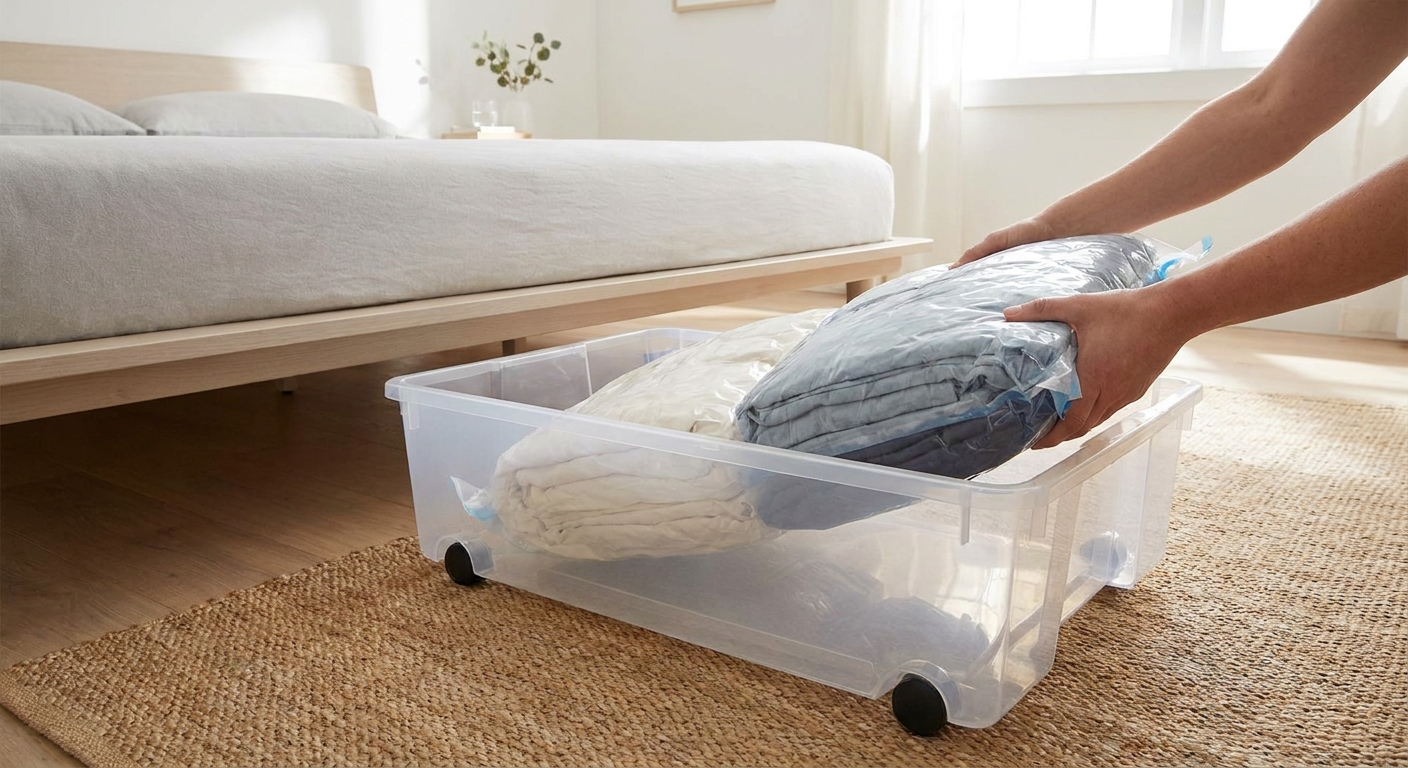
My favorite: low rolling bins with lids
- Why they work: A solid lid is the simplest dust barrier, and wheels reduce that gritty scraping on the floor that makes bins feel gross fast.
- Look for: A low profile, hard lid that snaps or slides securely, and wheels that roll smoothly on your flooring type.
- Avoid: Fabric-only zip bags if your home is dusty or you have pets. They can cling to hair and act like a lint trap.
If you have hardwood or laminate floors, this is also where you protect the finish. Choose rubberized wheels when you can, and if a bin tends to drag, add small felt pads at scrape points so you are not slowly sanding your floor every time you grab the holiday wrap.
Vacuum-sealed bags (best for soft goods)
Vacuum bags are wonderful for bulky textiles, but I treat them like a “special occasion” tool, not my everyday system.
- Best for: Comforters, winter coats, spare pillows, out-of-season kids clothing.
- Not ideal for: Anything you want quick access to, or anything delicate that creases easily.
- Tip: Put vacuum bags inside a low bin or a rigid under-bed box if you can. It protects the plastic from tiny punctures and makes sliding easier.
Moisture note: never seal anything that is even slightly damp, and be cautious in very humid rooms. If mildew has been an issue and you are storing dry textiles long-term, a small desiccant pack can help, but only if it is used safely and kept away from kids and pets.
Garment bags for awkward shapes
If you are storing long dresses, suits, or costumes, an under-bed garment bag can work, but only if it is fully zippered and you keep the contents very limited. Otherwise it becomes a lumpy, dusty taco under there.
Create zones
This is the step that makes under-bed storage stay useful for months instead of days. Give the space a layout, just like you would a closet.
A simple under-bed map
- Closest edge (easy access): categories you reach for a few times a month, like spare sheets or gift wrap.
- Middle: seasonal clothing and textiles.
- Far side or wall side: deep storage, like keepsakes or next-size kids clothes.
If your bed is accessible from both sides, try “left side textiles, right side clothing” or “adult side, kids side.” It sounds almost too basic, but clarity is what keeps you from shoving random items in later.
Labeling without fuss
You do not need a label maker. A piece of masking tape and a marker on the short end of the bin is enough so you can read it while kneeling.
Keep dust down with two habits
I am not going to tell you to deep clean under the bed every week. Real life is real life. These two habits do most of the heavy lifting.
1) Use a lid rule
Nothing goes under the bed without a lid or a full zipper closure. If it does not close, it does not live there. This one rule prevents the classic drift of loose items, stray socks, and random toys.
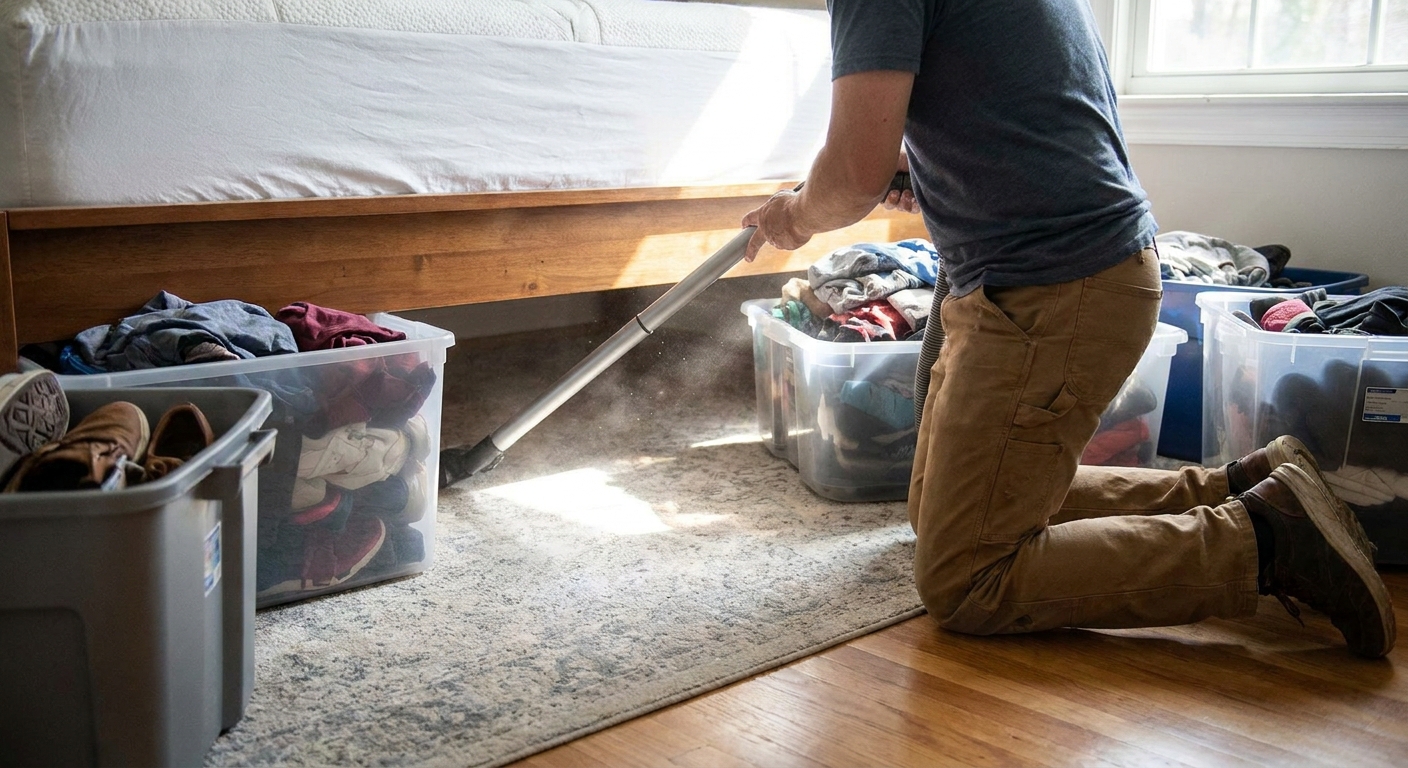
2) Do a 90-second sweep on sheet day
When you change sheets, pull out the bins halfway and do a quick vacuum pass or dust mop around the perimeter. If you have a robot vacuum, this is the moment to let it run under there while the bed is stripped.
If your bedroom tends to feel tight and shadowy, even when it is clean, you might also like my tips on paint colors that make a small room look bigger. It is surprising how much brighter walls make storage feel less stressful.
Prevent the stuff slide
Under-bed storage turns into clutter when it becomes unlimited. I like to set a hard container limit and stick to it.
- One category per container. Mixing categories is how you end up dumping a bin on the floor to find one thing.
- One in, one out. If you add a new sweater to the winter bin, donate one old one or relocate it somewhere that is actually appropriate.
- Keep a little air. Overstuffed bins pop open, warp, or tear. A bit of breathing room also makes items easier to fold back neatly.
If you are short on storage containers around the house in general, a small fabric bin on an open shelf can reduce the pressure to hide everything under the bed. I walk through an easy DIY in this fabric storage basket project, and it is great for corralling the little stuff that otherwise migrates to the bedroom.
Best setups by bed type
Platform bed with low clearance
- Use vacuum bags for soft goods.
- Choose the flattest rigid boxes you can slide easily.
- Stick to one or two categories only, like bedding and off-season clothing.
Metal frame with open space
- Go for lidded rolling bins to reduce dust settling onto exposed items.
- Consider adding a bed skirt only if you will still access bins easily. If a bed skirt makes it annoying, you will stop using the system.
Kids bed that attracts toys
- Make under-bed storage assigned, not general.
- Use two bins max: one for next-size clothes, one for seasonal gear.
- Keep everyday toys somewhere visible and easy, like a shelf basket system.
Troubleshooting
If your bins come out dirty
- Switch to bins with smoother wheels, or add felt furniture pads to areas where they scrape.
- Wipe bin bottoms once before loading them. Starting clean really helps.
- Check if your HVAC vent blows directly under the bed and redirect airflow if possible.
If things smell musty
- Only store items that are fully dry and freshly laundered.
- Avoid storing leather, sweaty sports gear, or damp shoes.
- Do a seasonal reset: pull everything out twice a year, vacuum, and only put back what you still want.
If it becomes a dumping ground
- Remove one container. Less space forces better decisions.
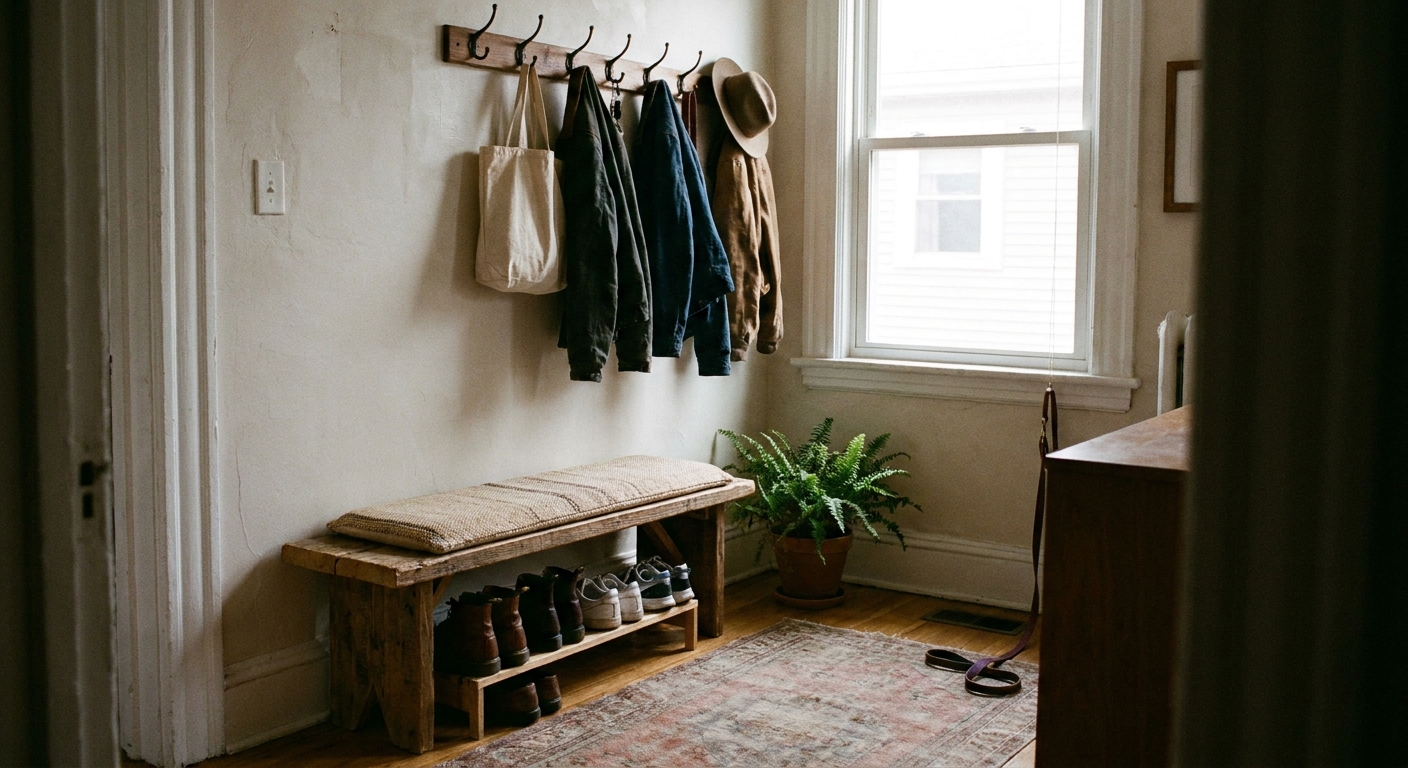
- Pick a landing spot elsewhere for daily clutter. A tiny drop zone can change everything. I have a step-by-step for that in planning a small entryway drop zone.
A simple plan for today
- Measure height and usable depth (and remember wheels and lid height).
- Choose 2 to 4 categories you actually need to store.
- Assign containers (lidded rolling bins for easy access, vacuum bags for bulky textiles).
- Label the short ends so you can read them while kneeling.
- Do a quick clean under the bed before sliding everything in.
- Set the limit and promise yourself: nothing loose goes under there.
Under-bed storage can be one of the calmest, cleanest storage zones in your home. It just needs boundaries, a lid, and a tiny routine that keeps dust and chaos from moving in.