
Vertical Closet Organizers That Work

I have lived with the kind of closet that makes you hold your breath when you open the door. In my smallest studio, my “wardrobe” was one rod, one top shelf, and a floor that instantly disappeared under shoes. What finally made it feel usable was not buying more bins. It was learning to treat the closet like a tiny room with height, zones, and a few organizers that earn their keep.
This guide focuses on three vertical upgrades I come back to over and over: double-hang rods, cascading hangers, and top-shelf dividers. Used correctly, they can dramatically increase your hanging capacity and, in closets dominated by short and medium garments, can come close to doubling it without turning your closet into a frustrating game of hanger Jenga.
Before you buy: a 10-minute check
I know it is tempting to order organizers first. But small closets punish guesswork. Do this quick check so you pick the right tool the first time.
1) Measure the usable hanging height
- Rod-to-floor height: Measure from the rod to the floor. If your closet is tall, you are leaving capacity on the table.
- Rod-to-shelf height: If there is a fixed top shelf, measure the gap from the underside of the shelf to the rod. Some double-hang solutions will not fit if the rod sits too high or too close to the shelf.
- Door swing and clearance: If doors bump hangers, keep bulky items closer to the wall ends.
2) Sort hanging clothes into three length groups
This is the part that makes double-hanging work instead of annoy you.
- Short: shirts, blouses, cropped jackets
- Medium: pants (folded over hangers), skirts (on clip or waistband hangers), knee-length dresses, most kids’ clothes
- Long: maxi dresses, coats, anything that needs full drop
If you have mostly short and medium items, you are a great candidate for a double-hang setup. If you have lots of long items, you still can double-hang, but you will want one long section.
3) Decide what must live in the closet
In a tight home, closets often become overflow for everything. If your closet also holds linens, cleaning supplies, or bags, that is fine. Just plan for that intentionally, because hanging systems do not fix a “too many categories” problem.
If you need ideas for making small spaces feel less crammed overall, our Small Spaces guide is a helpful starting point.
Organizer #1: Double-hang rods
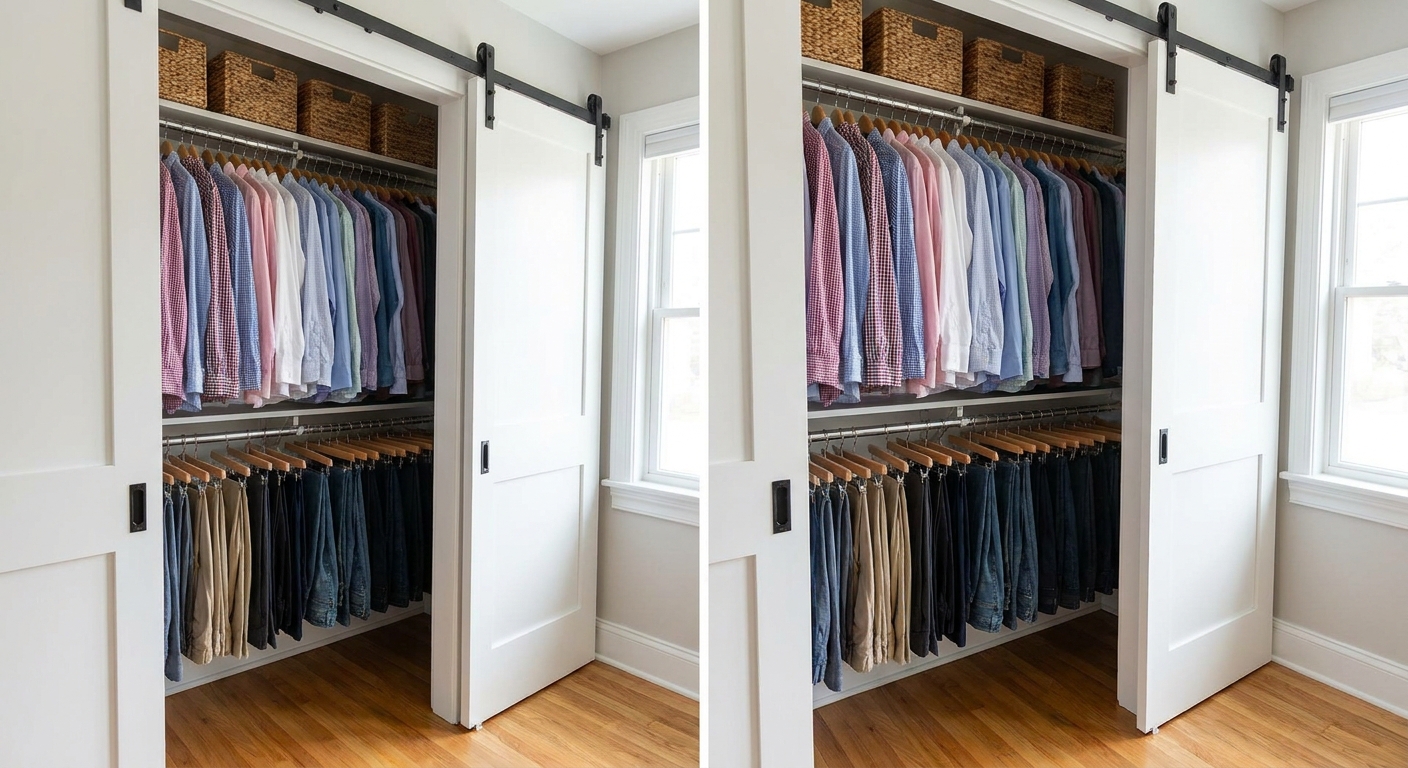
If I could pick only one upgrade for a small closet, it is a double-hang setup. Most closets are installed with a single rod at a height that wastes the lower half of the space. Two levels of hanging clothing are the closest thing to an instant “bigger closet” you can get.
When double-hang rods work best
- You primarily hang tops, pants, skirts, and kids’ clothes.
- You want a cleaner floor for shoes or a hamper.
- Your closet rod is currently high enough that space under shirts is basically empty.
When double-hang rods are a bad fit
- You hang lots of long dresses and coats and do not have room to dedicate a long section.
- Your closet is very shallow and bulky hangers already scrape the doors.
- You hate frequent re-hanging. Double-hang is best when you keep categories stable.
Two layouts that feel easy
Layout A: 2/3 double-hang + 1/3 long-hang
This is my favorite for real life. Use the double-hang area for tops and pants. Keep one section for long items so they are not crammed or dragging.
Layout B: Full double-hang + a slim “long lane”
If you only have a few long pieces, carve out a narrow strip where the lower rod is omitted so coats can drop. A lane of about 12 to 18 inches can work for a couple of slimmer pieces, but go wider if you have bulky coats or multiple long items.
How to set heights
Here is the mistake I made early on: I installed the lower rod too high, so pants brushed shirts and everything bunched.
- Start with your real clothes: Hang your longest “short” item (usually a tunic or shirt dress) on the upper rod, and your bulkiest “medium” item (often pants folded over a hanger) on the lower rod.
- Aim for a visible gap: You want air between the bottoms of the upper items and the tops of the lower items. If they touch, they will snag, wrinkle, and drive you nuts.
- Helpful ballpark ranges: Many closets feel good with roughly 38 to 42 inches for the upper section (rod to rod) and 36 to 40 inches for the lower section (lower rod to floor), but your wardrobe and hanger style matter. Treat these as starting points, then adjust.
Which style should you choose?
- Permanent installed rod (best feel): Most stable and easiest to use daily, especially if you have heavier items.
- Second rod add-on (renter-friendly): A drop-down bar that hooks over the existing rod can work well for lightweight tops, but it can also sway and steal horizontal space. I like these for seasonal overflow, not my everyday core wardrobe.
- Tension rod (quick fix): Useful in a pinch for light items, but it can slip on smooth paint or slick surfaces, especially in damp areas or if it is overloaded.
Rod safety, quickly
A double-hang setup can hold a lot, which is exactly why it needs to be installed well. If you are drilling, use appropriate anchors for your wall type or mount into studs when possible. If you are using an add-on bar, do not treat it like a permanent rod. Keep heavier items (coats, denim) on the most stable rod and spread weight evenly so nothing bows or pops loose.
If you are also trying to keep a small bedroom from feeling crowded, pairing a smarter closet with simpler window treatments can help. This piece on minimalist window treatments for small bedrooms is a nice next read.
Organizer #2: Cascading hangers
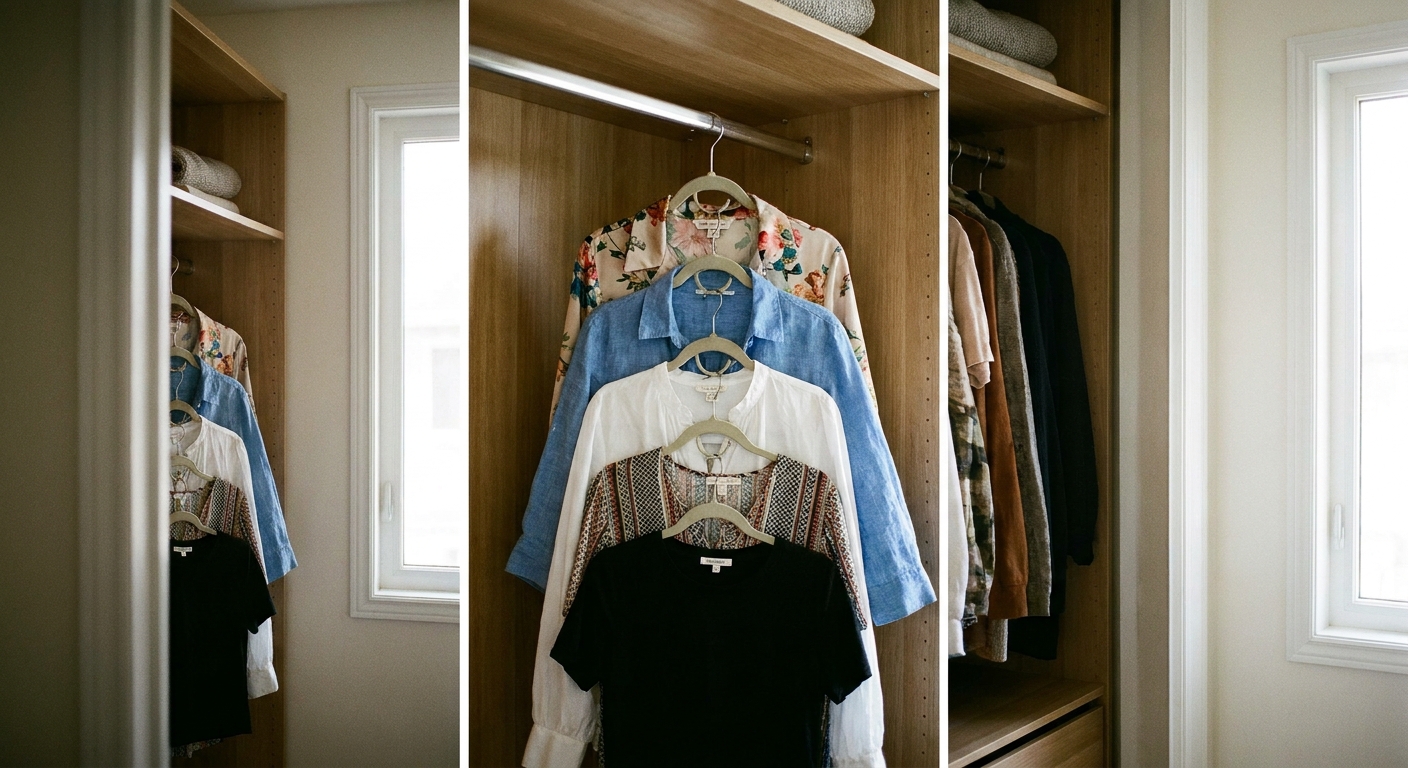
Cascading hangers are those connectors or multi-tier hangers that let you hang several items vertically from one hook. When they work, they are brilliant. When they do not, you end up with wrinkled clothes and an annoying swinging cluster you avoid.
The best uses for cascading hangers
- Lightweight tops: tees, tanks, thin blouses
- Work shirts you rotate often: keeps them visible without needing extra rod space
- Outfits as a set: top, cardigan, and scarf together so mornings are faster
When cascading hangers cause problems
- Bulky items: sweaters and thick hoodies get stretched and crowded.
- Delicates that snag: lace and knits can catch on hooks and connectors.
- If you hate wrinkles: tight vertical stacks can crease sleeves and shoulders.
How to make them behave
- Limit the stack: 3 to 5 items per cascade usually stays manageable.
- Keep similar weights together: a heavy item at the bottom can distort lighter ones above.
- Use the side-wall trick: park the cascade at the far left or far right end of the rod so it hangs into that corner “dead space,” instead of swinging through the middle of your closet access.
- Choose grippy hangers first: If your hangers slide, cascading just magnifies the chaos.
My personal rule: I use cascading hangers as a pressure valve, not the whole system. They are perfect when a season changes, laundry is behind, or I am testing a capsule wardrobe.
Organizer #3: Top-shelf dividers
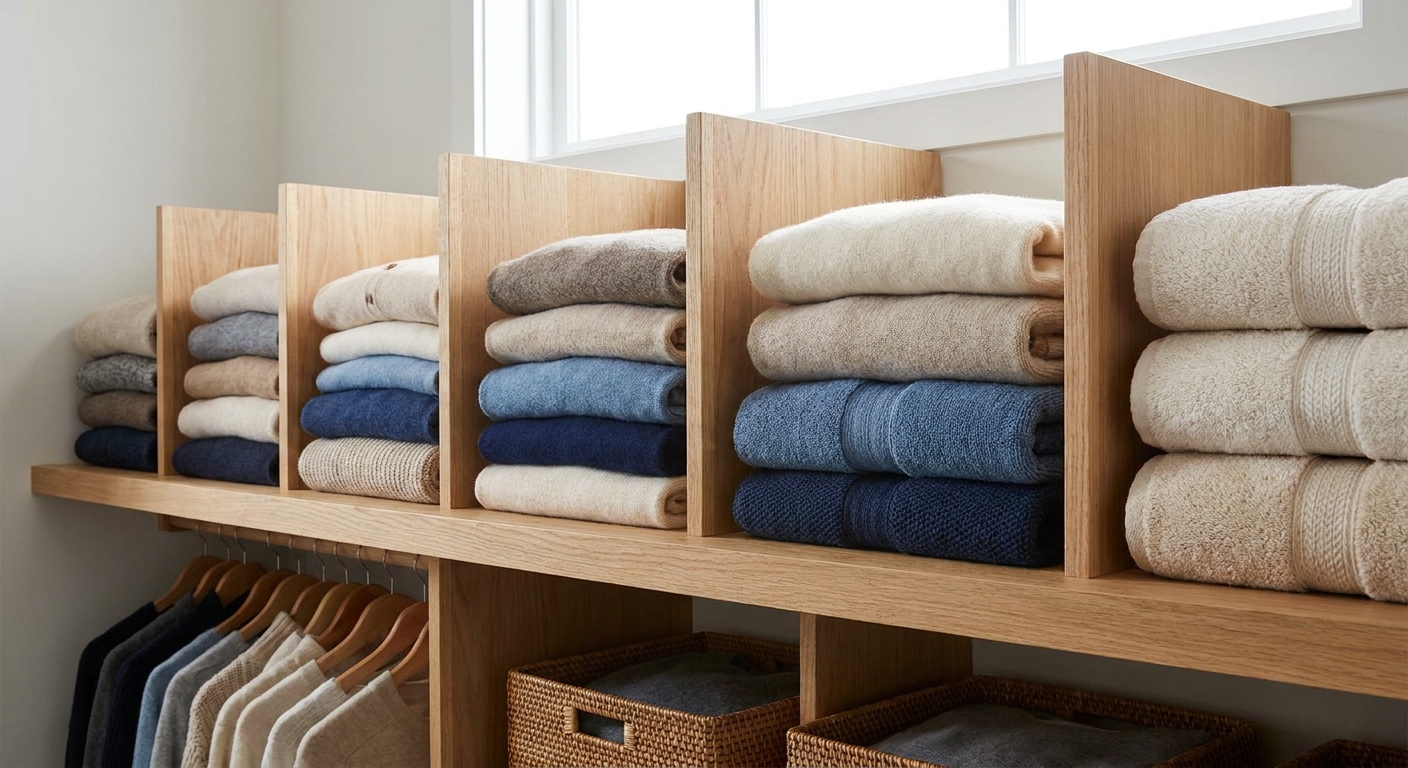
Most closet top shelves fail for one reason: stacks tip. Then the shelf becomes a messy “attic,” and you stop using it. Top-shelf dividers turn that wasted height into stable zones so you can actually store sweaters, jeans, handbags, or linens up there without constant re-folding.
If you have never used them, top-shelf dividers are usually simple clip-on vertical panels (wire or acrylic) that attach to the shelf and create lanes for stacks. Think of them as bookends for folded clothes.
What dividers are great for
- Folded categories: sweaters, workout sets, jeans
- Bags and clutches: keep them upright so they do not slump into a pile
- Guest items: extra bedding or towels you want contained
How to set up shelf zones
- Give each pile a “container” width: One divider per category, even if the category is small.
- Put least-used items farthest from the door: If you have to unstack things to reach daily items, the shelf will unravel.
- Use a soft bin for tiny items: Scarves, belts, and small accessories do better in one grab-and-go container than in a stack.
A quick safety note
If you are storing heavier items up top, keep the heaviest things closer to the shelf supports or side walls, and avoid piling high where things can tumble down when the door opens.
Put it together: 3 setups
These combos cover most small closets I have worked with, from kid closets to adult reach-ins.
Setup 1: The workhorse
- Double-hang rods: tops above, pants below
- Top shelf dividers: sweaters, gym wear, or handbags
- Floor: one tight shoe row, or a small hamper
This is the best “set it and forget it” option.
Setup 2: The top-heavy closet
- Single rod plus cascading hangers for blouses and tees
- Top shelf dividers for folded pants and knits
Use this if you cannot install a second rod or you have one awkward wall section that makes double-hanging tricky.
Setup 3: Mixed lengths
- 2/3 double-hang for short and medium pieces
- 1/3 long-hang for coats and dresses
- Divided top shelf for off-season items
It is the most balanced layout, and it keeps your long items from becoming a wrinkled, dragging mess.
Mistakes that waste height
Using one hanger type for everything
Bulky hangers eat rod space. Slippery hangers create falling piles. In a small closet, hanger choice matters more than you think. If you can, stick with one slim, grippy style for most items, then keep specialty hangers for suits or delicate pieces.
Storing “maybe” clothes at eye level
If you are not wearing it, it should not claim the most convenient real estate. Move occasional-wear pieces up high or to the far end, or consider a declutter session. If you want a gentle approach, I like starting with a small zone rather than the whole closet in one go.
Making the top shelf one unstable stack
One big stack is not storage. It is a future avalanche. Dividers create friction and boundaries, which is what a top shelf needs.
Letting the entryway steal closet space
If coats and bags do not have a home near the door, they migrate into bedroom closets and take over hanging space. If that sounds familiar, you might like how to plan a small entryway drop zone.
Mini FAQ
Will double-hanging look cluttered?
It can, if everything is visually mixed. Group by type and color, and keep a little breathing room between categories. The goal is dense storage that still feels readable.
How do I stop cascading hangers from swinging?
Keep them at the far left or far right end of the rod so they hang into the corner near the side wall, not in the center. Also, do not overload them. A smaller cascade is calmer and easier to use.
What goes up top versus down low?
Top shelf: off-season pieces, extra bedding, bags, or folded categories you do not need daily. Down low: shoes you wear often, a hamper, or a bin for items headed to donation.
What if I am renting?
You can still gain vertical space with a second rod add-on, cascading hangers, and shelf dividers. Keep the heaviest items on the most stable parts of the closet and avoid overloading tension systems.
A small closet pep talk
Closet organization is one of those projects that feels like it should be simple, but it gets emotional fast. It is hard to face the pile of clothes you spent money on, the pieces you love but do not wear, and the daily stress of not being able to find what you need.
If you take nothing else from this: choose one vertical upgrade and set it up well. A properly placed double-hang rod or a top shelf that stops collapsing can change how your whole morning feels. Progress over perfection, always.
For more small-home strategies, visit our Small Spaces guide.