Learn how to make a small room feel larger with paint: pick light hues with the right undertones, use low-contrast trim and ceilings, test samples correctly,...
Minimalist Window Treatments for Small Bedrooms: Curtains vs. Blinds

Published
Small bedrooms have a funny way of making everything feel personal. The laundry pile feels bigger, the bedside table feels tighter, and yes, the wrong window treatment can make the whole room feel heavier than it is. I learned this the hard way in a studio apartment where my bed was basically three steps from the window. One “cozy” curtain choice later, I felt like I was sleeping inside a fabric cave.
If you want a minimalist look that still feels warm (not sterile), there are three strong options that do not visually crowd the room: curtains on low-profile rods, sheer panels, and inside-mount blinds. Let’s compare them the way we actually live, with real windows, real clutter, and real mornings.
What makes a window treatment feel heavy
Before choosing curtains or blinds, it helps to know what usually makes a compact room feel visually crowded. In my experience, it is less about the window itself and more about what the treatment does to the lines of the room.
- Bulk at the top: thick headers, oversized rods, grommets, and big finials pull attention to the ceiling line.
- Too much contrast: dark fabric against light walls outlines the window like a bold frame.
- Extra puddling and pooling: long curtains that stack on the floor read “romantic,” but also read “more stuff.”
- Outside-mount hardware that spreads wide: it can be gorgeous, but it can also visually shrink the wall space in a tight room.
A minimalist window treatment is usually one that stays close to the window, keeps the top line clean, and lets light bounce around the room.
Option 1: Curtains on low-profile rods
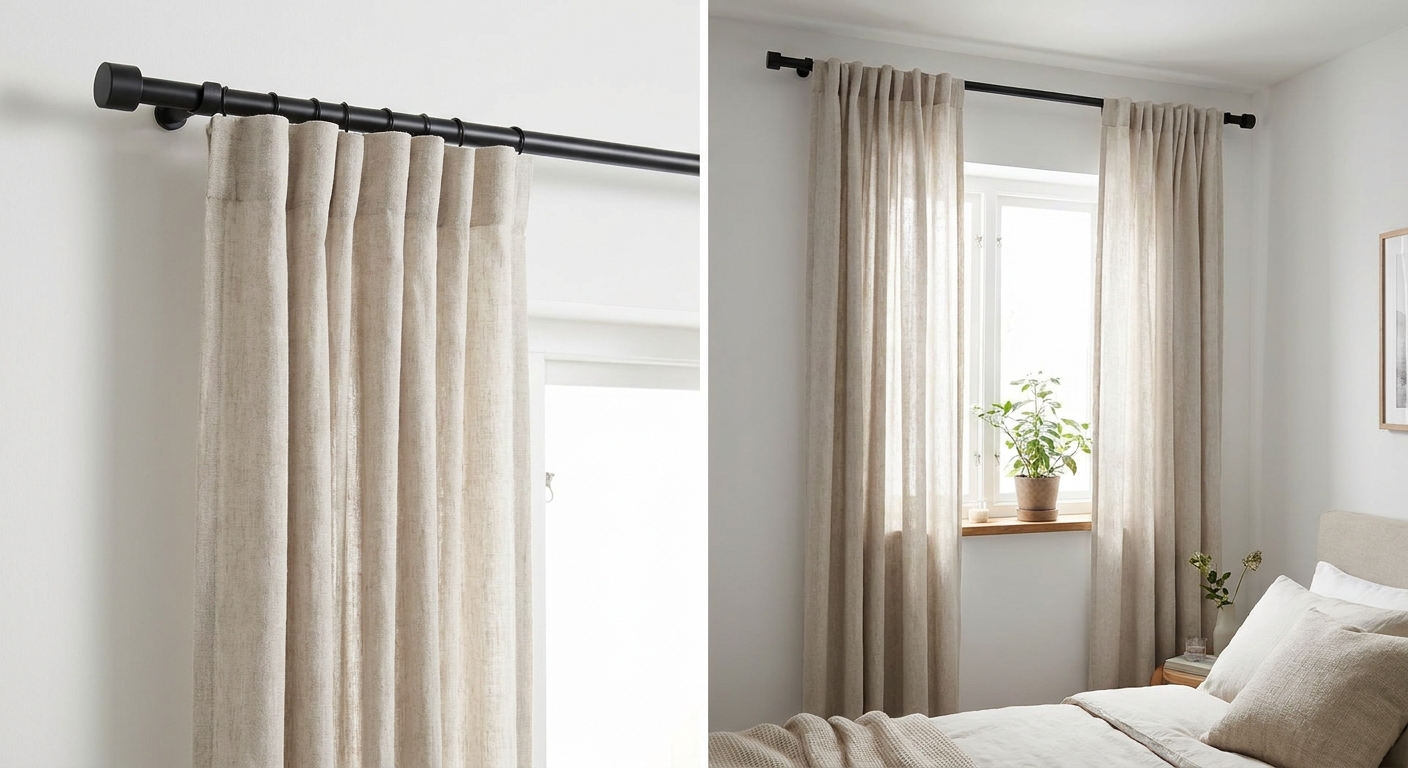
If you love the softness of curtains but hate the visual weight, the rod choice matters as much as the fabric. In a small bedroom, I look for rods that “disappear” instead of announcing themselves.
What to look for
- Small diameter rod: a slimmer rod reads lighter. A chunky rod can dominate a small wall fast.
- Simple ends: low-profile end caps or no finials at all.
- Low-return brackets: the rod sits close to the wall instead of jutting out.
- Rings or clips that keep the header neat: less bunching at the top typically looks calmer.
Best curtain headers for a small bedroom
- Tailored pleats: pinch pleat or euro pleat looks structured without looking bulky.
- Simple headers: soft top or back tab can look clean with the right fabric.
- Rod pocket, used carefully: it can look minimalist in a lightweight fabric, but it can also bunch up and read fuller than you expect.
When curtains are the best choice
Choose curtains when you want softness, warmth, and a more “finished” look. They can also help a bit with echo and perceived noise in a hard, boxy room, especially when you use a lined fabric, but they are not a magic soundproofing fix.
If you are already working on making the room feel larger overall, you might like pairing this with lighter wall colors. Here’s a helpful companion read: paint colors that make a small room look bigger.
Option 2: Sheer panels
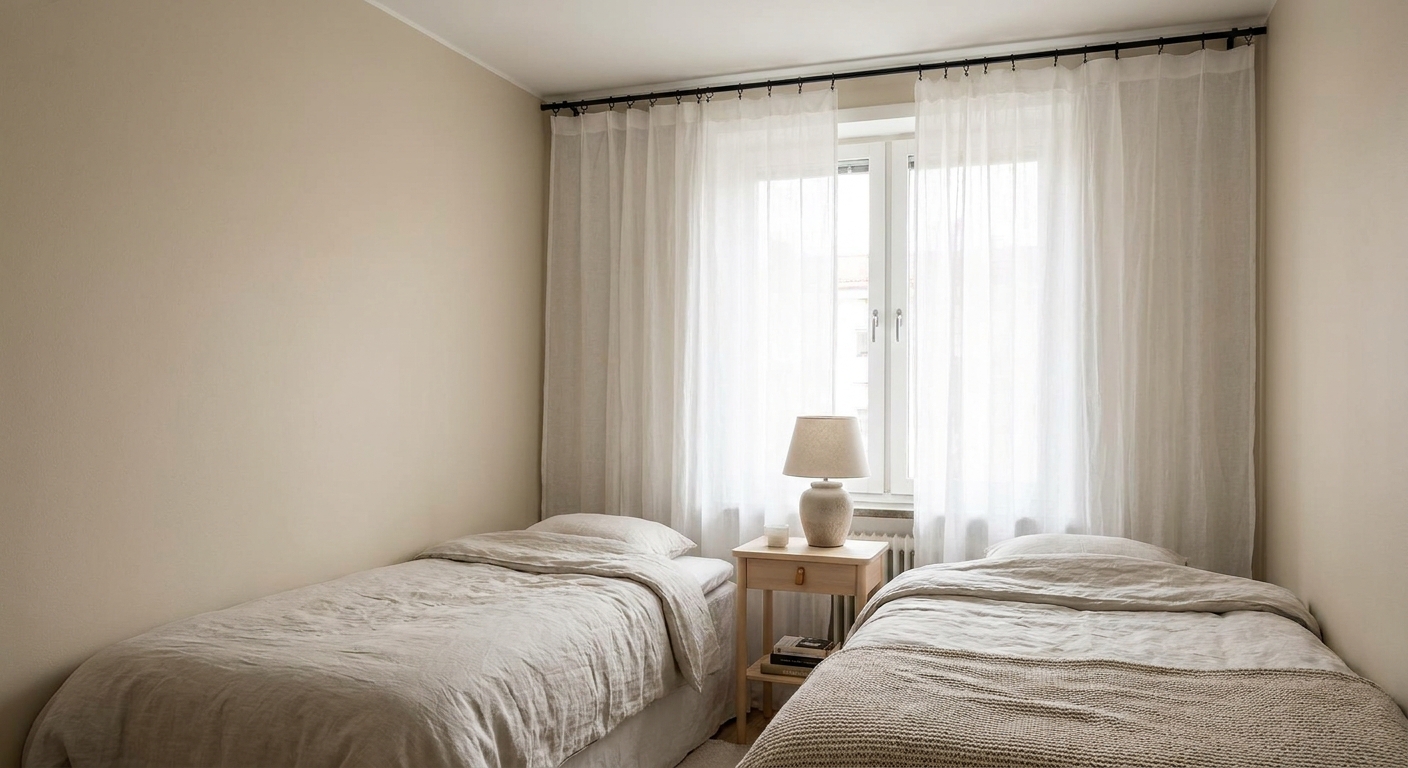
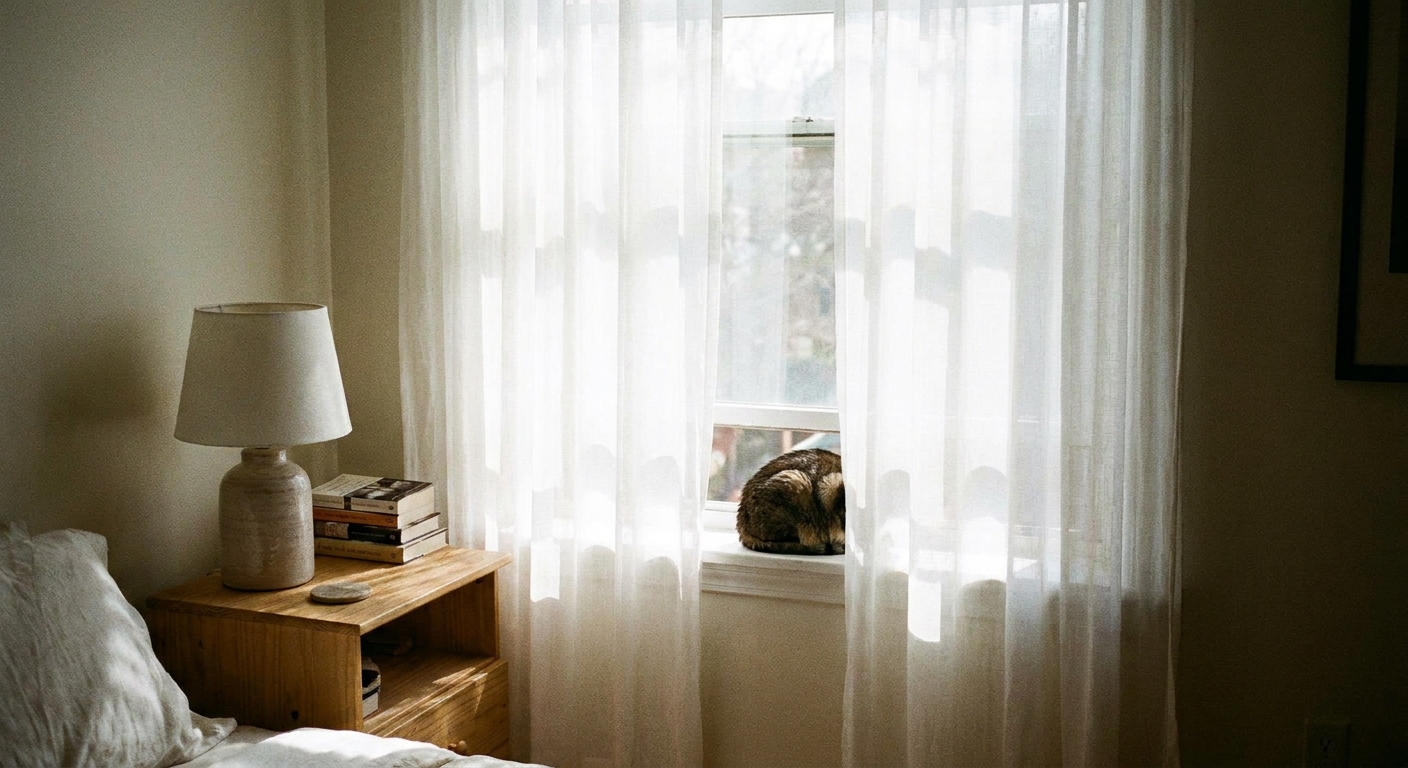
Sheers are the easiest shortcut I know for making a small bedroom feel lighter. They blur the hard edges of the window without blocking daylight, and that matters in tight spaces where you need every bit of brightness.
What sheers do well
- They expand the feeling of space: light passes through, so your eye does not stop at a solid wall of fabric.
- They soften without clutter: you get that “finished” look without a heavy profile.
- They work with almost any style: minimalist, farmhouse, cozy modern, and everything in between.
How to make sheers look intentional
Sheers can look a little flimsy if they are too short, too wrinkled, or hung on a clunky rod. My checklist:
- Hang them high: closer to the ceiling line usually makes the room feel taller.
- Keep them long: I like them just kissing the floor, not pooling.
- Use two panels: even if you mostly keep them open, symmetry calms a small room.
- Steam them: it is annoying, but crisp sheers look ten times more minimalist than rumpled ones.
Privacy reality check
Sheers often give some daytime privacy, but it depends on the weave, the lighting, and how close your neighbors are. At night, with your lights on inside, silhouettes are usually visible. If that is a concern, plan on a second layer (like a simple roller shade behind the sheers) or choose blinds instead.
For more foundational decorating choices that keep rooms feeling calm, you can also browse our Home Decor guide.
Option 3: Inside-mount blinds
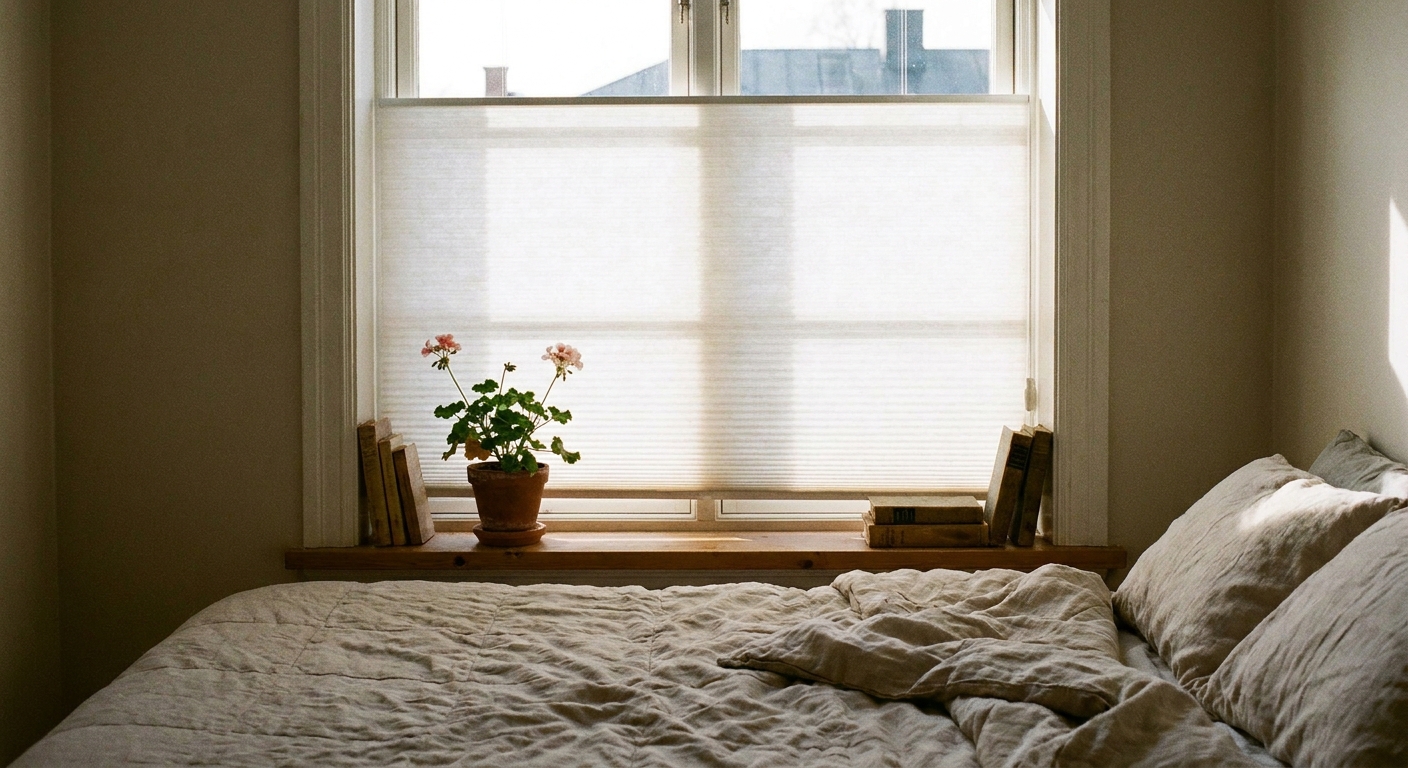
If your goal is “as minimal as possible,” inside-mount blinds are hard to beat because they sit inside the window frame. Nothing is floating out into the room. No extra visual layers. Just a clean rectangle.
Why inside-mount matters
- They keep the wall line open: you are not adding width around the window.
- They reduce visual noise: especially in rooms with a lot of furniture close to the window.
- They are practical: easy light control and privacy without fabric volume.
Choosing blinds that still feel soft
“Blinds” can look sharp and modern or a little office-like, depending on the material. For a bedroom, I look for options that feel calm:
- Cellular shades: streamlined, great for light control, and often helpful for comfort since the air pockets can reduce drafts.
- Simple roller shades: clean, flat, and excellent for minimalist bedrooms.
- Faux wood blinds in a light tone: warmer than metal, still tidy.
Measure carefully
Inside-mount only works when you have enough depth in the window casing for the product to sit properly and operate smoothly. Even with an inside mount, a shallow casing can leave part of the headrail visible. If you are unsure, check your window depth and the manufacturer’s requirements before buying. In older homes (or quirky rentals), outside-mount might be necessary.
If you need true blackout
Minimalist does not have to mean waking up at 5 a.m. If you need a genuinely dark room for sleep, skip “light-filtering” language and look for a blackout roller shade or blackout cellular shade. In a small bedroom, I like blackout as the inside layer, then add sheers only if you want softness in the daytime. Two simple layers can still look clean if neither is fussy.
Quick comparison
| Option | Best for | Where it can feel heavy | Minimalist tip |
|---|---|---|---|
| Low-profile curtains | Softness, warmth, a finished look | Thick fabric, bulky header, dark contrast | Match curtain color to wall and use a slim rod |
| Sheer panels | Brightness and airy feel | Can feel flimsy, privacy varies by lighting | Hang high, go floor-length, and steam wrinkles |
| Inside-mount blinds | Clean lines, privacy, tight spaces | Wrong material can look harsh; shallow depth can show headrail | Choose cellular or roller styles for the softest look |
My go-to picks by problem
If your bed is right next to the window
Go with inside-mount blinds or a roller shade. Fabric brushing the bed can feel fussy and collect dust faster.
If your room feels dark
Start with sheers. If you need nighttime privacy, layer a simple shade behind them. The key is keeping both layers visually simple.
If your room feels echo-y
Choose curtains in a light fabric on a low-profile rod. That little bit of textile softness can help take the edge off, even if it is not true soundproofing.
If you are decorating a rental
Inside-mount blinds can be tricky if you cannot drill or the casing is shallow. In that case, sheers on a slim rod are a renter-friendly way to make the window feel finished without adding bulk.
Safety and upkeep
- Go cordless when you can: it is cleaner visually and safer if you have kids or pets who treat pull cords like a toy.
- Sheers: plan on occasional washing and more frequent dusting if your window is near the bed.
- Blinds and shades: easier day-to-day dusting, but slats can be fiddly and fabric shades can show fingerprints near the bottom edge.
Simple install tips
- Keep hardware consistent: match rod or blind hardware to other metals in the room (drawer pulls, lamp base) so nothing stands out.
- Avoid extra layers unless you need them: a small bedroom rarely needs valances, swags, or ornate tiebacks.
- Mind the stack: curtains that stack wide can eat wall space. If your window is small, consider slimmer panels.
- Choose calm neutrals first: you can always add color elsewhere, like bedding or art, without visually shrinking the window.
If your bedroom is part of a bigger small-space puzzle, our Small Spaces guide has more ideas for making tight rooms feel easier to live in.
Bottom line
If you want the cleanest look with the least visual bulk, inside-mount blinds usually win. If you want a soft, cozy finish without making the room feel heavy, sheers on a low-profile rod are my favorite middle ground. And if your bedroom needs a little warmth and hush, lightweight curtains on slim hardware can still feel minimalist when you keep the color and header simple.
Whatever you choose, aim for one main job (privacy, blackout, softness) and let the window treatment quietly do it. In a small bedroom, quietly is the whole point.