
Best Mirror Placement for More Natural Light in Tiny Apartments

I learned the hard way that “just add a mirror” is not a plan. In my tiniest studio, I hung a pretty mirror wherever it fit, then wondered why the room still felt dim by 3 p.m. The trick is not the mirror itself. It is what the mirror is reflecting, and what angle that reflection sends back into the room.
Below are my go-to mirror placements for tiny apartments when the goal is simple: more natural light, less cave feeling, and a room that looks like it has breathing space.
The quick rule: reflect the brightest thing
Before you pick up a hammer, stand where you spend the most time (sofa, bed, desk) and look toward your main window. Now imagine where that window light could bounce next.
- Best reflection: a window, or the bright patch of floor the window creates.
- Second best: a light-colored wall, ceiling, or a lamp you actually use.
- Avoid reflecting: clutter piles, the side of a fridge, or a dark hallway. Mirrors duplicate whatever they face, including the mess.
If you want the bigger-picture approach to making a room feel more open, I also keep a running guide here: Home Decor Guide.
Best placements near windows
1) Directly opposite a window (the “double window” effect)
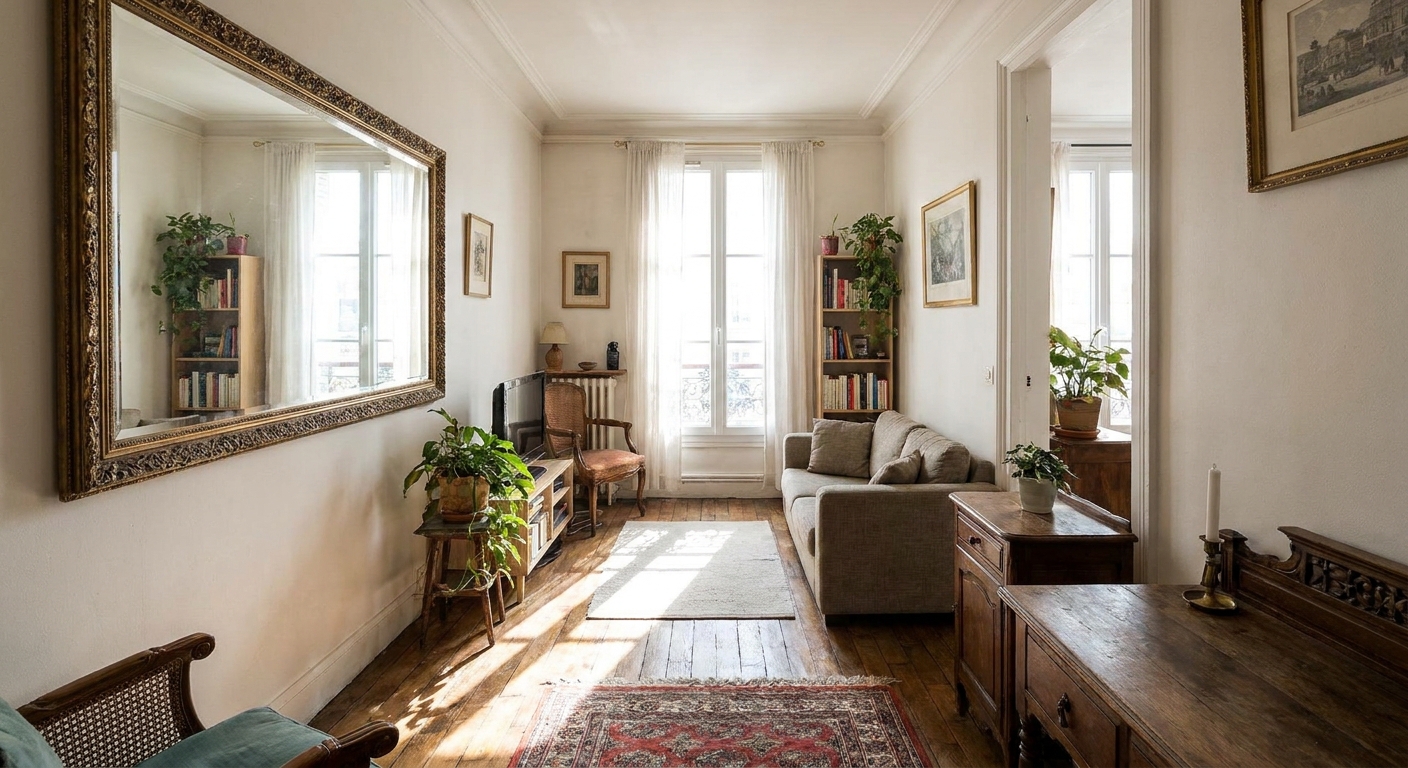
If you can do only one mirror in a small space, this is my favorite. A mirror on the wall across from a window can make it feel like you have two windows, especially in rentals where you cannot change much else.
- Where it works best: living rooms and bedrooms where the window is the main light source.
- Height tip: center the mirror roughly at eye level when you are standing, then adjust so you catch as much window as possible in the reflection.
- Small-space tip: go as large as you can without crowding furniture. One larger mirror usually looks calmer than several small ones.
2) On the wall perpendicular to the window
If the wall opposite your window is taken up by a sofa, TV, or a closet door, go perpendicular. This placement bounces light sideways into the deeper parts of the room, which is exactly where tiny apartments tend to feel dim.
- Best for: long, narrow living rooms and studio “bowling alley” layouts.
- Angle trick: if you are leaning a mirror, rotate it slightly until you see the brightest slice of window reflection. Even a small angle change can brighten a dark corner.
3) Beside the window (when glare is a problem)
If direct opposite creates uncomfortable glare (common with west-facing windows), try placing the mirror on the same wall as the window, just a foot or two to the side. You still get bounce, but usually with a softer feel.
Best placements with lamps and lights
4) Behind a table lamp
This is the easiest way to make one lamp feel like two. It is also a great workaround for apartments with a single overhead fixture that does not reach the corners.
- Where it shines: entry consoles, bedroom dressers, and behind-couch consoles.
- Bulb note: choose a warm or neutral bulb you like looking at. The mirror will amplify that glow.
5) Across from a ceiling light
Mirrors can help overhead light spread, but the placement matters. Too close, and you get a bright hotspot. Better is across the room at a height that catches the general glow.
- Good spot: a hallway mirror facing a ceiling fixture farther down the hall.
- Avoid: a mirror directly under a bare bulb or directly facing an exposed LED, which can feel harsh.
6) Near the darkest corner you use
In my current busy house, the darkest corner is always where the kids drop backpacks. In my apartment years, it was the “where do I put this chair” corner. Put a mirror there, and it stops feeling like dead space.
If your dark zone is an entryway, this pairs beautifully with a simple landing system. I mapped out my favorite approach here: Plan a Small Entryway Drop Zone.
Room-by-room ideas
Tiny living room
- Best: one large mirror opposite the window, or perpendicular if the opposite wall is taken.
- Also works: mirror behind a lamp on a side table to boost cozy evening light.
- Skip: reflecting the TV directly, which can create distracting glare.
Bedroom
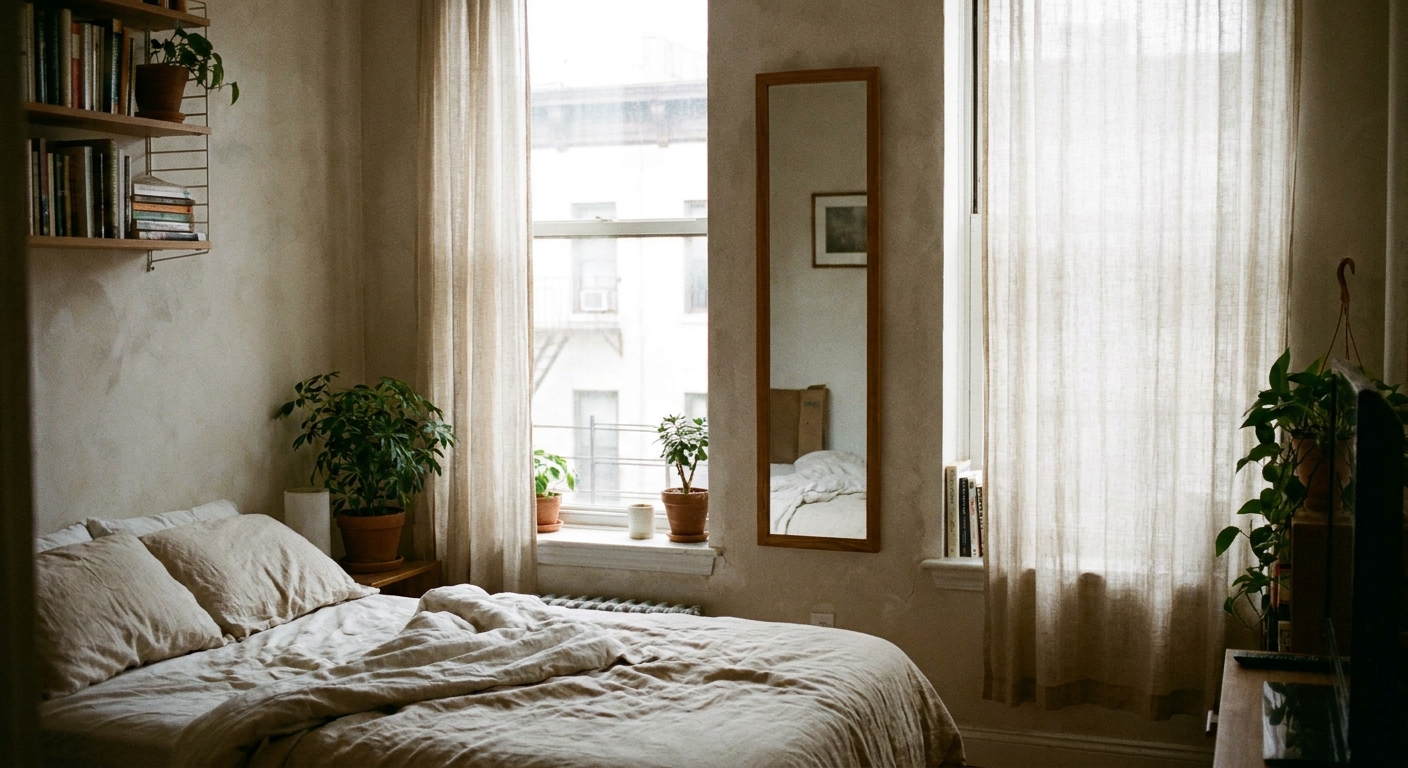
- Best: mirror perpendicular to the window to brighten the desk area without blasting you in the face.
- Leaning mirror tip: anchor it so it cannot tip, especially if you have kids or pets.
Narrow hallway
- Best: mirror at the end of the hall to “extend” it visually, or on the wall opposite the brightest doorway.
- Extra: if you can add a small lamp or sconce substitute, mirror placement will make it feel intentional instead of shadowy.
Kitchen and dining nook
- Best: mirror where it reflects a window or bright backsplash, not the sink full of dishes.
- Practical note: kitchens get splatter. Choose a frame and finish you can wipe down easily.
Bathroom
You already have a mirror, so think about upgrading its impact. If your vanity mirror is tiny and the lighting is sad, a wider mirror can bounce more light and make the room feel cleaner instantly. If you cannot change it, add a second small mirror on the wall perpendicular to the vanity light to spread brightness.
How high to hang a mirror
People get stuck here, so I use a simple rule: hang for the view you want to multiply.
- To maximize window light: hang so the mirror captures the window (or the sunlit floor patch) in its reflection.
- To make ceilings feel taller: hang slightly higher than you normally would, but avoid going so high that all you reflect is ceiling.
- Full-length mirror: if you can, place it so you can step back 3 to 5 feet. In tight bedrooms, that often means across from the closet or angled near the window.
Leaning vs hanging
Both work, but they behave a little differently.
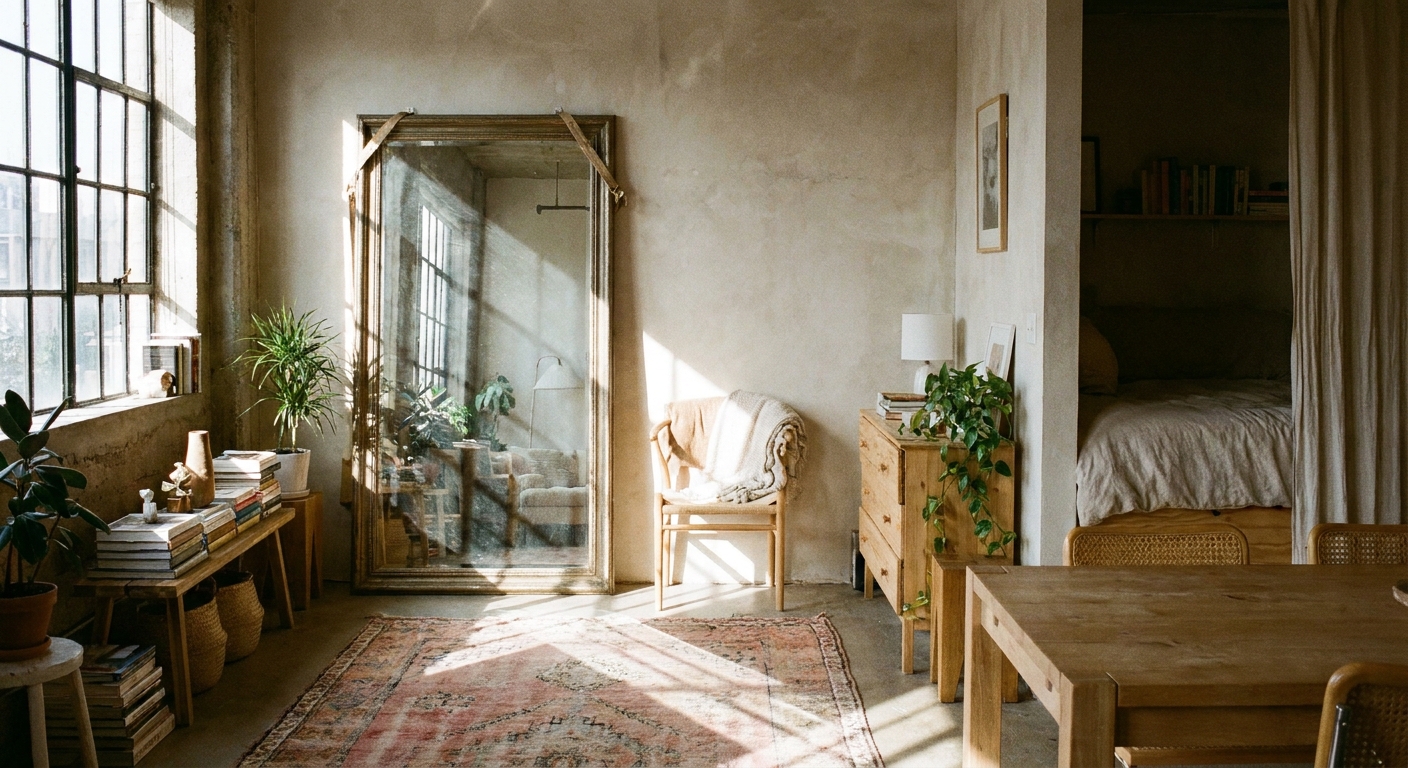
- Leaning mirrors: great for bouncing light downward and into the room. Perfect when you want a brighter floor area or you are trying to lift a dim corner.
- Hanging mirrors: more stable, cleaner look, and better if you need the reflection to sit at a specific height for daily use.
Renting and worried about holes? Leaning is your friend, just make sure it is secure. In my house, I treat a leaning mirror like I treat a baby gate: it needs to be steady enough for real life, not just for a photo.
Common mirror mistakes
- Mirroring clutter: if the mirror faces your laundry chair, it will double your stress. Rotate it until it reflects something calmer.
- Too many tiny mirrors: in small spaces, lots of little reflective spots can look busy. One or two larger pieces usually read as more intentional.
- Glare in the wrong spot: if the mirror throws light directly into your eyes while you sit, it will never feel relaxing. Shift it a few inches or change the angle.
- Reflecting a dark void: mirrors do not create light out of nowhere. They amplify what is already there, so pair them with lighter walls, curtains, or a lamp.
If you are also working on color choices to help with brightness, you may like: Paint Colors That Make a Small Room Look Bigger.
A 10-minute test drive
This is the little routine I do when I am not sure.
- Clean the mirror. Dust and smudges actually dull the light bounce.
- Prop it temporarily. Use a sturdy chair or stack of books on the floor (safely) to mimic hanging height.
- Check three times of day: morning, mid-afternoon, evening with lamps on.
- Stand in your main spots: sofa, bed, desk. If it adds glare, shift it.
- Take a quick photo. Your eyes adjust to dim rooms. Photos reveal what is truly brighter.
FAQ
Should I put a mirror directly across from a window?
Usually, yes. It is the strongest placement for maximizing natural light. If it causes uncomfortable glare, move the mirror perpendicular to the window or place it beside the window instead.
Do mirrors make a room look bigger or just brighter?
Both, when they reflect light and a sense of depth. A mirror reflecting a window or an open sightline can visually expand a room. A mirror reflecting a crowded shelf mostly just doubles the crowded feeling.
What size mirror is best for a tiny apartment?
If your goal is “brighter and bigger,” bigger mirrors tend to work better than small ones. I would choose one medium-to-large mirror over a cluster, unless you are intentionally creating a gallery wall look.