Stop sacrificing your walkway. Learn the real dimensions to shop for slim-depth, low-profile sofas, consoles, media units, and tables—plus clearance targets ...
Area Rug Size and Placement Rules for Small Living Rooms

Published · Last updated
I used to think buying a rug for a small living room was basically a coin toss. In my first studio apartment, I picked a “cute” rug that fit the empty floor, then wondered why the room felt chopped into little zones and the furniture looked like it was floating. The fix wasn’t fancy design knowledge. It was a few repeatable sizing and placement rules that make the whole room read as one calm, grounded space.
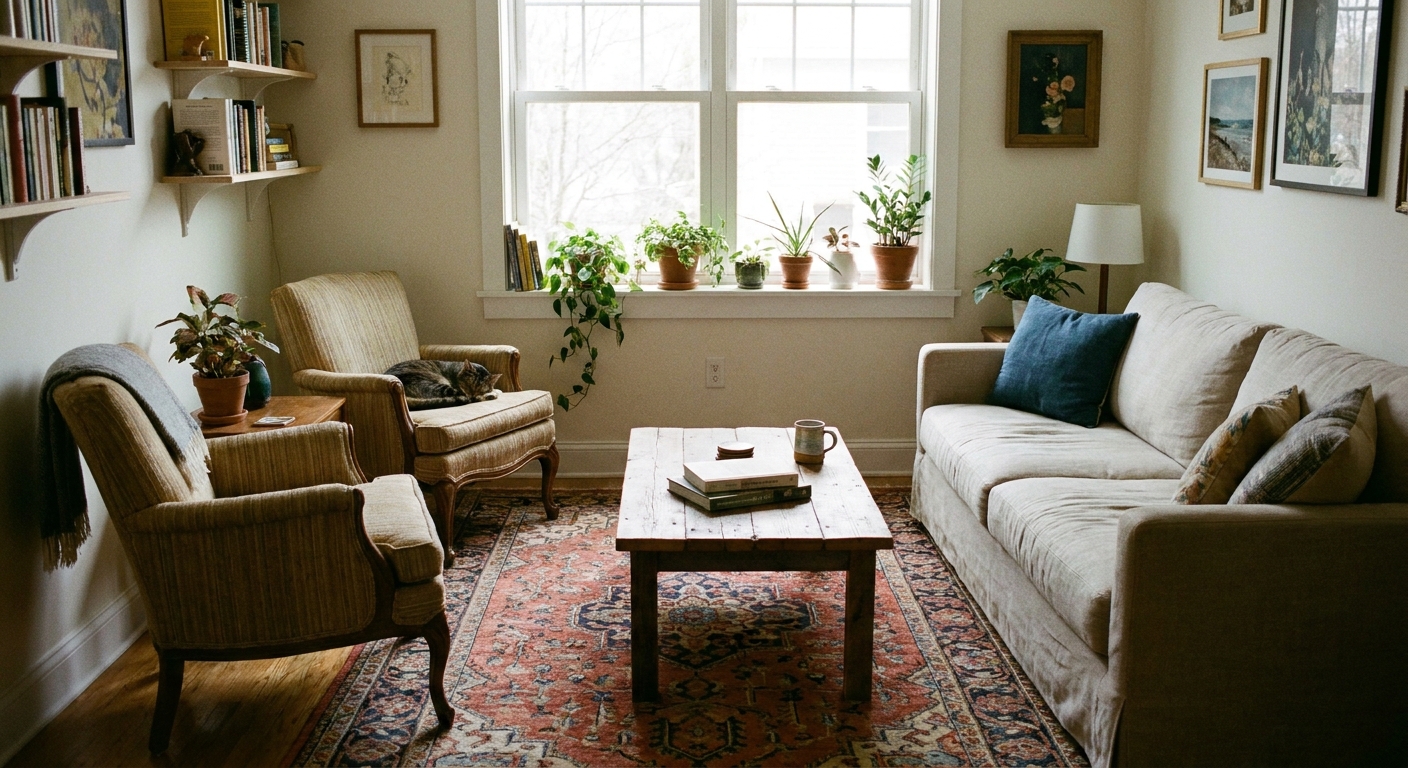
This guide walks you through how to pick the right rug dimensions and where to place it so your furniture feels connected without visually shrinking the room.
The 3 rules that help a small room
Rule 1: Anchor the front legs
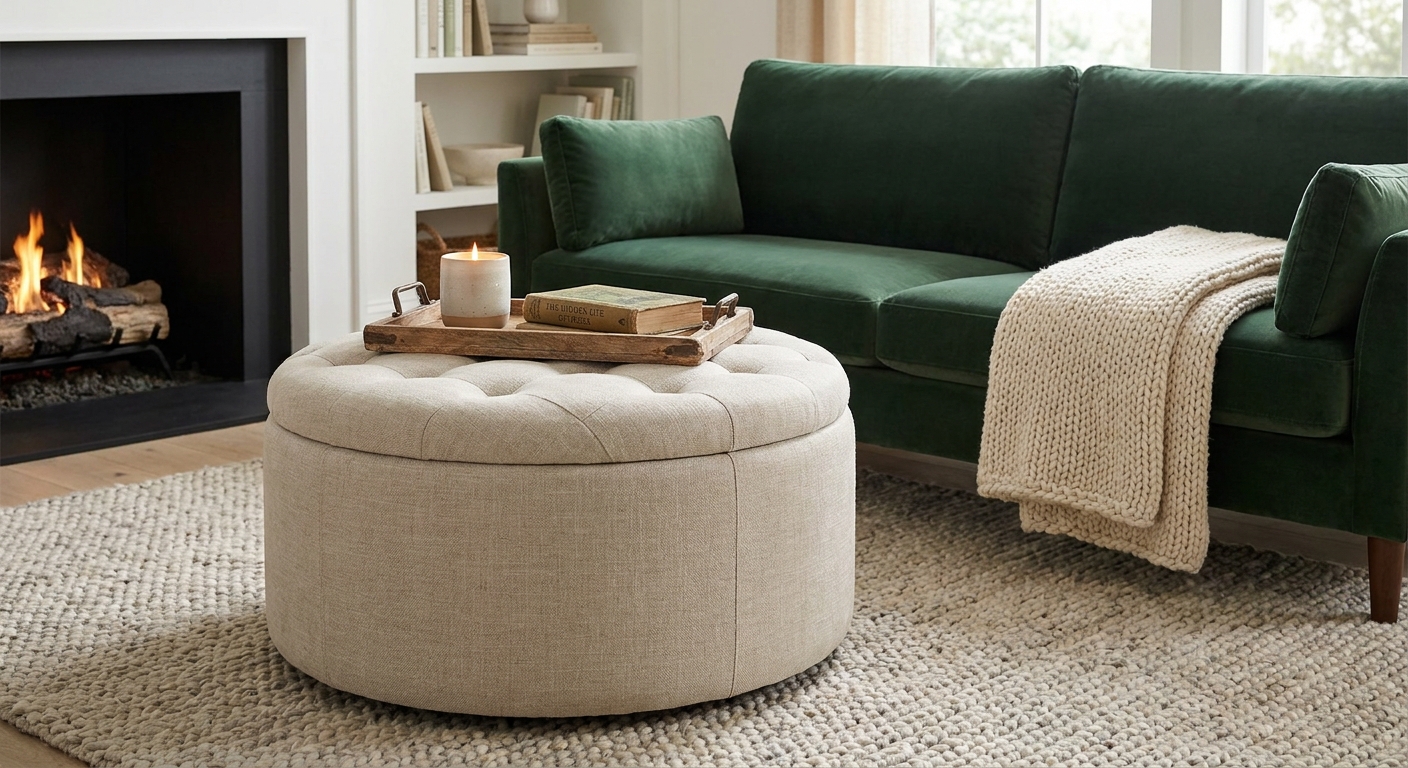
In most small living rooms, the easiest “looks right” target is this: the front legs of the sofa and chairs should sit on the rug. It ties the seating together and stops that scattered, floating feeling.
- Minimum: front legs on the rug (back legs can be off).
- Better: all legs on the rug for the sofa and chairs, if the room allows it.
Rule 2: Go bigger than your first instinct
A rug that is too small makes a small room feel smaller. It highlights every edge and creates a little “island” effect. A slightly larger rug, even in a tight space, often makes the room feel more open because the eye reads one continuous zone.
Rule 3: Keep a consistent border (when you can)
If you can, aim for a clean, even strip of visible floor around the rug. In many small rooms, about 6 to 12 inches looks intentional and keeps the rug from feeling wall-to-wall.
If your room is truly tight, 3 to 6 inches can still look great, especially in rentals where door swings and baseboard heaters make “perfect” spacing unrealistic.
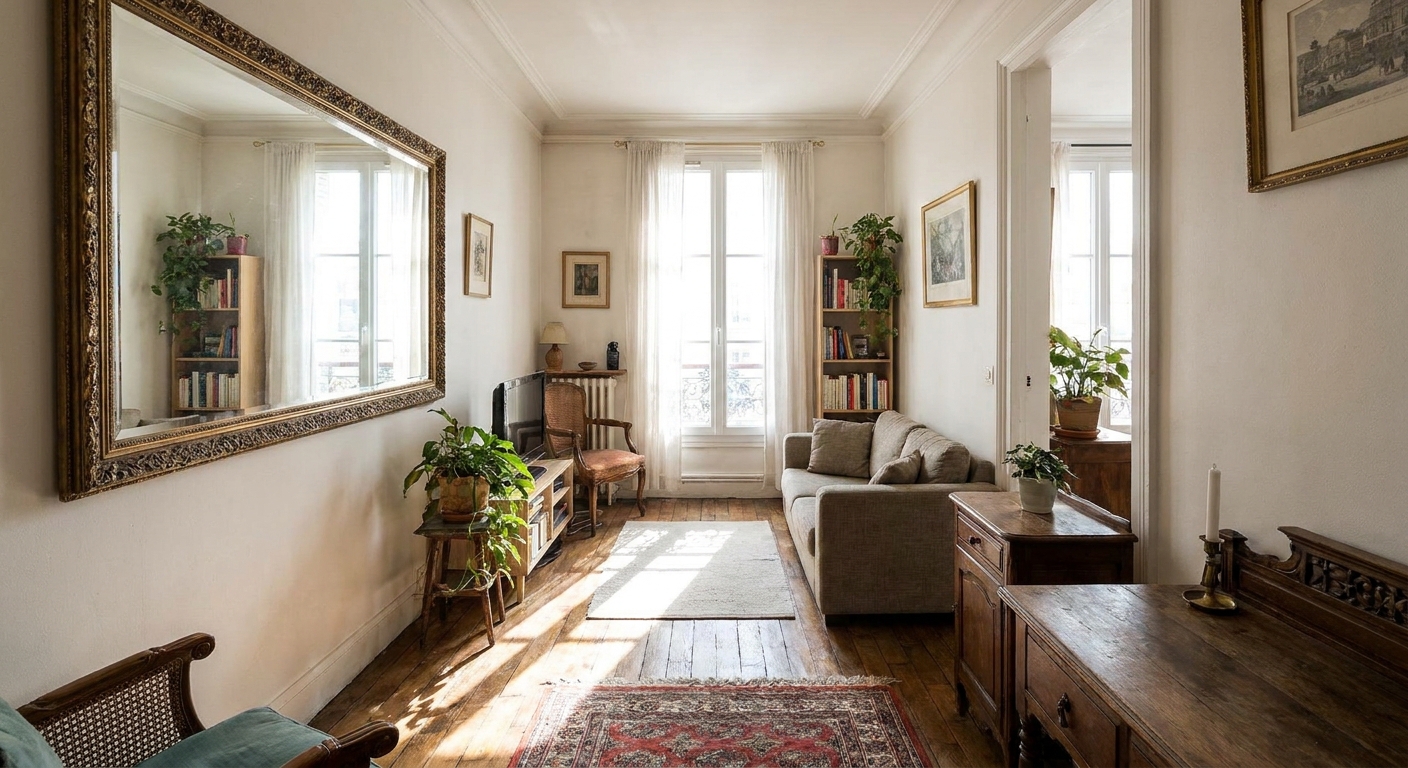
Exception: If your living room is very narrow, it can look better to run the rug closer to the wall on one long side and keep the walkway side more open.
Quick rug size cheat sheet
These are the sizes I see work most often in real, lived-in small spaces. Your exact “right” size depends on furniture width and whether you are anchoring just the seating or also a media console.
| Rug size | Best for | Placement sweet spot |
|---|---|---|
| 4 ft × 6 ft | Very small seating area, loveseat, or a single chair plus small sofa | Works best when it reaches under front legs. Often feels small in an 8 ft+ wide room. |
| 5 ft × 8 ft | Most small apartments and compact living rooms | Front legs of sofa and chairs on rug, coffee table centered. |
| 6 ft × 9 ft | Small room with a full sofa and two chairs, or a small sectional | Front legs on, plus more breathing room around the coffee table. |
| 7 ft × 9 ft (or 7'6" × 9'6") | When 6 × 9 feels a touch narrow, but 8 × 10 feels like too much | A great in-between for anchoring a standard sofa and chairs without swallowing the borders. |
| 8 ft × 10 ft | An open-plan “small” living area that still needs a big anchor | Can be the best choice if it fits with functional walkways and door clearance. |
If you are torn between two sizes, I usually vote for the larger option as long as it does not block door swing or create a tripping edge in a main walkway.
Measure and choose (no guesswork)
Step 1: Measure the seating zone, not the whole room
In small living rooms, the rug’s job is to define the conversation area. Measure:
- Width of the sofa
- Distance from the sofa front to where the coffee table ends
- Chair placement, if you have chairs (including a little “drift” space, since chairs rarely stay perfectly pushed in)
Step 2: Add landing space around the coffee table
A good rug gives you a little extra rug showing around the coffee table so it does not look cramped. As a starting point, aim for about 8 to 12 inches of rug visible on all sides of the coffee table.
If your coffee table is oversized or your walkway is tight, prioritize stable placement and comfortable clearance over hitting a perfect number.
Step 3: Sanity-check with one real example
Here’s a quick way to picture it: if your sofa is around 84 inches wide (a pretty common “standard sofa” size), a 5 × 8 can feel tight because it may not extend much past the sofa arms once it’s pulled under the front legs. In that same setup, a 6 × 9 or 7 × 9 usually gives you that extra side breathing room without having to rearrange the whole room.
Step 4: Use painter’s tape before you buy
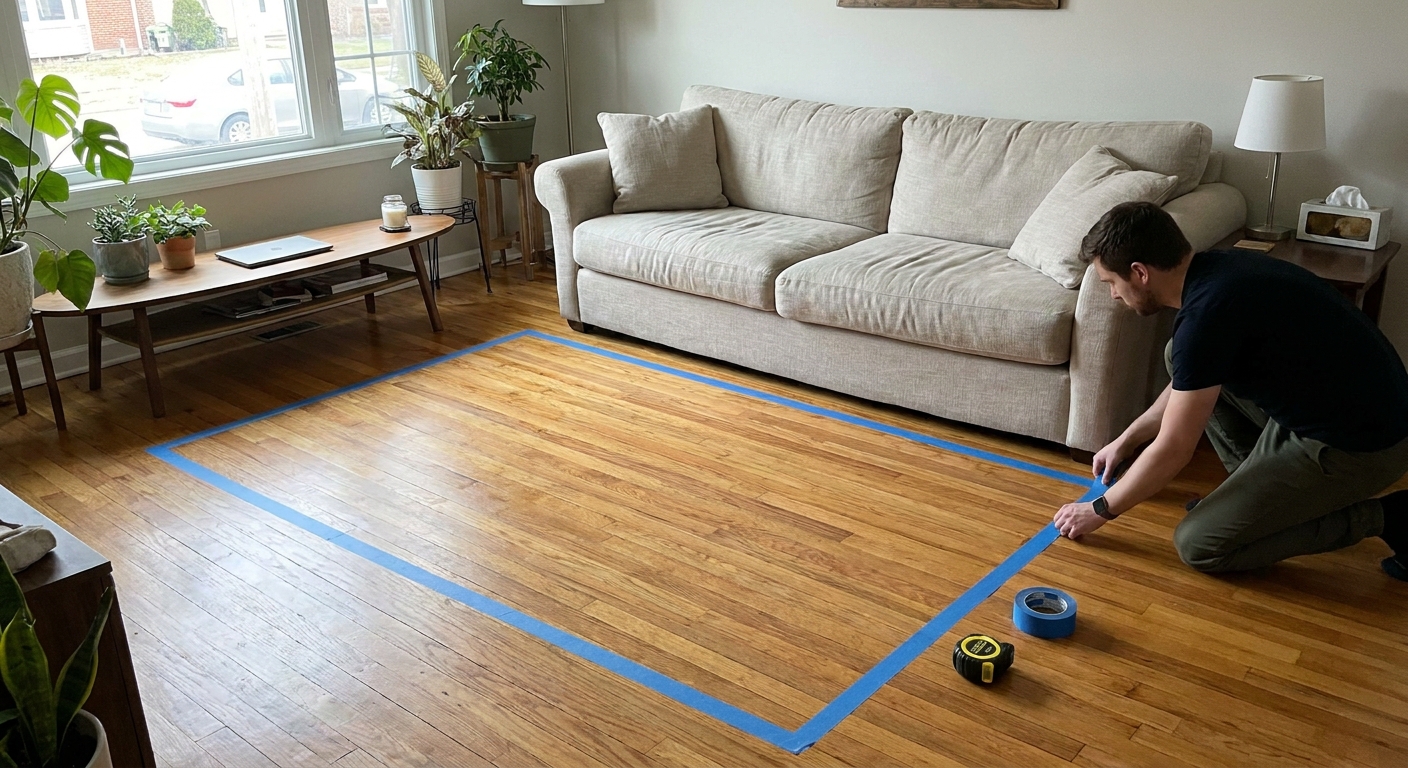
This is my favorite low-effort trick. Tape the outline of the rug size on the floor. Live with it for a day. Walk around it. Open drawers. Let the dog do their zoomies. If the taped outline constantly catches your eye as an obstacle, size up or adjust placement.
If you love space-maximizing moves like this, you might also like our Small Spaces guide for layout and storage ideas that pair well with smart rug placement.
Placement by layout
Standard sofa facing a TV
- Center the rug on the sofa, not on the room.
- Pull the rug under the sofa’s front legs by a few inches so it reads connected, not “parked in front.”
- Keep the coffee table fully on the rug whenever possible.
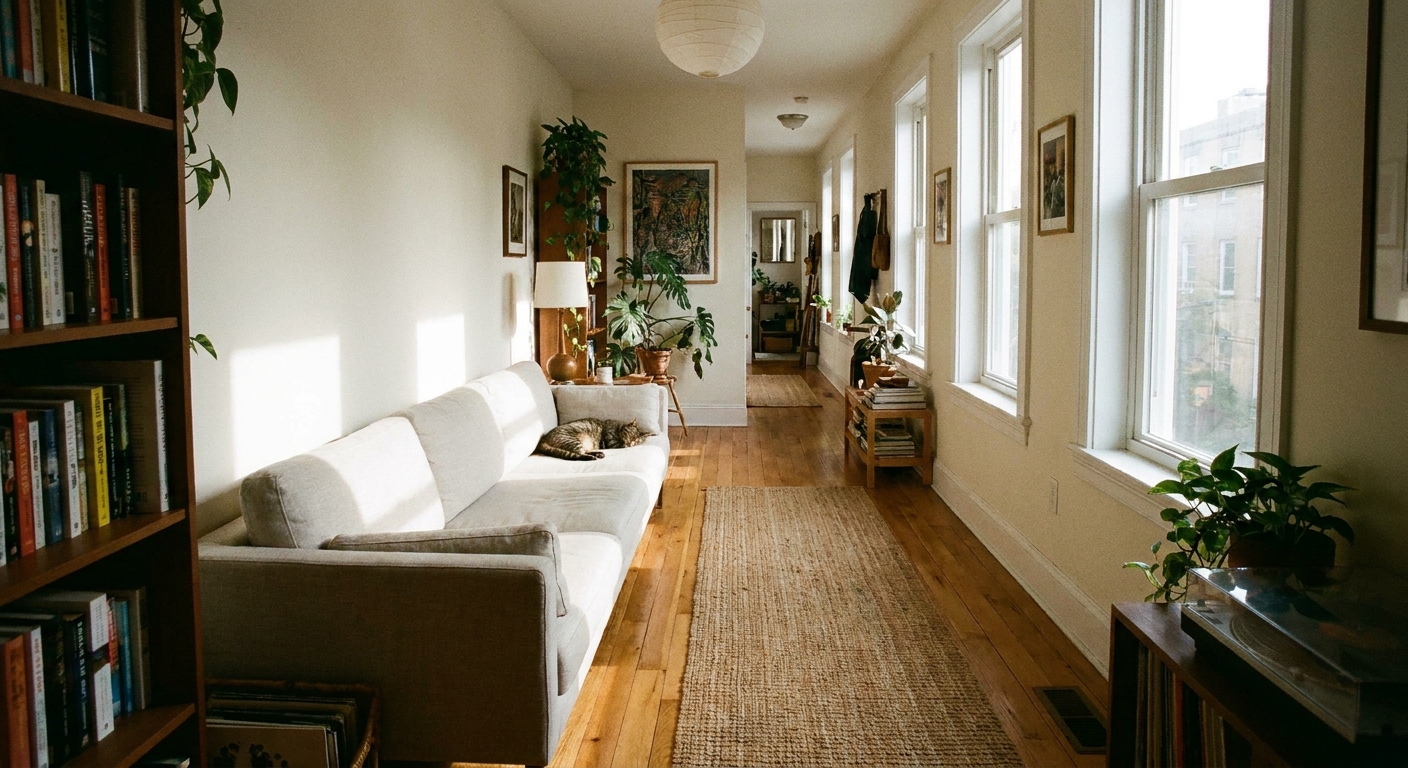
In narrow rooms, it is usually better for the rug to run long in the same direction as the room. A long rectangle helps your eye move through the space instead of stopping at a short edge.
Sectional in a small living room
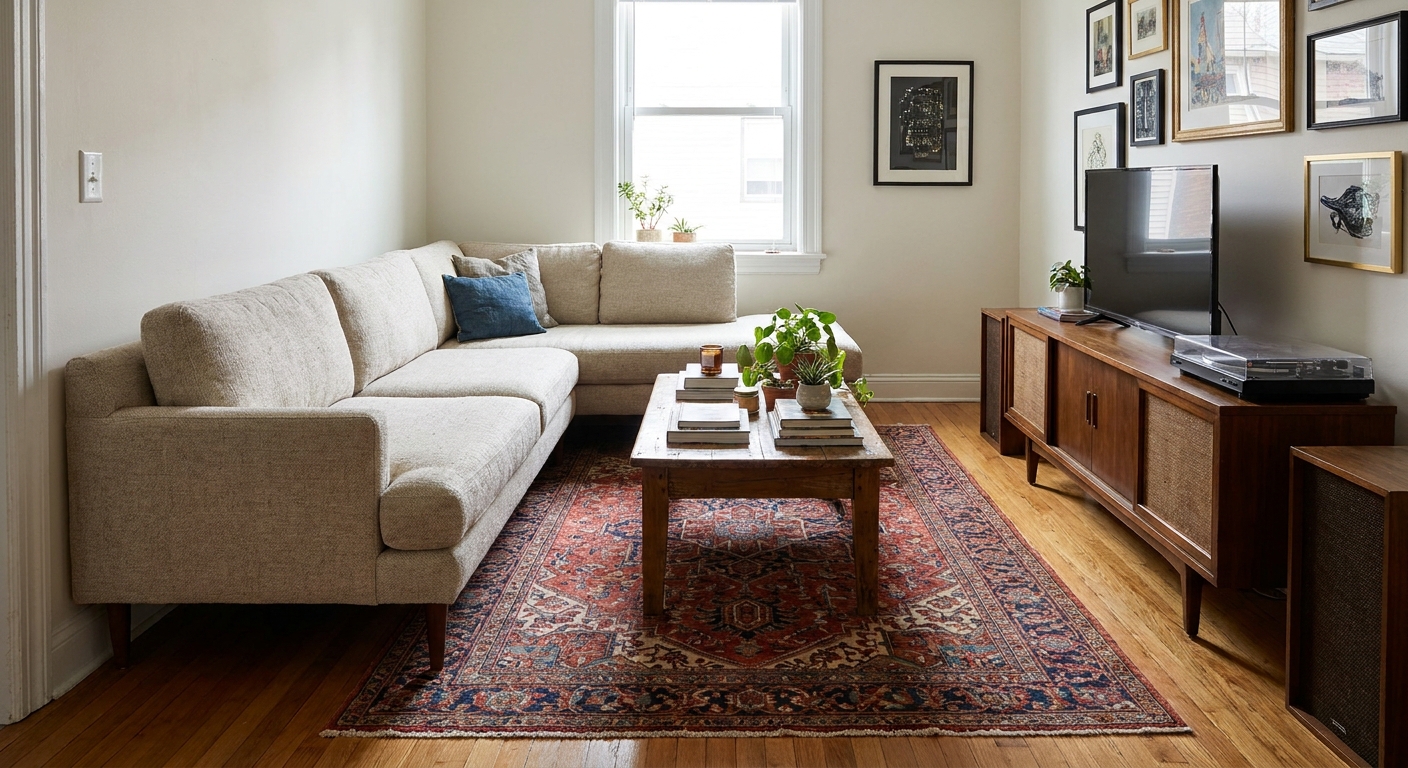
Sectionals can make rug sizing feel impossible because they take up so much footprint. The trick is to size the rug for the “L” seating zone.
- Try to get both legs of the L to have front legs on the rug.
- If one side must be off, keep the longer run anchored on the rug and let the chaise side float.
- Place the rug so it extends beyond the chaise edge slightly, not just to it.
Two sofas facing each other
This setup can look incredibly cozy, but only if the rug is large enough to unify both pieces.
- Best case: both sofas’ front legs on the rug.
- Make sure there is still a comfortable walkway around the group, even if it is tight.
Loveseat plus chairs
If your living room is truly tiny, a loveseat and two small chairs can be more flexible than a full sofa. In this layout, choose a rug that reaches under the chair front legs so they do not feel like they are perched on the edge. (Bonus points if it still works when a chair slides forward a few inches.)
Common mistakes
Buying a rug that only fits under the coffee table
This is the “postage stamp” rug: a tiny rug marooned under the coffee table. It is not wrong because it is small. It is wrong because it disconnects the seating. If the rug only touches the coffee table, it is not anchoring anything.
Centering the rug in the room instead of the furniture
In small spaces, furniture placement leads and rugs follow. Centering the rug in the open floor can push it away from the sofa and create a visual gap that feels awkward.
Leaving a big strip of bare floor between sofa and rug
A gap can make the seating feel like it is hovering behind the “real” living area. Pull the rug toward the sofa until the front legs land on it.
Using multiple small rugs that compete
Sometimes you need more than one rug, but in a small living room, multiple rugs often create visual noise. If you want more softness without the choppy look, consider one larger rug for the seating zone and keep other textiles minimal.
Rug shape tips
Rectangles are the easiest win
They align with sofas, media consoles, and most room shapes. If you want the room to feel longer, run the rug lengthwise with the room.
Round rugs work in tight corners
A round rug can be great if you have a small sectional with a rounded coffee table, or if you are softening a boxy room. Just make sure the round rug is large enough that at least the front legs of nearby seating can touch it.
Runners can work, but choose carefully
A runner can work in a narrow space if the “living room” is basically a pass-through zone. In that case, it is more about comfort underfoot and guiding traffic than anchoring a full conversation area.
Layering rugs (without the mess)
Layering can add texture without committing to an expensive large pattern rug. The key is to keep the bottom layer calm and generous.
- Use a larger neutral base (jute, sisal-look, flatweave).
- Layer a smaller patterned rug on top, centered under the coffee table.
- Keep the top rug big enough that it does not look like a bathmat in the middle of the room.
Practical note from my own house: if you have kids, pets, or both, low-pile and washable styles tend to earn their keep fast.
Details that make it look finished
Leave a little floor showing
That border helps the rug feel like a deliberate choice, not something squeezed in. For many small rooms, 6 to 12 inches is a solid target, but if you can only manage 3 to 6, that can still look clean and intentional.
Match pattern scale to room scale
In a small room, an oversized pattern can feel busy, while a tiny repeating pattern can look like visual static. If you want pattern, medium-scale designs often read the calmest from across the room.
Use a rug pad, but watch door clearance
A rug pad keeps edges from curling and reduces sliding, which matters more in tight layouts where you are constantly stepping around furniture. One quick heads-up: thick pads plus plush rugs can snag doors or make them drag, especially in apartments with tight clearances. If you have a nearby door swing, a thinner pad and a lower-pile rug are usually the smoother combo.
If your living room is small because the whole home is, you may also like paint colors that make a small room look bigger. Rug size and wall color together can do a lot of heavy lifting.
FAQ
Should a rug go under the sofa in a small living room?
Yes, if you can manage it. Even just the front legs on the rug helps the whole setup feel anchored. Full sofa-on-rug looks great too, but it is not required in a small space.
How far should the rug extend past the sofa?
A helpful guideline is around 6 to 12 inches past each side of the sofa if space allows. If you cannot get there, do not panic. Consistent placement and front-leg anchoring matter more than a perfect side overhang.
What if my room is too small for the “right” rug size?
Prioritize these two things: (1) front legs of seating on the rug, and (2) coffee table on the rug. If you can accomplish that, you are in a good place even if the rug is not perfect by showroom standards.
Can I put the rug closer to the TV stand?
You can, but don’t push it away from the sofa to do it. In small rooms, the rug’s main job is to connect the seating. If the media console ends up off the rug, that is usually fine.
A simple shortcut
If you only remember one thing: choose the largest rug that lets your main seating’s front legs sit on it and still keeps walkways and door swings functional. In small living rooms, that single choice often makes the whole room feel calmer, more finished, and surprisingly bigger.
For more everyday decorating that works in real homes, you can browse our Home Decor guide.