Make small rooms feel taller and calmer with floating shelves. Learn where to hang them, install them securely, and style with negative space, balanced group...
Over-the-Toilet Storage That Keeps Bathrooms Looking Open

Published
The space above the toilet is one of those awkward “should be useful” zones that small bathrooms waste. I have lived through enough rentals with one sad vanity drawer to know the temptation: add a big cabinet, cram it full, and call it solved. The problem is that bulky over-the-toilet storage can make a tiny bathroom feel like it is leaning in on you.
The sweet spot is storage that holds the essentials while keeping the room visually open. Think lighter profiles, fewer hard edges at eye level, and a setup that is easy to keep tidy in real life (because if it is annoying to use, it turns into clutter).
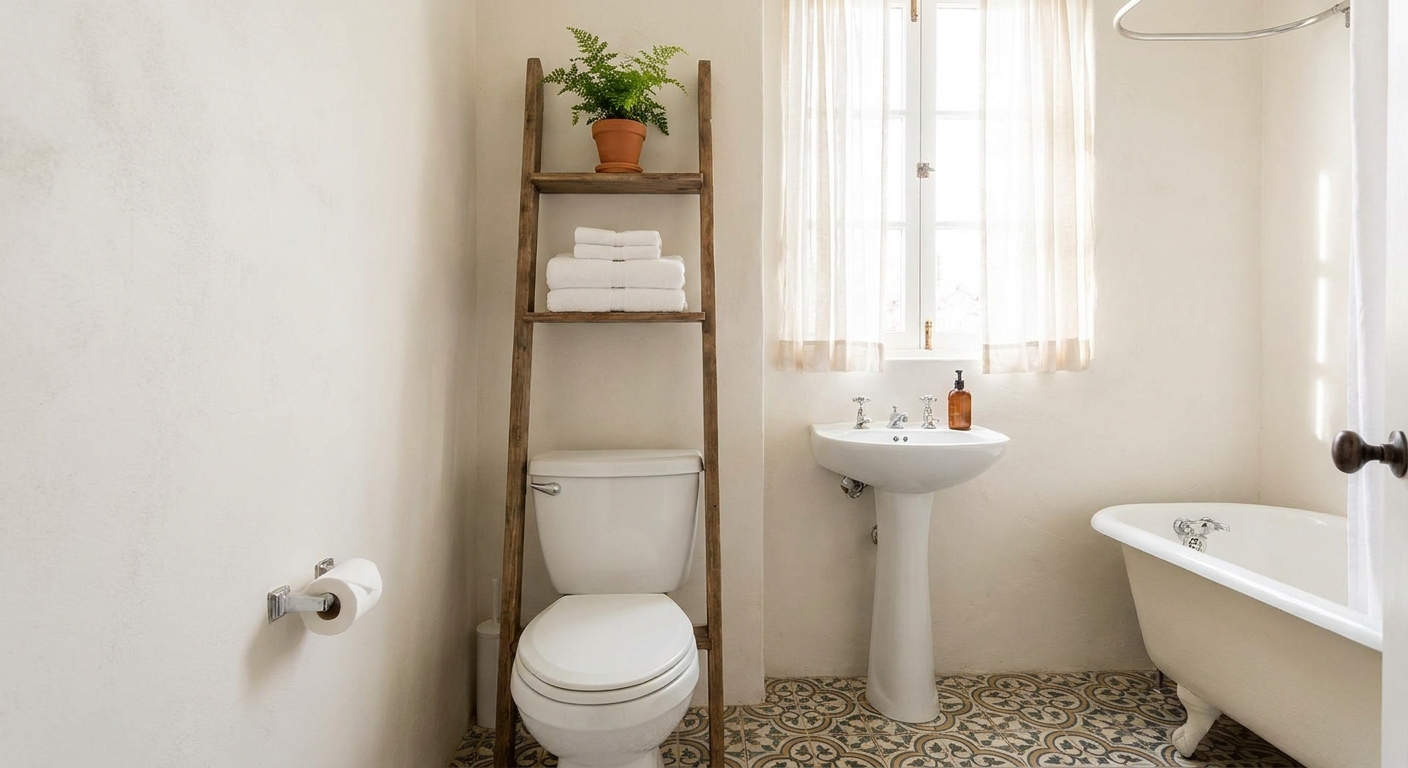
Before you buy anything: 7 quick checks
These take five minutes and save you from the classic mistake of buying a unit that technically fits but makes the whole bathroom feel tighter.
- Measure the “usable” height: from the top of the toilet tank lid to where you want the first shelf or cabinet bottom to start. I like leaving several inches so you can lift the tank lid without bumping anything.
- Check the flush handle and lid swing: if a shelf is too low or too deep, you will feel it every single day.
- Look at standing and head clearance: account for the tallest person in your home. Anything sharp at forehead height is a bad surprise in a tight bathroom.
- Look at door and elbow clearance: in narrow baths, the over-toilet piece can become the thing you smack into while turning around.
- Find studs (or plan for anchors): floating cabinets are wonderful, but only if they are mounted properly. If you rent, choose options that can be secured discreetly. Any truly secure anchoring usually means small holes you will patch later.
- Do not block access: make sure you can still reach the shutoff valve and any access panels. Storage is not helpful if it turns a quick fix into a hassle.
- Decide what must live there: backup toilet paper, extra towels, cleaning supplies, skincare? Knowing the “inventory” helps you pick open shelves versus closed storage.
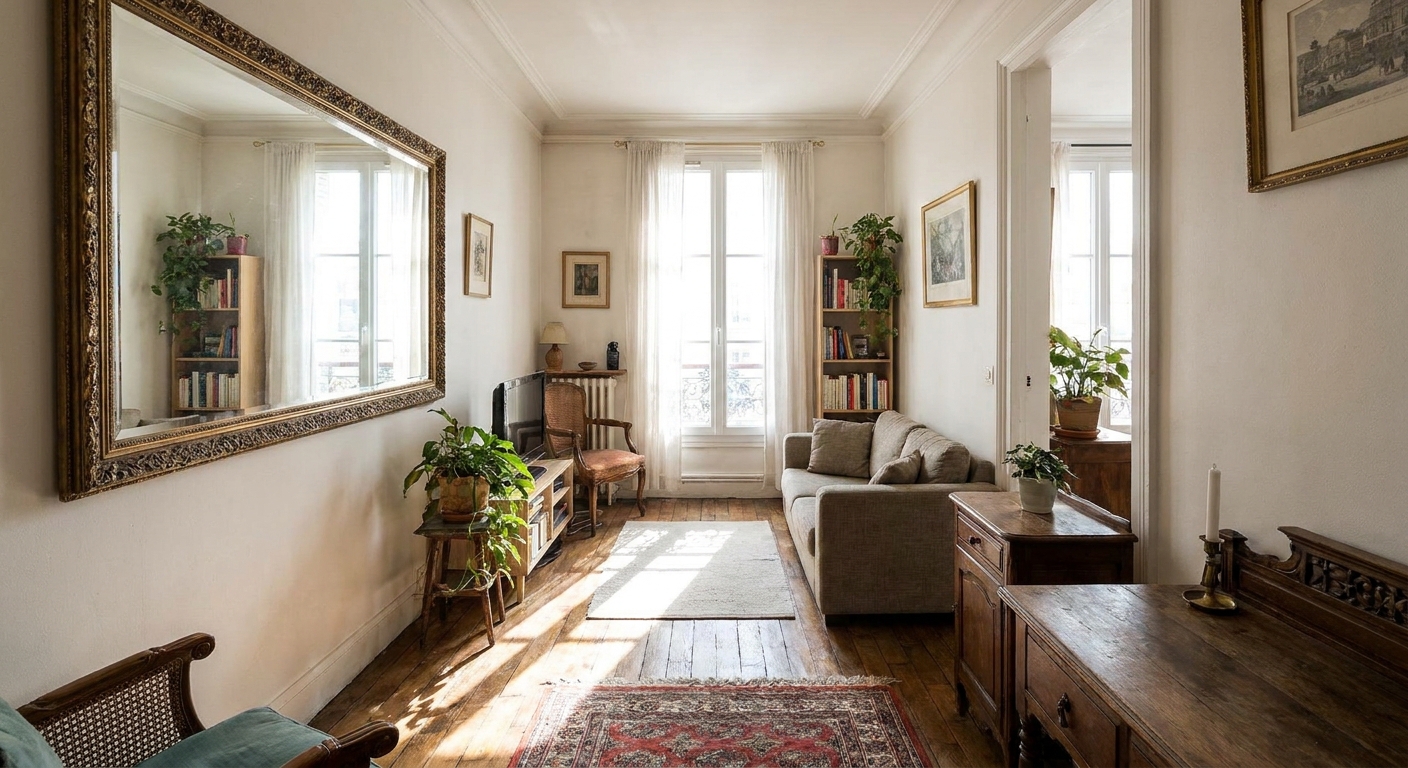
If your bathroom already feels dim, pairing storage with light-bouncing choices elsewhere can help. I like using mirrors strategically, and this guide is full of practical placements: Best Mirror Placement for More Natural Light in Tiny Apartments.
Material matters in bathrooms
Bathrooms are humid, and over-the-toilet storage sits right in the splash and steam zone. If you want it to look good for longer than one season, pick finishes that can take it.
- Best bets: powder-coated metal, sealed wood, and quality plywood with a durable finish.
- Be cautious with: MDF or particleboard in a steamy bathroom, especially if edges are not well sealed. They can swell over time.
- Ventilation helps everything: if your fan is weak (or nonexistent), lean toward closed storage for visual calm, but avoid stuffing it so tight that towels never dry.
- Cleaning reality check: shallow shelves are easier to wipe, and a tray or bin you can lift out makes weekly cleaning feel less annoying.
Solution 1: Ladder shelves
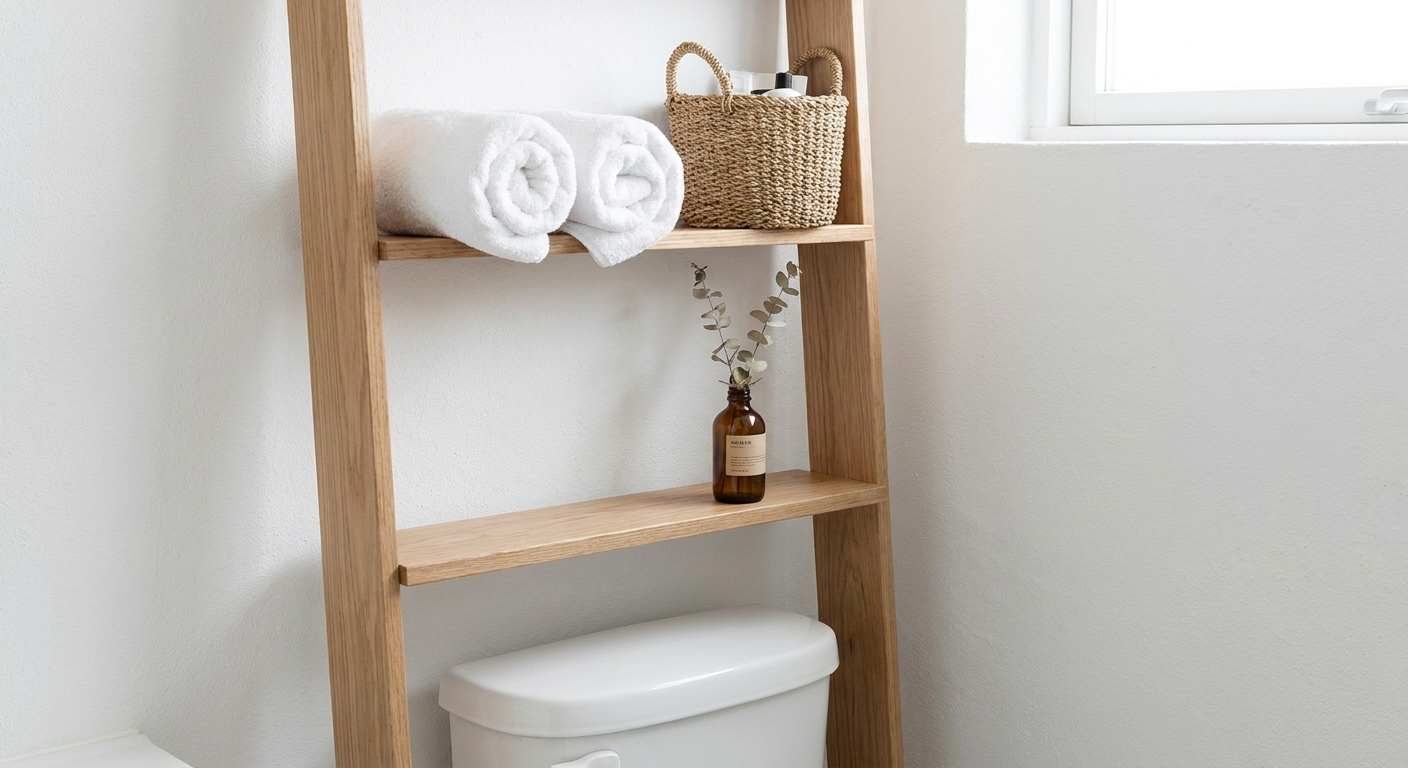
If you want storage that feels more like decor than furniture, a ladder shelf is usually the easiest win. Because the sides are open and the shelves are visually light, it adds function without that boxed-in feeling.
Why it keeps a small bathroom looking open
- Open sides let your eye travel, which reads as more space.
- Narrow shelves force you to store “edited” quantities (a good thing in tiny bathrooms).
- Less visual weight than a full cabinet hovering at head height.
What to store on a ladder shelf
- Top shelf: seldom-used extras (backup soap, spare toothpaste, travel kits)
- Middle shelves: rolled towels, tissues, a small tray for daily items
- Bottom shelf: toilet paper in a basket, or a lidded bin for not-so-pretty basics
My “do not make it look messy” rule
Use two containers max and make them repeat (same color or material). A busy mix of bottles and mismatched baskets is what turns open shelving into visual clutter.
Solution 2: Floating cabinets
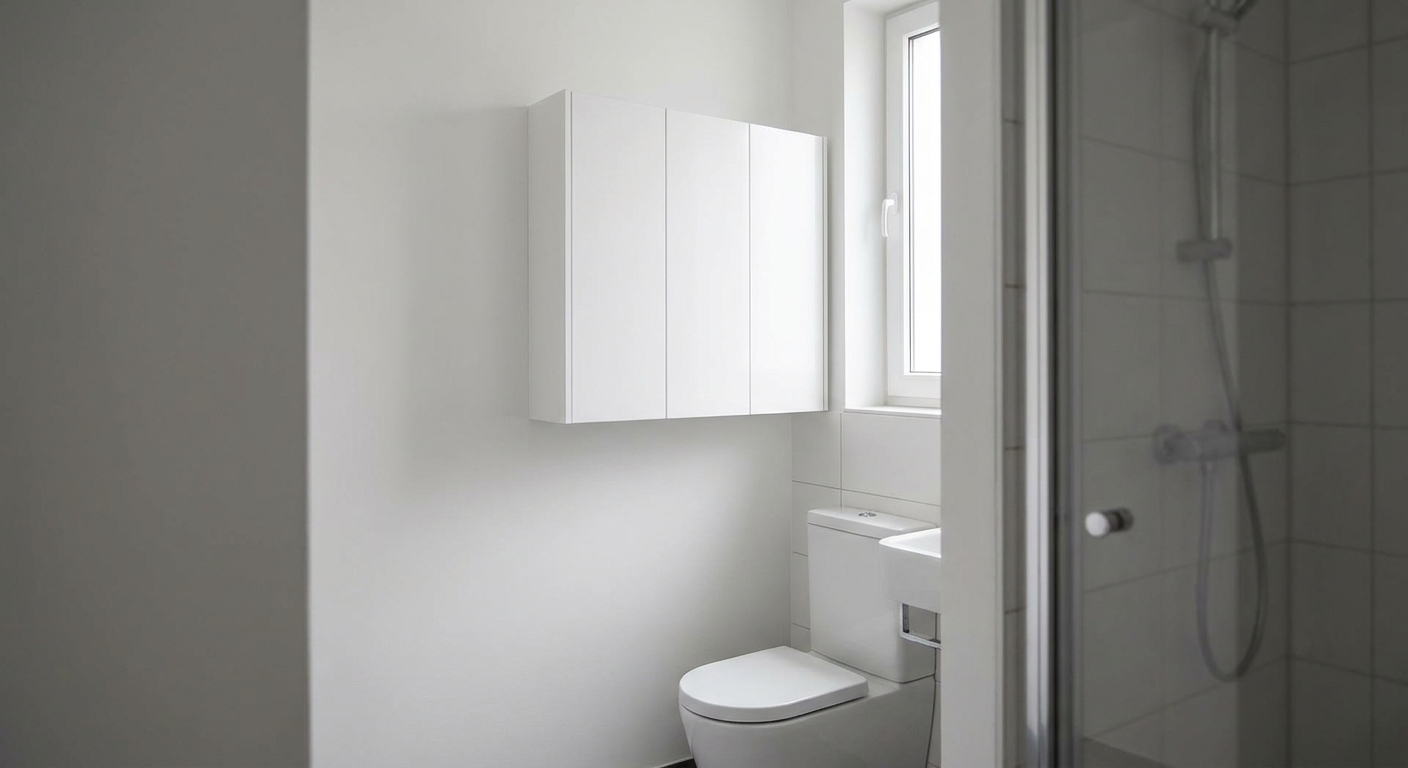
Floating cabinets are the best choice when you need to hide a lot and still want the room to feel calm. Closed doors instantly reduce visual noise, which is a big deal in a bathroom where you see everything at once.
How to choose a floating cabinet that feels light
- Go shallow: depth matters more than height. A slimmer cabinet keeps the “walkway” feeling open.
- Pick a finish that blends: a cabinet close to your wall color disappears faster than a high-contrast block.
- Try a single door or two slim doors: fewer breaks in the front looks cleaner.
- Leave a little breathing room: mounting it a bit higher (without being awkward to reach) helps it feel less looming.
What to store inside (so it does not become the junk cabinet)
I like organizing a floating cabinet by “zones,” especially in family bathrooms:
- Top shelf: backstock (refills, extra shampoo, unopened toothpaste)
- Middle shelf: first aid basics and meds in a small bin
- Bottom shelf: cleaning wipes, toilet brush refills, anything you want out of sight
Tip from my own chaotic-household life: keep one small “grab bin” per person for daily items that tend to drift onto the counter.
Solution 3: Narrow over-toilet racks
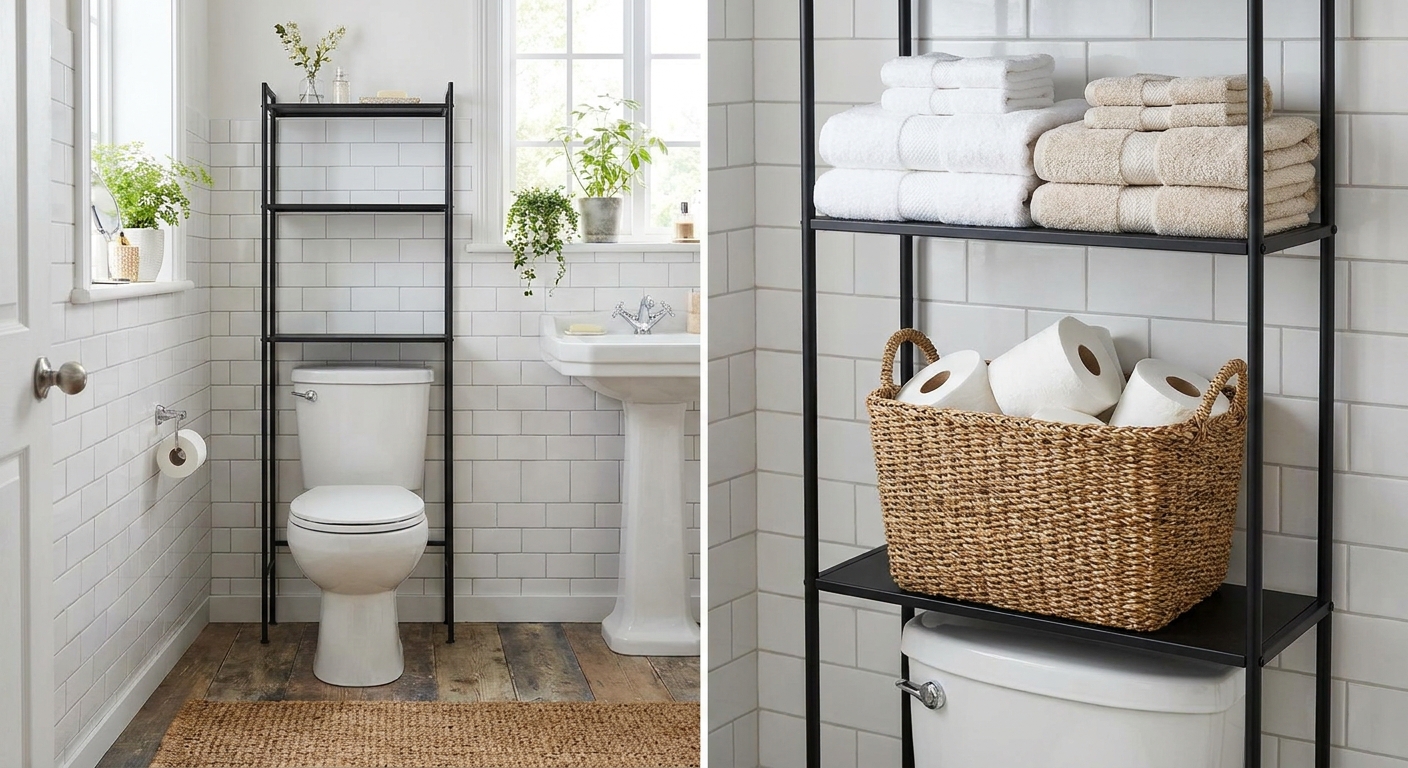
If your bathroom is extremely tight, a narrow rack is often the style that works without bumping shoulders. These are typically tall and slim, designed specifically to straddle the toilet tank and use vertical space efficiently.
When a narrow rack is the right call
- You need storage, but the bathroom cannot handle deep shelves.
- You want something more stable than wall shelves but less bulky than a full cabinet.
- You have a pedestal sink or very small vanity and need an “elsewhere” for supplies.
How to keep it from looking crowded
- Stick to three categories: for example toilet paper, towels, and a small bin of backup toiletries.
- Use vertical stacking: tissue boxes, extra TP, and folded towels stack neatly and look intentional.
- Hide the odd shapes: hair tools, sprays, and cleaning bottles look best in a lidded container.
Solution 4: Floating shelves
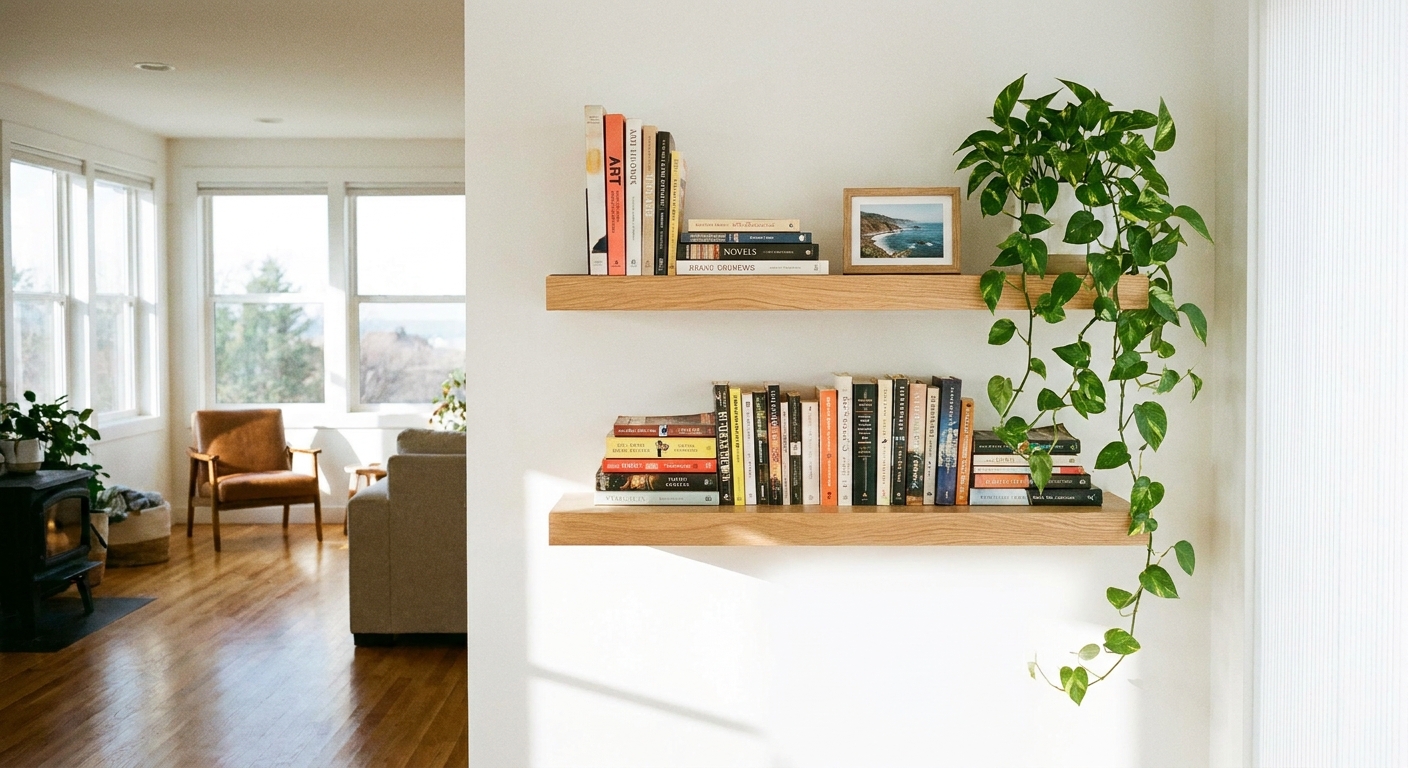
If you like the lightest possible look, a couple of floating shelves above the toilet can be enough. This works best when you are disciplined about what lives there.
My favorite shelf setup
- Two shelves, not three. Three often starts to look busy.
- Bottom shelf for daily-use items in a tray (so the shelf still looks tidy).
- Top shelf for backups in one basket.
If you want more ideas for keeping wall storage pretty without sacrificing function, you will like: Styling Floating Shelves Without Losing Floor Space.
Solution 5: Slim cabinet plus mirror
Here is a trick I used in a studio apartment bathroom that had exactly zero charm: if you can combine storage with a reflective surface, the whole room feels brighter and less cramped.
- A mirrored medicine cabinet style over the toilet (if the layout allows) can hide clutter and bounce light.
- If you already have a vanity mirror, choose an over-toilet cabinet in a light finish and keep the styling minimal so the mirror still wins visually.
For more “make it feel bigger” ideas that work in tiny rooms, this is a helpful companion read: Paint Colors That Make a Small Room Look Bigger.
What makes it look cluttered
I say this with love, because I have done every one of these at least once.
Problem: too many small items on open shelves
Fix: corral them into a tray or one basket. If you can pick it up with one hand, it is easier to clean and it looks calmer.
Problem: mismatched packaging and bright labels
Fix: move backups into neutral bins, or decant daily items (even just grouping them inside one container helps).
Problem: a big dark unit that dominates the wall
Fix: swap to a lighter finish, a shallower depth, or open sides. If replacing is not possible, style with fewer items and keep the top clear.
Problem: the “random cleaning supplies shelf”
Fix: one lidded bin. Cleaning supplies are necessary, but they do not need to be the first thing you see.
A quick afternoon plan
- Empty the space (including the back of the toilet). Wipe it down so you are starting fresh.
- Sort into three piles: daily, weekly, backup. Toss expired products while you are there.
- Pick your storage type based on your pile sizes: ladder shelf for light, floating cabinet for lots, narrow rack for tight spaces.
- Add one container for the messy category: hair stuff, cleaning stuff, or “misc.” This is the clutter magnet.
- Style last: one small plant or candle is plenty. Open space is part of the design.
FAQ
Is it safe to store things above the toilet?
Yes, as long as the unit is stable and mounted or anchored appropriately. Avoid storing heavy glass items overhead, and keep anything you would not want falling (like large bottles) in a closed cabinet or on a lower shelf. If kids are in the home, keep medications child-safe and out of reach.
What is the most space-saving option?
A floating cabinet often holds a lot while looking less cluttered, because the doors hide the visual chaos and the floor stays clear. That said, the best choice is the one that fits your actual “inventory” without forcing you to stack things precariously.
How do I keep toilet paper from looking messy on open shelves?
Put it in one basket, and only display what you will use in a week or two. The rest can live elsewhere, especially in family bathrooms where backstock multiplies fast.
What if I rent and cannot drill much?
Choose a freestanding ladder shelf or narrow rack that can be stabilized discreetly if needed. If you do add wall-mounted shelves, keep them shallow and use proper anchors for your wall type. Most secure options still leave small holes to patch later.
The goal is calm, not crammed
Over-the-toilet storage works best when it is treated like a tiny “micro-closet,” not a landing pad for every spare bottle in the house. Pick the style that matches your real storage needs, give your items a home (preferably inside one or two containers), and leave a bit of blank space on purpose. In a small bathroom, that open breathing room is not wasted, it is what makes the whole space feel livable.
If you are tackling other tight areas in the house, you will find more small-footprint organizing ideas in our Small Spaces guide.