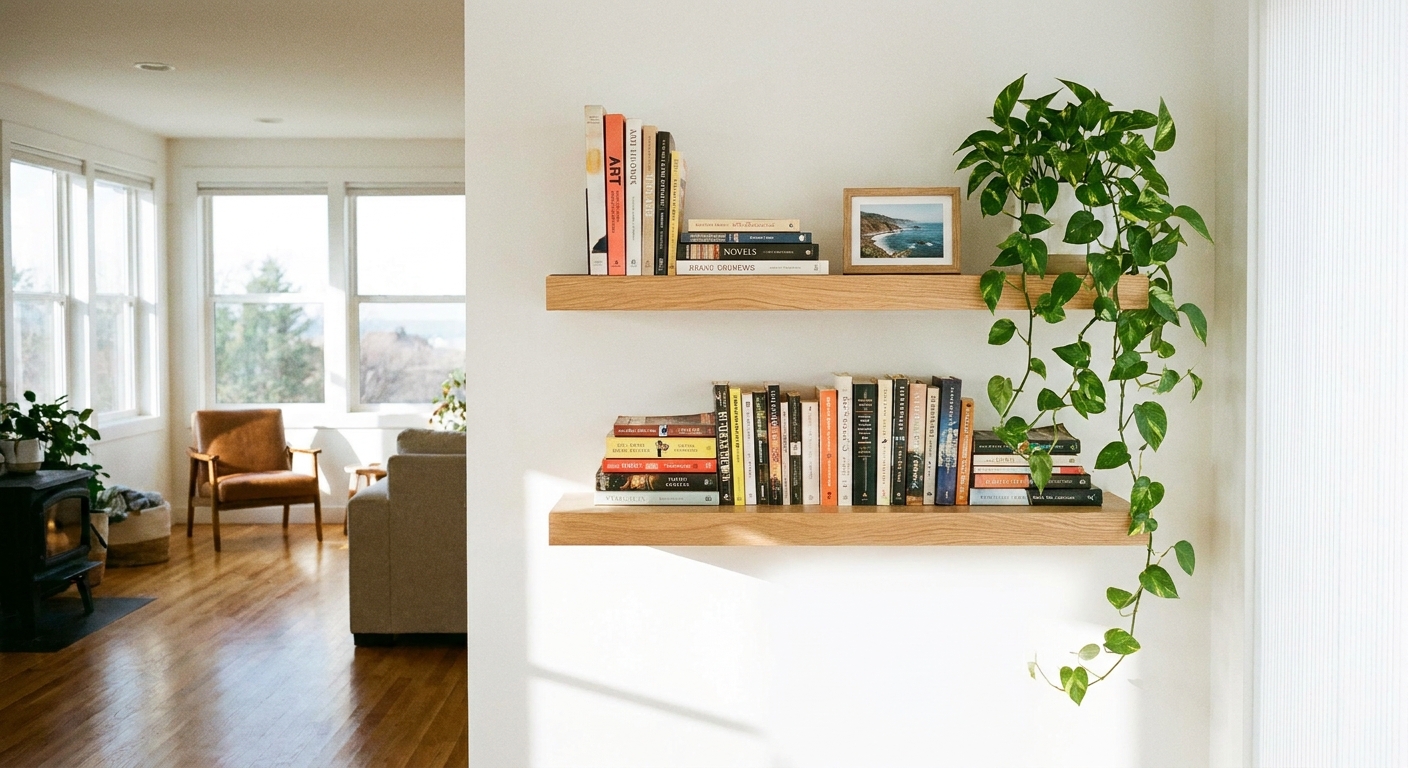
Make small rooms feel taller and calmer with floating shelves. Learn where to hang them, install them securely, and style with negative space, balanced group...
Organizing Open Farmhouse Shelving with Wire and Wicker Baskets

Published · Last updated
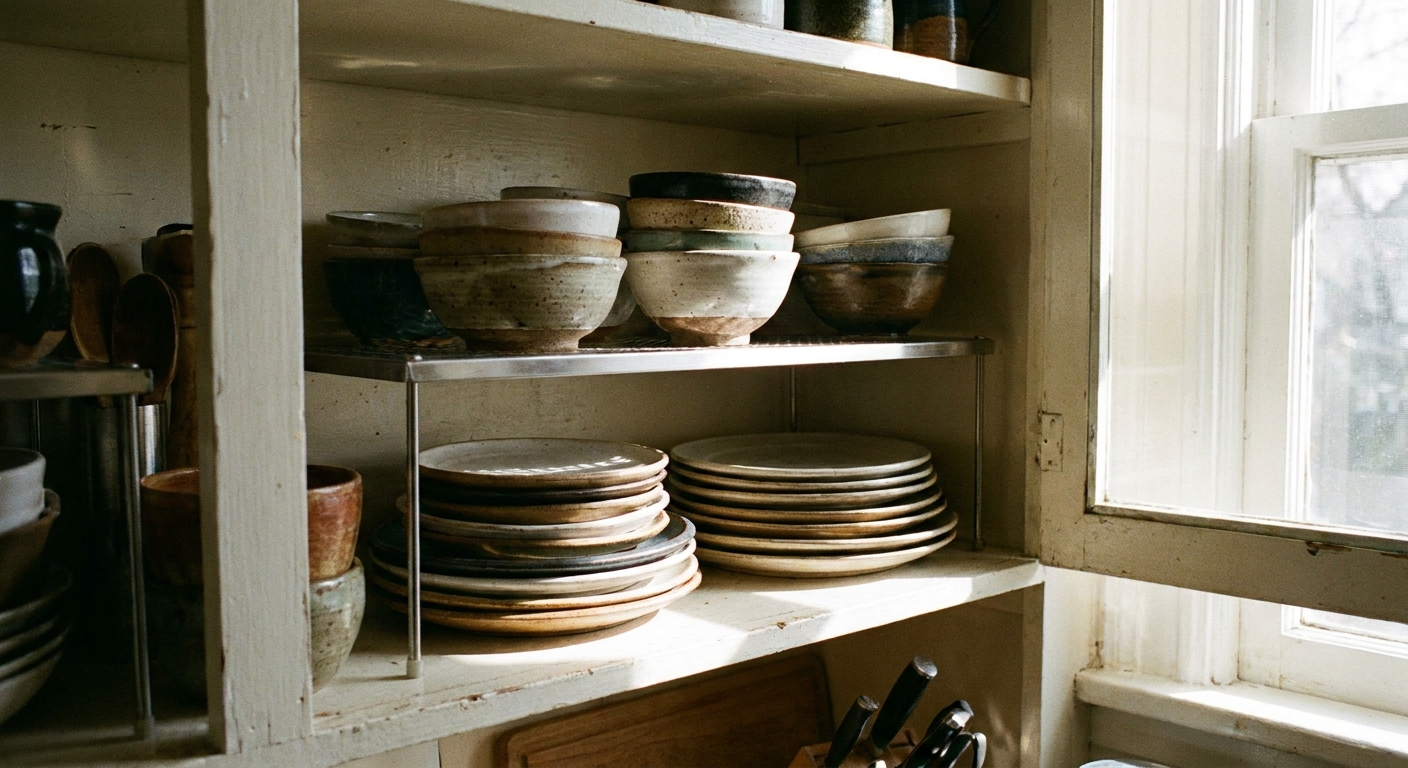
Open shelving is one of those farmhouse details I will always love, until I have to live with it on a random Tuesday afternoon when the kids have been “helping” and suddenly every shelf looks like a garage sale table. The good news is you do not need to give up the airy, collected look to keep daily clutter under control. Wire and wicker baskets are basically the farmhouse version of closing a cabinet door, especially for things like snack bags, chargers, and the odd little items that never look “decorative.” They soften the visual noise, hide the weird stuff, and still look intentional.
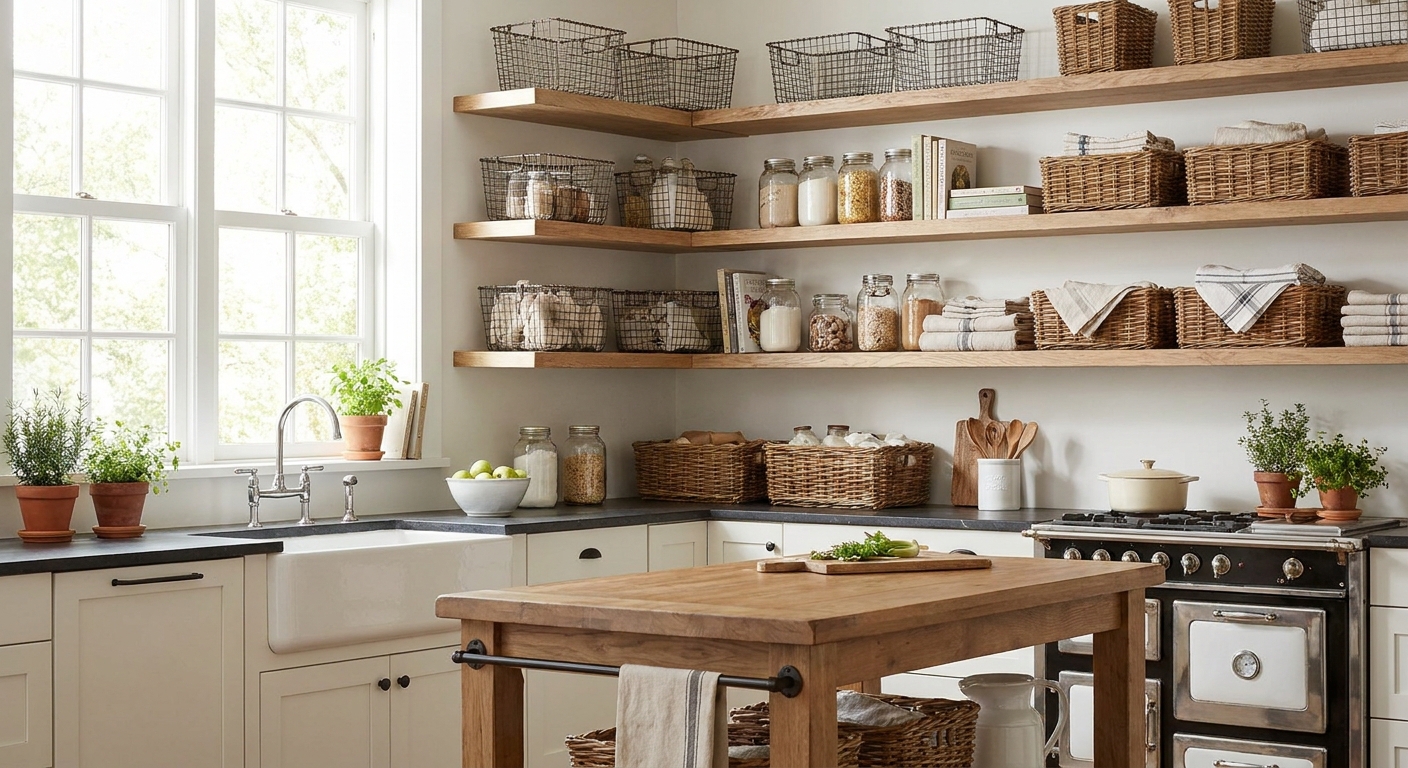
Below is how I use wire mesh and woven baskets on open shelves so everything looks tidy, even when life is not.
Wire vs. wicker
If you try to make one basket type do every job, you will end up annoyed. I mix wire and wicker on the same shelving unit because they solve different problems.
Wire baskets (mesh or grid)
- Best for: grab-and-go items you need to see, like snacks, onions or garlic, dish towels, or dog leashes.
- Why they work: the open sides let you spot what is running low and can help with airflow. That is especially handy for items like onions and garlic, and for linens that need to dry fully between uses.
- Watch-outs: small items can poke out and look messy fast. Use pouches, jars, or smaller bins inside if needed.
Wicker or rattan baskets (woven)
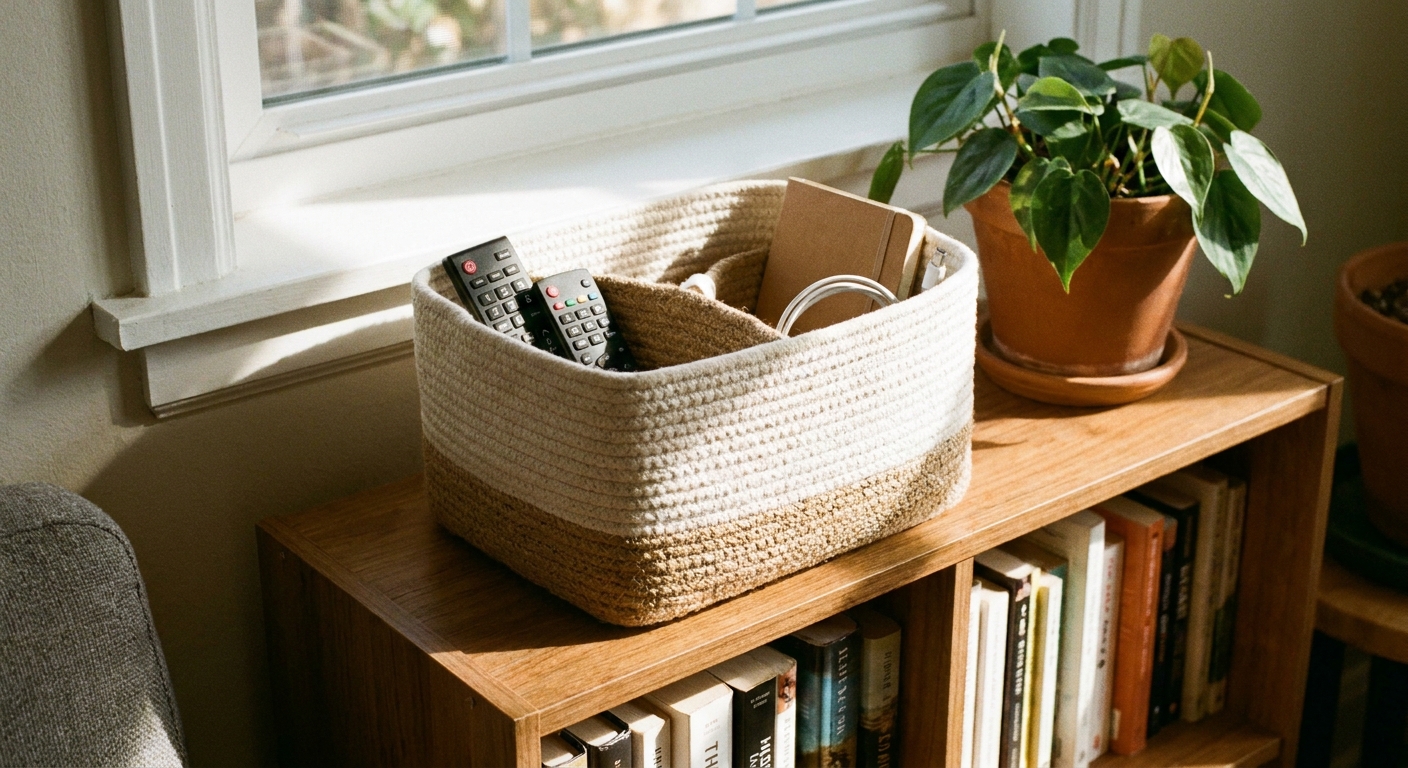
- Best for: visually messy categories, like medicine, cords, batteries, mail, and the random little stuff that ruins the “styled” look.
- Why they work: the texture reads warm and collected, and the solid weave hides clutter from every angle.
- Watch-outs: they can be harder to wipe clean. In kitchens, I keep wicker away from grease and splatter zones when possible.
My rule: wire for visibility, wicker for camouflage.
Map shelf zones first
It is tempting to buy a stack of baskets first and figure it out later. I have done that. It usually ends with mismatched sizes and a shelf that still feels chaotic.
Instead, stand in front of your open shelves and decide what those shelves need to do. A simple farmhouse shelving map might look like this:
- Eye-level shelves: everyday items (mugs, plates, lunch containers, snack basket)
- Upper shelves: backups and lighter items (paper goods, extra tea, seasonal serving pieces)
- Lower shelves: heavier items (mixing bowls, small appliances) and kid-accessible bins
Once you have zones, you can choose basket types and sizes that actually fit the job.
Measure before you shop
I say “measure first” because open shelves punish guessing. Before you buy anything, I do three quick checks:
- Shelf depth: measure front to back and choose a basket that sits fully on the shelf, with a little breathing room behind it.
- Shelf height: leave at least 1 to 2 inches above the basket so your hand can grab and lift it out without scraping knuckles.
- Real usable space: account for brackets, trim, or lip edges that steal an inch here and there.
If your shelves are narrow, depth matters more than width. A deep basket that hangs over the edge will always look “off.” This is the same logic I use when choosing slim-depth furniture for narrow rooms.
Basket features that matter
Two baskets can look similar online and behave totally differently in real life. These are the details I actually care about:
- Handles: yes for anything you will pull out daily (snacks, lunch stuff). Optional for baskets that just sit there.
- Height: shorter baskets are easier on eye-level shelves. Taller baskets are great up high, where you want to hide backups.
- Liner or no liner: for wire baskets holding tiny items, a simple cloth liner or a smaller bin inside keeps things from poking out.
- Wipeability: in kitchens, I prefer wire or a sealed basket finish near cooking zones.
- Edges: avoid snaggy wire around dish towels and linens. If it catches, it will drive you nuts.
Pick calming basket sizes
Open shelves look messy when you have too many small objects and too many tiny containers. Baskets help by creating bigger, cleaner shapes.
Three sizing tips
- Go fewer, larger when you can. Two medium baskets often looks quieter than six little ones.
- Leave breathing room. Aim for about 1 to 2 inches of space around baskets so you can slide them in and out without scraping.
- Repeat sizes. Repetition is what makes open storage look intentional. If you find a basket you love, buy two or three.
Use wire for daily categories
Wire baskets are my favorite for busy-household hot zones because they make it easy to toss things back where they belong. Here are a few categories that work especially well:
- Snacks: one basket per type, like bars, fruit snacks, or grab-and-go breakfast.
- Kitchen linens: dish towels, cloth napkins, and potholders. Airflow can help them dry faster and cut down on musty odors.
- Coffee or tea station: filters, pods, sweeteners, stir sticks.
- Lunch packing: baggies, napkins, and small containers (this one saved my mornings).
Crumb and pest reality check: for anything open (crackers, candy, loose snacks), I like to stash it in jars or canisters inside the basket. The basket keeps the shelf looking tidy, and the container keeps the food protected.
Quick visual fix: If the basket looks cluttered through the mesh, place the messiest items in a small lidded container inside, or use matching jars. You still get the breathable basket, but the shelf looks less visually busy.
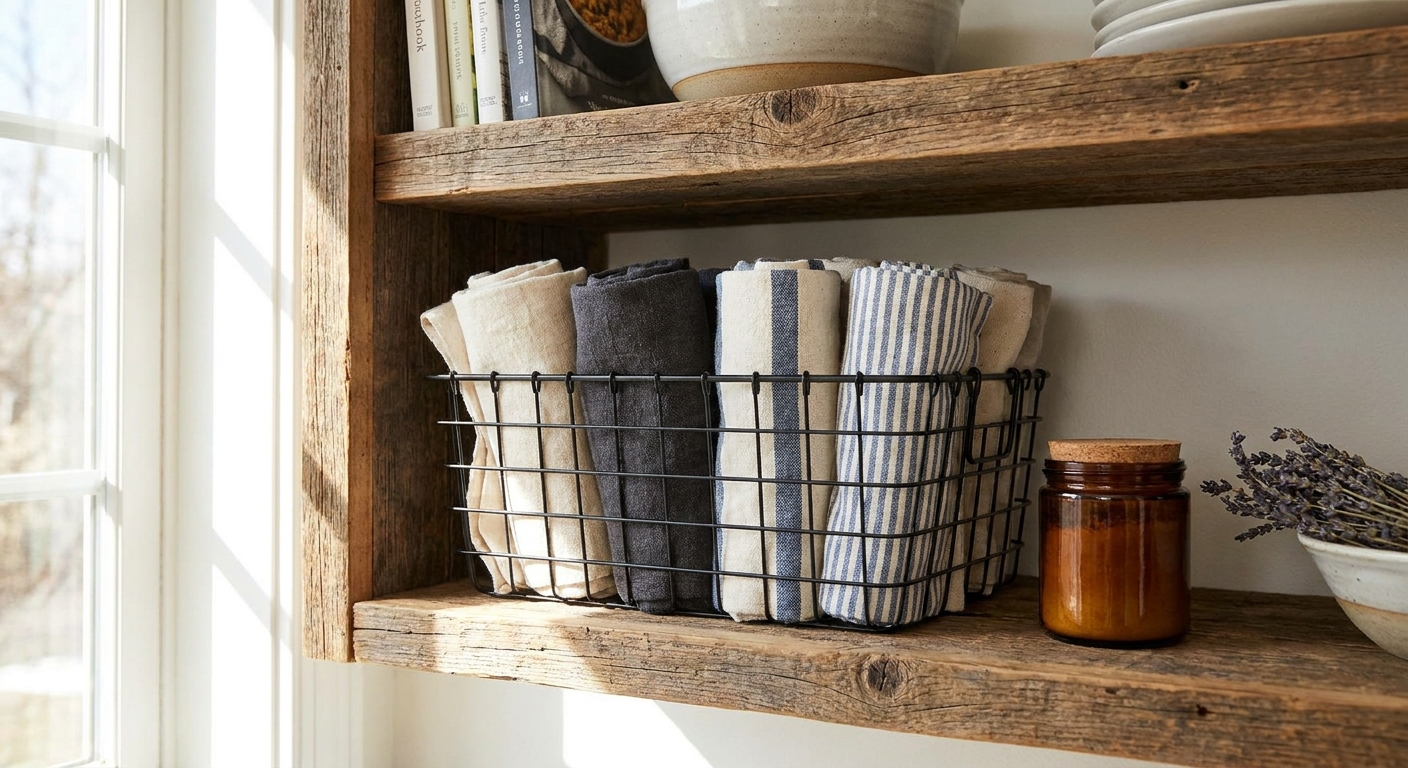
Use wicker to hide clutter
Wicker is what I reach for when the category is real life, but not pretty life.
My go-to categories
- Medication and first aid: it helps to keep it contained and out of sight, but in homes with kids this also needs to be up high or in a locked container, not just hidden.
- Paper clutter: mail, kids’ school papers, instruction manuals you cannot toss yet.
- Tech odds and ends: chargers, earbuds, spare cords.
- Pet supplies: treats, brushes, poop bags.
- Seasonal bits: birthday candles, sparklers, tiny decor.
Wicker also helps open shelving feel more farmhouse and less store display. If your shelves feel a little stark, layering a couple of woven baskets in the mix warms everything up immediately.
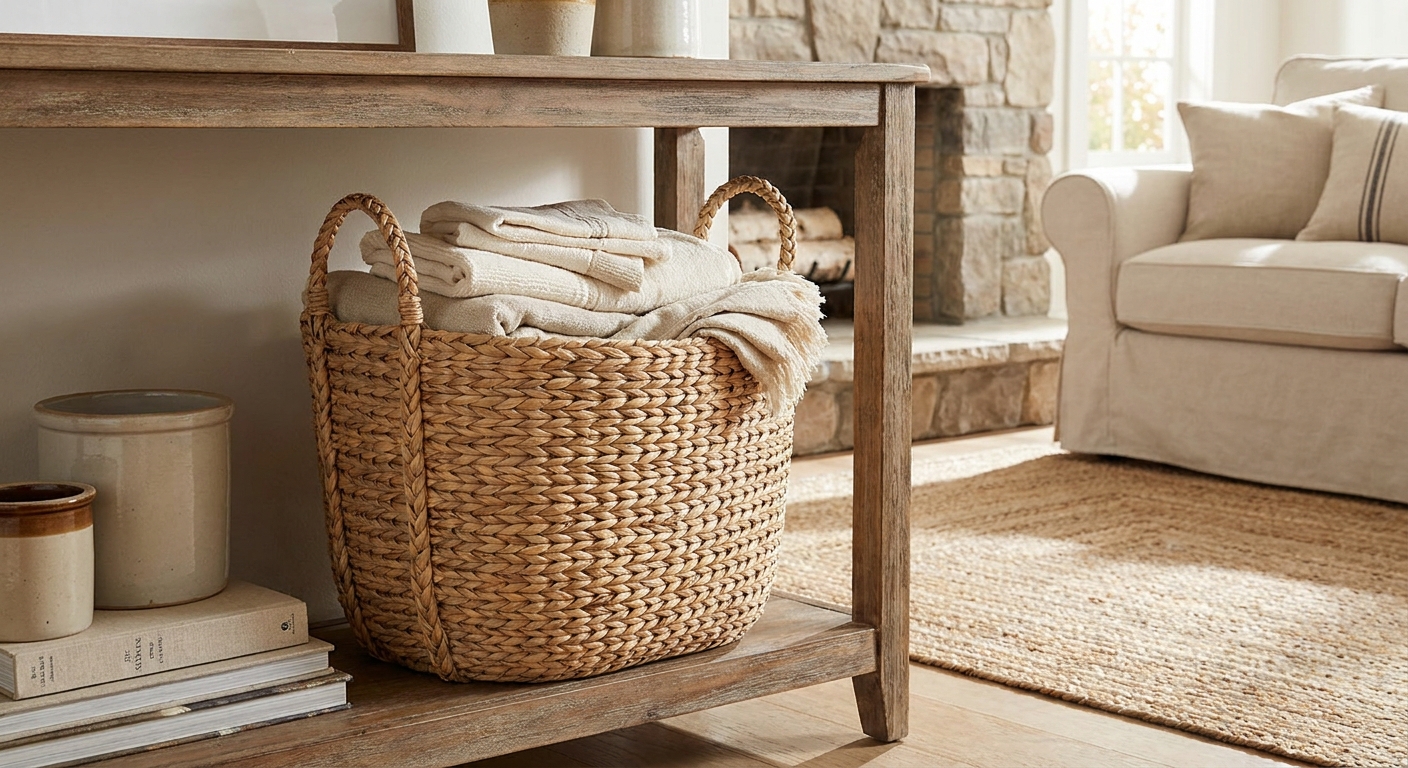
Keep it styled and useful
I love a styled shelf, but I love finding what I need more. This formula keeps the farmhouse charm without turning your kitchen into a museum.
My 60-30-10 balance
- About 60 percent closed storage: wicker baskets, lidded crocks, canisters
- About 30 percent open storage: wire baskets, glass jars, stacked dishes
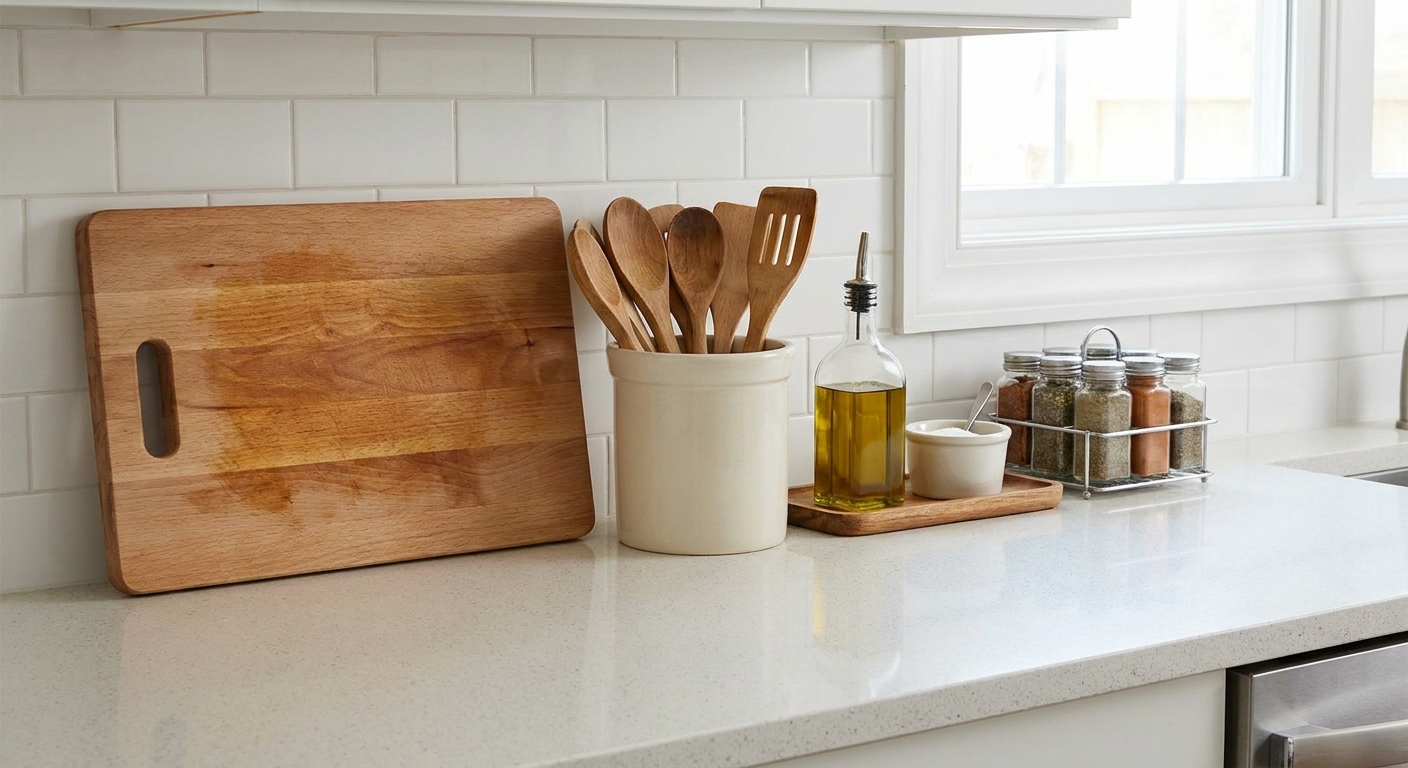
- About 10 percent decor: one small framed photo, a little plant, a cutting board leaned behind a basket
This is just the ratio I aim for when I want shelves to feel relaxed, not fussy. If you need more ideas for making shelves look styled but still functional, this overlaps with how I think about styling floating shelves without losing floor space.
Farmhouse-friendly labels
Labels are not just for pantries. On open shelves, labels stop the slow drift where everyone puts things “close enough” and the system collapses.
- For wire baskets: small hanging tags or simple clip-on labels keep it tidy without covering the mesh.
- For wicker baskets: a small tie-on tag at the handle looks classic and is easy to swap if the category changes.
- For family systems: use plain, clear words. “Snacks,” “Baking,” “Lunch,” “Towels.” If someone needs a legend, it is too complicated.
My personal rule is that every shelf gets at least one basket that is labeled. That gives your eyes an anchor and keeps your household honest.
Dust and crumbs
This is the part nobody puts on the mood boards. Open storage gets dusty, and baskets can too. A few habits keep it manageable:
- Line baskets that hold food. A washable cloth liner or even a folded tea towel makes crumbs easier to shake out.
- Choose wipeable wire for splatter zones. Near the stove, wire is usually easier than wicker.
- Do a one-basket reset weekly. Not the whole shelf. Just one basket each week. It keeps things from getting out of hand.
If your shelves are in the bathroom, the same logic applies, and I would pair this with smart vertical solutions like over-the-toilet storage that keeps bathrooms looking open.
A quick shelf reset
When my open shelves start looking chaotic, I do a fast reset that takes about 10 minutes and does not require perfection.
- Pull everything off one shelf. Just one. Not the whole unit.
- Wipe the shelf. A quick dry dusting is better than nothing.
- Sort into three piles: belongs here, belongs elsewhere, toss.
- Put baskets back first. Large shapes create instant calm.
- Return the daily items. Keep the front row simple and easy to grab.
This is the same kind of small-bite method I use for other clutter zones, like planning a small entryway drop zone. One shelf at a time is how you actually maintain it.
Small-space tweaks
If you are working with tight shelves or a narrow kitchen, a few adjustments make baskets work harder:
- Stack inside baskets. Put a smaller container inside a larger wicker basket to create compartments.
- Use risers behind baskets. Raise back-row items so you can see them without pulling everything out. (I use the same principle in cabinets too. See adding more kitchen cabinet space with shelf risers and tension rods.)
- Keep one blank pocket. Even 6 inches of open space helps the whole wall feel less busy.
FAQ
Do wire baskets look too modern?
Not if you choose simple shapes and classic finishes. Matte black, aged brass, or galvanized metal tends to blend in beautifully with farmhouse textures. The key is repeating the finish so it looks intentional, not random.
Can I mix wicker shades?
Yes, and it can look collected in the best way. I try to keep them in the same warmth range, either mostly honey and natural tones or mostly deeper brown. If the shelf already has a lot going on, matching shades looks tidier.
What should I not store in wicker?
I avoid anything that leaks, stains, or attracts grease. In kitchens, that means open oils, sticky syrups, and anything that tends to drip. Those live in wipeable bins or on a tray.
One last reminder
Open shelving will never look perfect all day, every day, in a home that is actually lived in. The goal is not perfection. The goal is a system that makes it easy to put things away quickly. Wire baskets make the everyday stuff easy to grab. Wicker baskets make the visual clutter disappear. Together, they let your shelves look warm and farmhouse-cozy, while still working for real life.
If you want a deeper farmhouse styling foundation beyond shelving, our Farmhouse Style guide is a helpful next read.