
Light Whitewashed Wood Finishes for Small Rooms

I used to think “farmhouse” automatically meant dark stain, chunky beams, and heavy wood everywhere. Then I lived in a studio where the “dining area” was basically a corner of my kitchen, and I learned the hard way: deep espresso finishes can make a small room feel like it’s closing in.
Light whitewashed wood is the gentler version of farmhouse style. You still get warmth, grain, and that relaxed lived-in character, but with less visual weight and more light bounce. This guide will help you choose pale, distressed wood tones that keep compact rooms feeling open, not crowded.
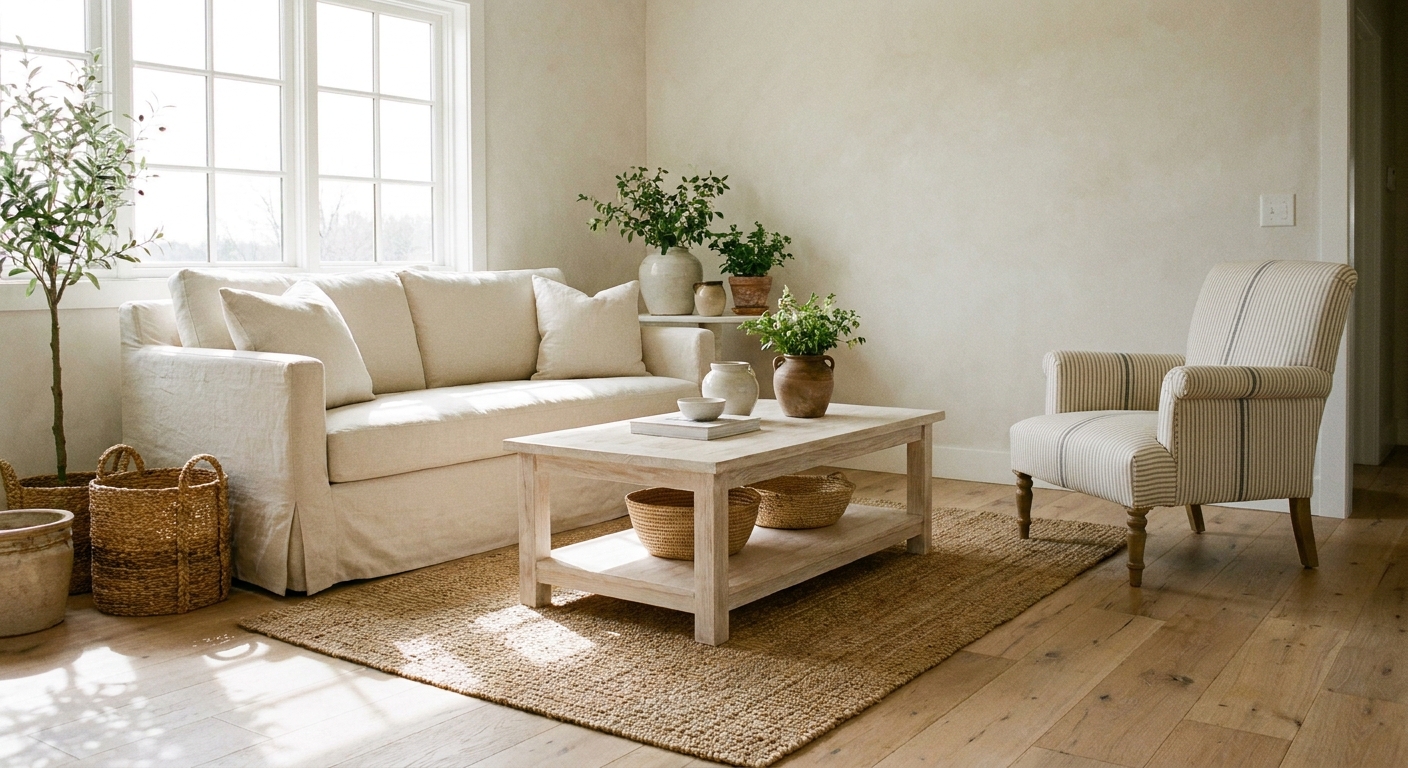
Why whitewashed wood helps small rooms
If you only remember one thing, make it this: small rooms often feel bigger when surfaces reflect light and when the biggest visual blocks stay quiet.
- Higher light reflectance: Pale finishes tend to bounce daylight and lamplight around the room instead of absorbing it.
- Less contrast at the floor line: Dark furniture against light walls can create strong horizontal bands that visually chop up the room.
- Grain without heaviness: You still get texture, but the overall value stays light, which reads calmer and more spacious.
If you’re working on the overall “make it feel bigger” plan, pairing light wood with smart paint choices is powerful. I keep coming back to the tips in Paint Colors That Make a Small Room Look Bigger.
Whitewash vs pickling vs liming
These terms get tossed around like they mean the same thing, but they read differently in a small room. Here’s the practical difference when you’re standing in a store aisle squinting at sample boards.
Whitewash
A thin, semi-transparent white layer that lets the wood tone show through. Whitewash is great when you want the room to feel brighter but not sterile. It often looks slightly uneven, which is perfect for relaxed farmhouse style.
Pickled finish
Usually a stronger white effect than a classic wash, but still translucent enough to show grain. Depending on the underlying wood and topcoat, it can lean creamier, and sometimes even slightly pink.
Limed (cerused) finish
Traditionally pushes a white paste into open grain (especially oak) so the grain lines pop. Limed oak can be stunning in small rooms because the overall tone stays light, while the texture adds depth without feeling bulky.
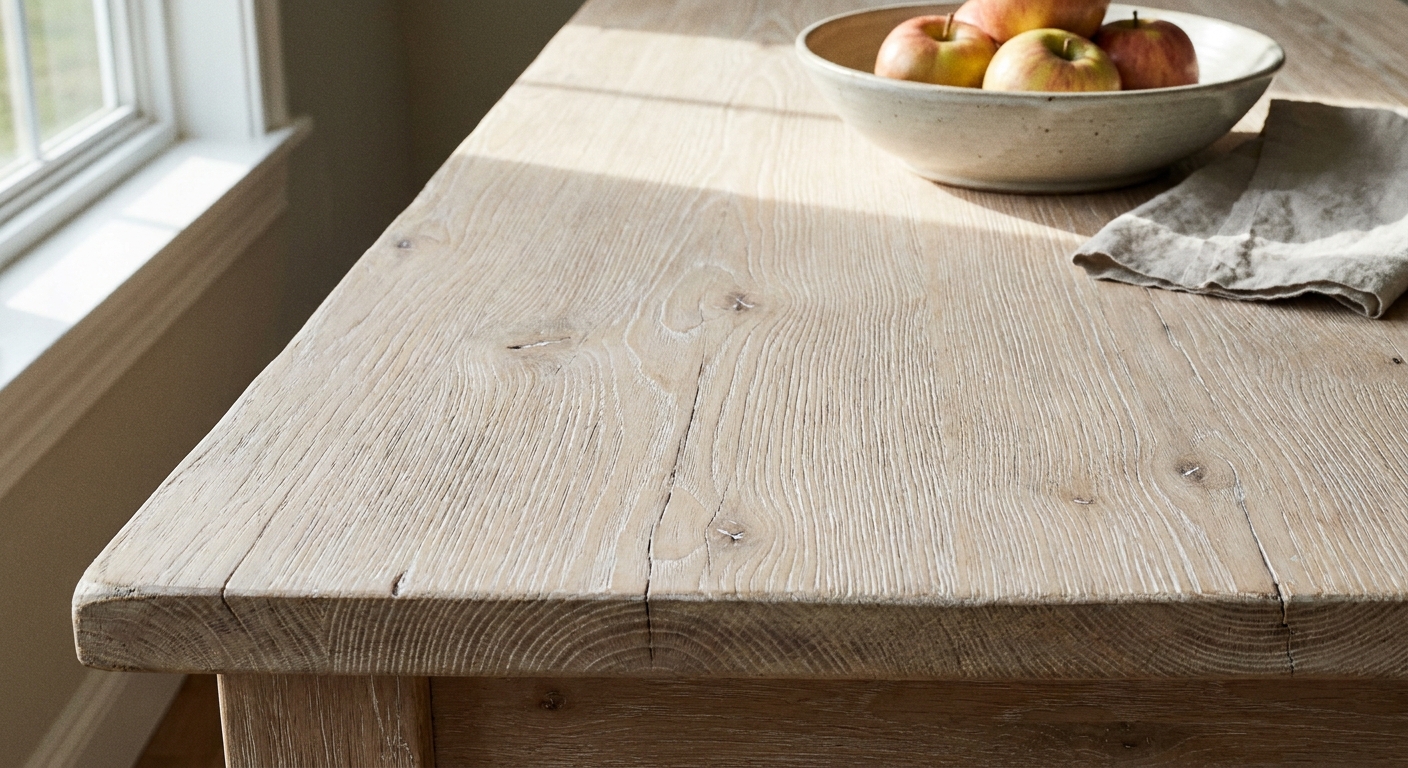
My small-room rule: If the space is tight, choose the finish that looks light from across the room, not just up close.
Start with undertone
Undertone is what makes pale wood feel cozy or chilly. In compact rooms, undertone matters more because you see everything at once, often in mixed lighting.
Warm whitewashed woods (creamy, honey, beige)
- Best for north-facing rooms that feel flat or cool.
- Plays nicely with brass, woven textures, and warmer whites on walls.
- Helps a small room feel inviting instead of stark.
Cool whitewashed woods (icy, gray-leaning)
- Best when you already have warm elements (tan upholstery, warm floors) and want balance.
- Works well with black metal accents, cooler whites, and crisp linens.
- Be careful: too cool can feel a bit washed out in low light.
Neutral whitewashed woods (balanced, not too yellow or gray)
- The safest choice if your room has mixed finishes or you rent and cannot change floors.
- Easiest to blend with both warm and cool decor as seasons change.
Quick check at home: Hold your sample next to something truly white (printer paper works). If it suddenly looks yellow or blue, you’ve found the undertone.
Pick the right wood species
Whitewash looks different depending on the species underneath. You do not need to become a wood expert, but you do want to recognize the personality of the grain.
Oak (open grain, classic farmhouse)
Oak is my go-to for small rooms when you want texture without darkness. Limed or whitewashed oak keeps the palette airy, and the grain brings that cozy farmhouse depth.
Pine (knotty, rustic)
Pine can look charmingly casual, but knots can create visual dots that feel busy in tight spaces. If your room already has a lot going on, choose pine with fewer, smaller knots or a lighter, more even wash.
Maple or birch (tight, subtle grain)
If you want the lightest, cleanest look, these are great. They read calmer and less rustic, which can be a win in compact rooms where visual noise adds stress.
Reclaimed wood (beautiful, but loud)
I love reclaimed pieces, but in a small room I treat them like a statement. Use one hero item (say, a small console), not five different reclaimed surfaces competing with each other.
Distressing and texture
Distressed finishes can make a room feel relaxed and forgiving, which is wonderful in a busy household. But there’s a fine line between gently timeworn and busy texture that shrinks the space.
- Look for wide, soft variation (subtle rub-through on edges) rather than lots of tiny marks.
- Avoid high-contrast distressing where dark brown shows through sharply. In a small room, those spots can read like clutter.
- Know the difference: distressing is about wear marks, wire-brushing is about a rougher grain texture, and liming is about color sitting in the grain. You can have one without the others.
- Prefer smoother surfaces for everyday use. Deep wire-brushing collects crumbs and dust, and I say that as someone who is constantly wiping something.
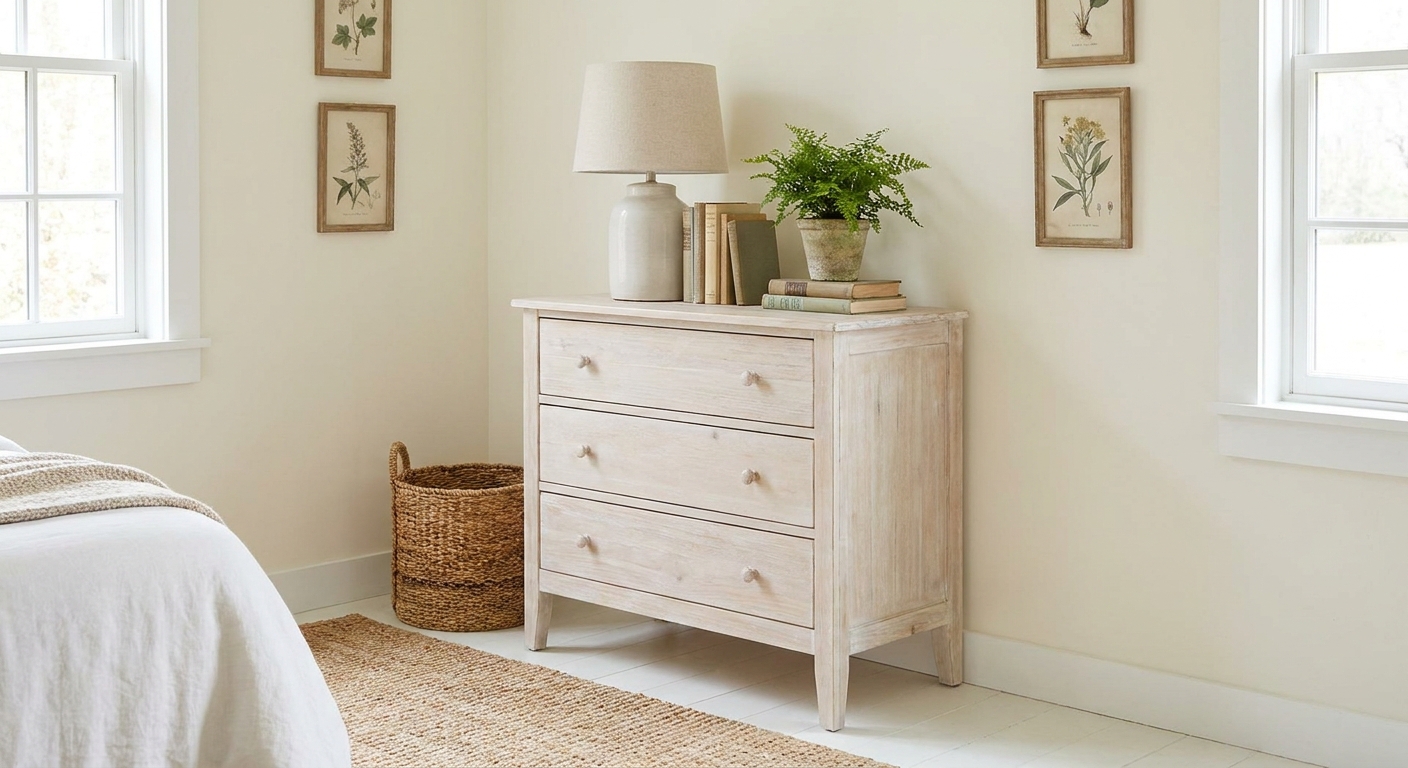
If you want farmhouse character without the fussy factor, a simple shaker detail often does more than heavy distressing. I love a peg rail for that reason. See Install a Shaker Peg Rail if you want a light-wood, high-function project.
Sheen and topcoat
In small rooms, shine can either help (more bounce) or hurt (glare and highlight every bump). Here’s how I decide:
- Matte to satin is the sweet spot for most whitewashed furniture and built-ins. It looks soft and forgiving, especially under overhead lighting.
- High gloss can feel hard in farmhouse spaces and can spotlight brush marks. I avoid it unless the room is very bright and the piece is ultra simple.
- Very flat finishes can look chalky and can show oils and scuffs, especially on tabletops.
Kid and dog reality check: For dining tables and coffee tables, satin tends to live the best day to day when it’s paired with a durable topcoat. The protective finish matters as much as the sheen.
Match what you cannot change
Most of us have at least one stubborn element we are decorating around: rental floors, a countertop, tile, or a sofa you are not replacing. The easiest way to make whitewashed wood look intentional is to echo one of those fixed tones.
If you have warm floors (golden oak, honey tones)
Choose a warm or neutral whitewash. Cool gray washes can make warm floors look extra yellow by comparison.
If you have cool floors (gray LVP, cooler tile)
A neutral to slightly cool wash will blend better. Add warmth through textiles instead of forcing wood tones to do all the cozy work.
If your room is low-light
Go lighter than you think. In dim corners, a “light” stain can read medium. This is one reason mirrors help so much with pale wood. If you want to place one strategically, Best Mirror Placement for More Natural Light in Tiny Apartments is a great next step.
Best places to use pale wood
You do not need to whitewash everything. In fact, small rooms usually look better when you choose a few light-wood anchors and let the rest stay quiet.
- Large horizontal surfaces: dining tables, coffee tables, desks. Keeping these light can reduce the heavy slab feeling.
- Vertical storage: bookcases, hutches, wall shelves. Light wood helps tall pieces feel less looming. For styling, see Styling Floating Shelves Without Losing Floor Space.
- Trim and wall accents: a peg rail, simple frames, a light wood bench. Small moments of pale wood can brighten a room without adding bulk.
My personal favorite: light wood in the spots where clutter tends to gather. When the landing zone is visually light, the whole room feels calmer even before you tidy.
DIY or buy
If you’re tempted to DIY a whitewash, it can be a satisfying weekend project, but it’s not equally safe for every surface.
- DIY is easiest on solid wood or properly sanded unfinished pieces, where a wash can soak in evenly.
- Be cautious with veneer. You can refinish veneer, but aggressive sanding can cut through fast, and a blotchy wash is hard to unsee.
- Skip DIY on laminate or foil-wrapped furniture. Those need specialty prep and products, and even then the finish can chip in high-touch spots.
When in doubt, I’d rather buy one good pale-wood anchor than spend a week chasing a finish that fights back.
Sample test in one afternoon
If you’re choosing between a few finishes, do this before you buy the big piece or commit to refinishing.
- Gather 3 samples (or paintable swatches if you’re DIYing a wash).
- Test them in three places: near a window, in your darkest corner, and under your evening lighting.
- View them at two distances: right up close and from the doorway. Doorway view is how your brain reads “spacious.”
- Check undertone next to your fixed finishes: floor, countertop, and the biggest upholstered item.
- Give it a full day: morning light and nighttime light can completely change the read.
If you are painting walls too, pick the wall color second. It is usually easier to match paint to a finish than to force a wood tone to behave.
Common mistakes
- Going too gray on purpose: Some gray-washed finishes can make a cozy farmhouse room feel cold, especially with cool LEDs. Warmer bulbs often help.
- Mixing too many almost-the-same whites: If your wood is creamy, keep your textiles creamy. If it is cool, keep your whites crisp. A little contrast is fine, but five different whites looks accidental.
- Over-distressing in a tight room: Too much texture reads like visual clutter.
- Forgetting contrast: A small amount of black or metal (hardware, a frame, a sconce) helps pale wood feel grounded. Without it, the room can float.
- Over-lightening everything: Very pale washed furniture against very pale floors can lose definition. If that happens, add contrast through a rug, a darker leg on a table, or even just darker picture frames.
Lighting plays a huge role in whether pale finishes feel crisp or flat. If you are deciding between sconces and lamps in a small room, Wall Sconces vs Floor Lamps for Small Rooms can help you build a lighting plan that supports that airy farmhouse look.
Care and maintenance
Whitewashed and limed finishes are pretty forgiving, but they do best with gentle care.
- Clean with mild soap and water on a barely damp cloth, then dry. Harsh cleaners can dull the topcoat.
- Use coasters and trivets on pale tabletops. Water rings and heat marks are not picky about style.
- Expect some wear-through on edges over time, especially on distressed looks. I actually like this when it stays subtle. If it starts to look dirty instead of lived-in, that’s your cue for a quick touch-up and a fresh protective coat.
My go-to palette
When I want the room to feel bigger fast, I build around a simple combination:
- Wood: neutral whitewashed oak or a warm whitewash with visible grain
- Walls: soft warm white or gentle greige
- Textiles: linen-like neutrals, small-scale stripes, or simple checks
- Contrast: a touch of black or aged brass (hardware, picture frame, or light fixture)
- Greenery: one plant with a clear silhouette, not lots of tiny busy stems
This keeps the room bright and calm while still feeling like farmhouse style, not a blank box.
FAQ
Will whitewashed wood look dirty over time?
It can, but it depends on the topcoat and how much texture it has. A smoother satin finish with a durable protective coat is easier to wipe clean than very flat, porous finishes. Also, subtle variation hides scuffs better than a perfectly uniform pale finish.
Is light wood too casual for a living room?
Not if you balance it. In a small living room, light wood can look more “designed” when the rest of the room feels intentional. Clean lines, one or two darker accents, and a simple rug layout help a lot. If you are figuring out rug sizing, Area Rug Size and Placement Rules for Small Living Rooms is worth a read.
How do I keep pale wood from looking washed out?
Add contrast in small doses: black hardware, a darker frame, a charcoal stripe pillow, or even a warmer bulb. The goal is definition, not heaviness.
One last note
If you’re working with a compact room, you do not need a dramatic makeover to feel a difference. Swapping one dark piece for a lighter whitewashed finish can change how you breathe in the space. That’s why I love these soft farmhouse woods. They do the cozy job without stealing the light.