Behind-the-Door Organization: 10 Clever Ideas

I used to think “behind the door” meant “dead space.” Then I lived in a studio where the only closet was basically a suggestion, and suddenly every blank vertical inch mattered. Now, in a busy house with two kids and a dog who seems to multiply leashes overnight, behind-the-door storage is one of my favorite ways to hide clutter in plain sight.
The trick is to treat the back of a door like a tiny wall: you need the right hardware, the right depth, and a setup that still lets the door open smoothly. Here are 10 clever, genuinely useful ways to turn that forgotten space into hidden organization.
Before you start: 4 quick checks
- Measure your clearance. Open the door fully and check how much space you have between the door and the wall, trim, or nearby furniture. Over-the-door organizers often stick out a few inches, but it varies a lot by product, so measure your deepest item too.
- Pick the right mounting style. For renters or commitment-phobes, over-the-door hooks and hangers are usually the safest bet. Adhesive strips can work for very light items on smooth, clean surfaces, but I do not trust them for heavy loads on a door that gets opened and closed all day. If you screw-mount anything, follow the manufacturer limits and try to hit the door’s solid wood frame (often the perimeter), or use hardware designed for hollow-core doors.
- Protect the finish. Add felt pads anywhere metal touches the door, and use small clear bumpers if the organizer rubs when the door swings. Also check the hinge side clearance, because that is where paint scuffs love to happen.
- Do not mess with exits. Keep exit doors and doors that must latch and lock fully free to close. If a door is part of your main egress path, go light and slim, or choose a different door.
1) Over-the-door shoe pockets for more than shoes
The classic clear pocket organizer is still one of the highest payoff tools for tiny spaces. I like it because it assigns “a home” to items that otherwise roam.
What to store
- Flip flops, flats, kids shoes
- Hair tools and brushes (once cooled)
- Sunscreen, bug spray, lip balm, travel sizes
- Pet accessories like treats, poop bags, grooming tools
Make it look calmer
- Group by category top to bottom (daily, weekly, backup).
- Use a fabric-pocket version if visual clutter stresses you out.
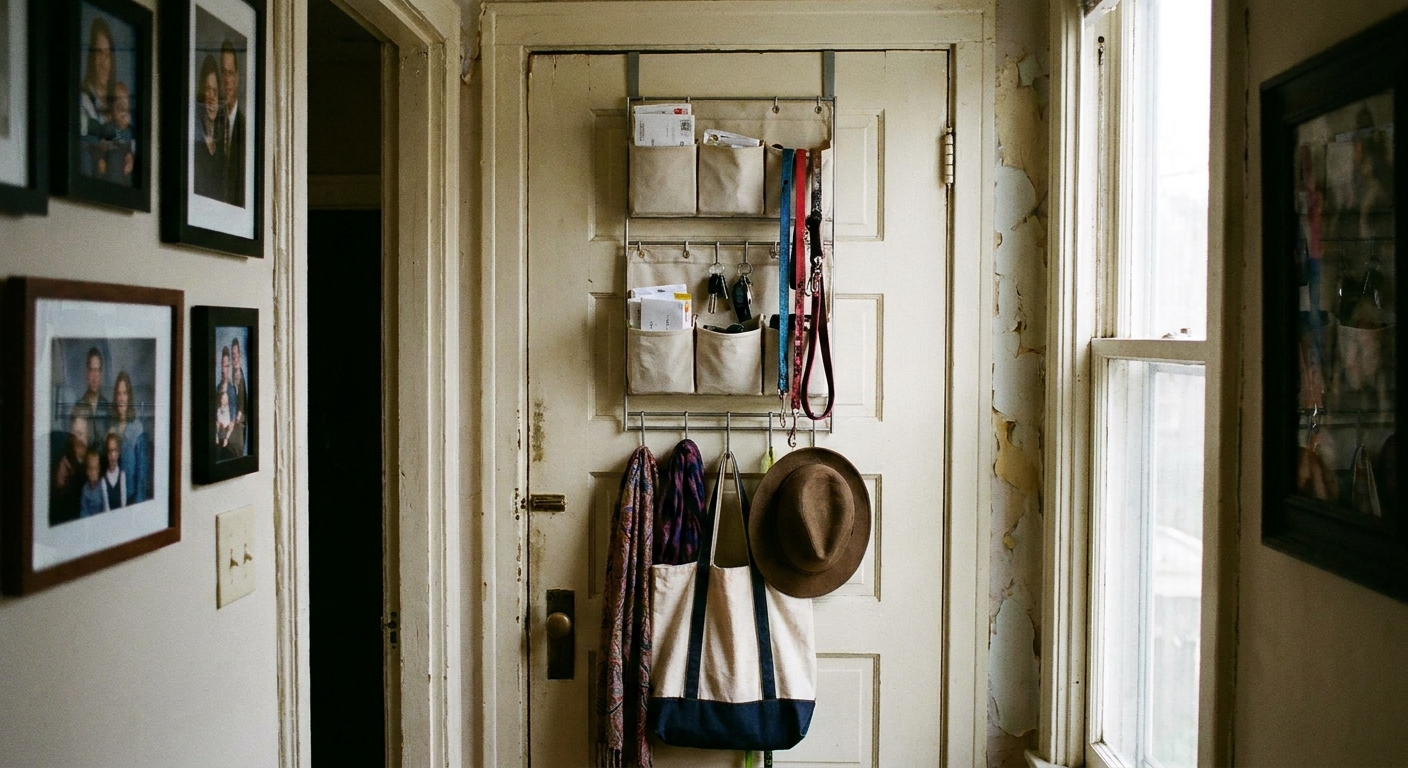
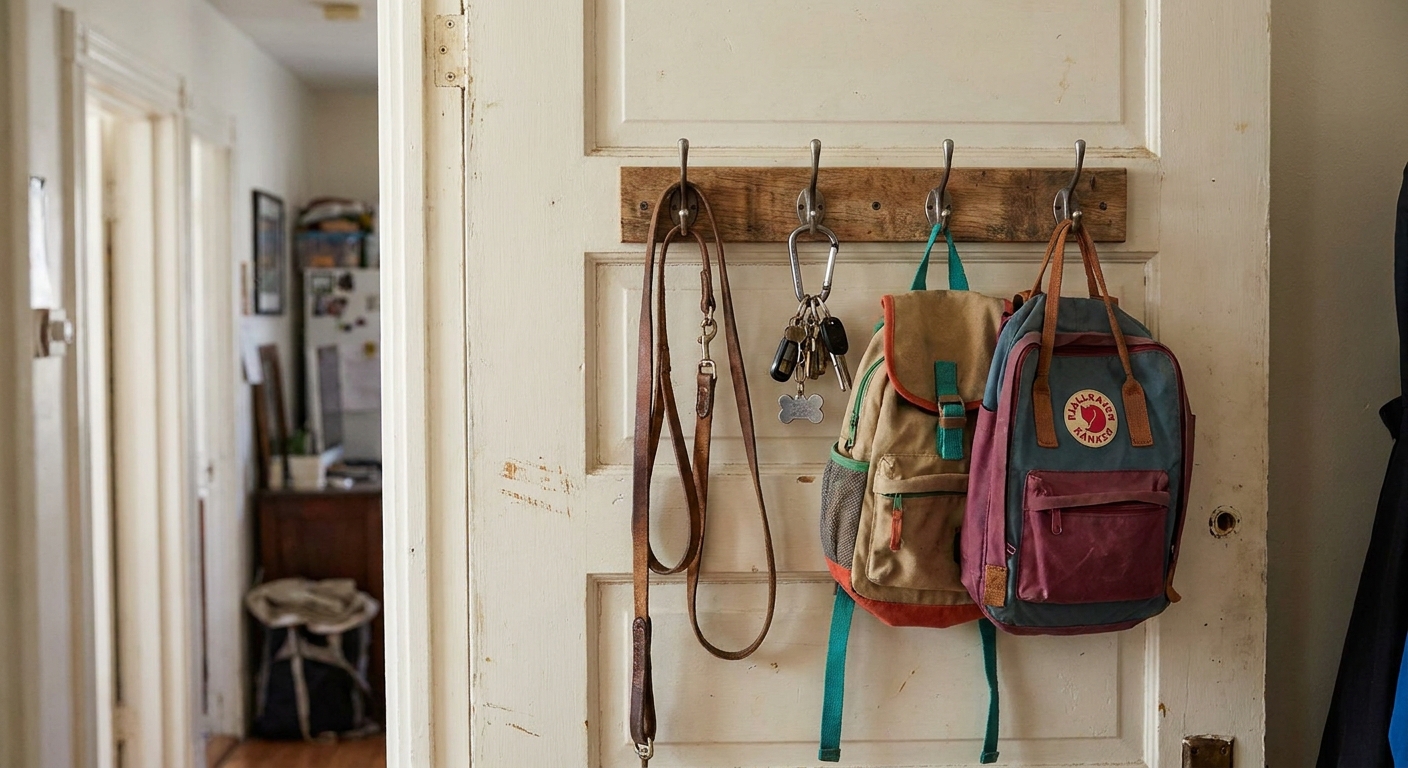
2) A hook rail for daily grab-and-go accessories
If your mornings feel like a scavenger hunt, put the essentials on the back of the door you use most. In my house, that is the door nearest the main path to the kitchen, because apparently no one can leave without a snack.
Best for
- Keys on a lanyard
- Dog leash and harness
- Baseball caps and light scarves
- Kids backpacks (one hook per kid works wonders)
Gemma tip: Hang bags by their top loop, not the strap, to keep straps from sliding off and tangling.
If you are building a whole landing zone, my small-space approach is in Plan a Small Entryway Drop Zone.
3) A slim rack for cleaning supplies
Cleaning supplies are awkward because bottles are tall, and most of us store them under the sink where they become a tippy chaos pile. A narrow over-the-door rack on a pantry or utility door keeps them upright and visible.
What works best
- A rack with a bottom rail so bottles do not slide
- Two tiers: daily cleaners on top, refills on the bottom
- One small bin for sponges, gloves, and microfiber cloths
What counts as “daily”
- Daily: all-purpose spray, glass cleaner, dish soap, disinfecting wipes
- Refills: backup sprays, extra sponges, dishwasher tabs, concentrated refill bottles
Safety note
If you have small kids, place this on a door they cannot access, or store chemicals up high with a childproof latch. Behind-the-door storage is only “hidden” if it is also safe.
4) Door-mounted pegboard for flexible storage
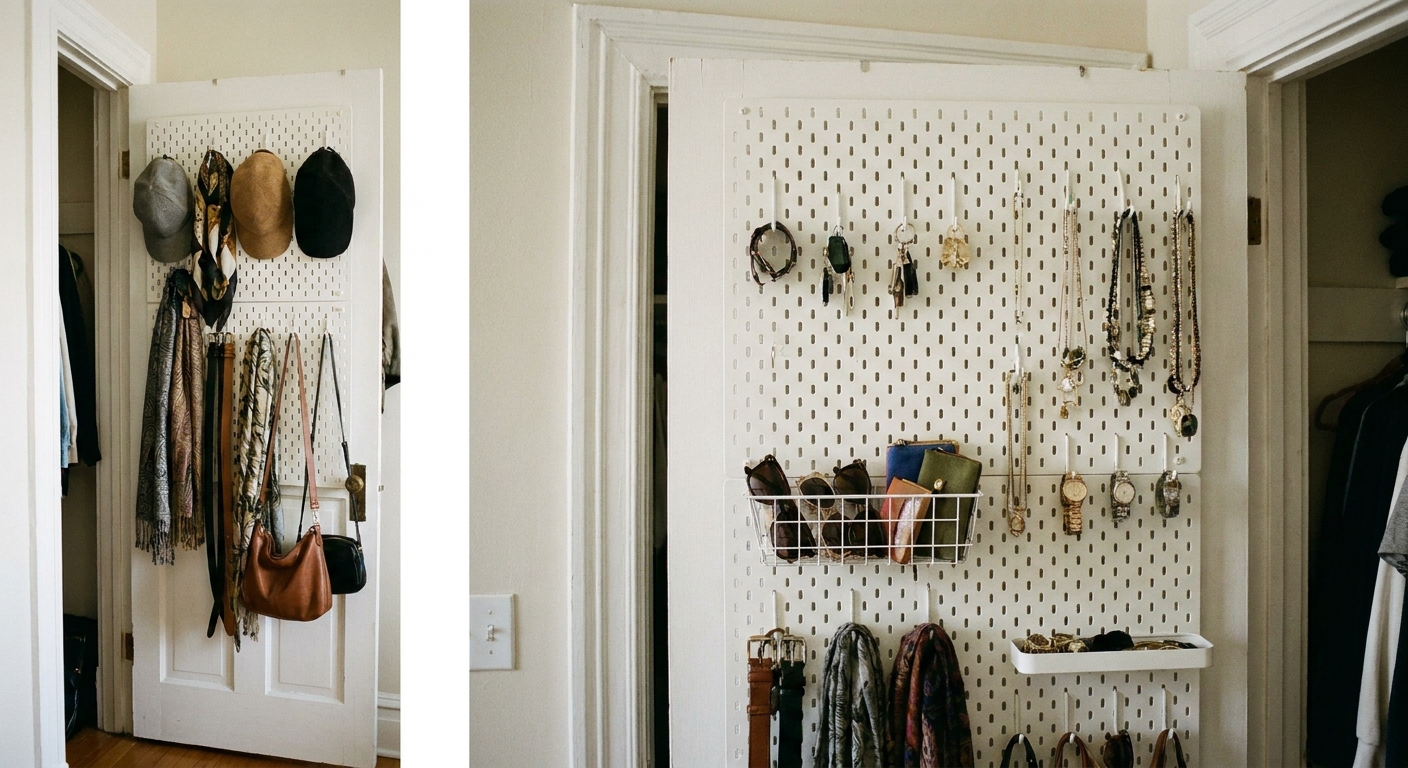
Pegboard is the most customizable option, and it is fantastic for problem categories like craft supplies, hair tools, or tools. You can move hooks as your needs change, which matters because our homes change season to season.
Great locations
- Back of a closet door for accessories
- Laundry room door for stain removers and lint rollers
- Home office door for headphones, cords, and notebooks
Keep it tidy: Use a small basket on one peg for “bits” (batteries, scissors, tape). A single catchall container prevents the tiny-item avalanche.
5) A shallow spice rack for toiletries
This one feels slightly cheeky, but it works: a slim spice rack or narrow wall shelf mounted to the back of a bathroom linen closet door can corral skincare and backup toiletries beautifully.
Use it for
- Backup toothpaste, deodorant, and soap
- Hair products you use weekly
- First-aid basics (bandages, antiseptic, ointment)
Prevent door bumps
- Keep shelf depth shallow (around 3 inches is often enough).
- Mount shelves in the middle area of the door, not at handle height where hands and elbows collide.
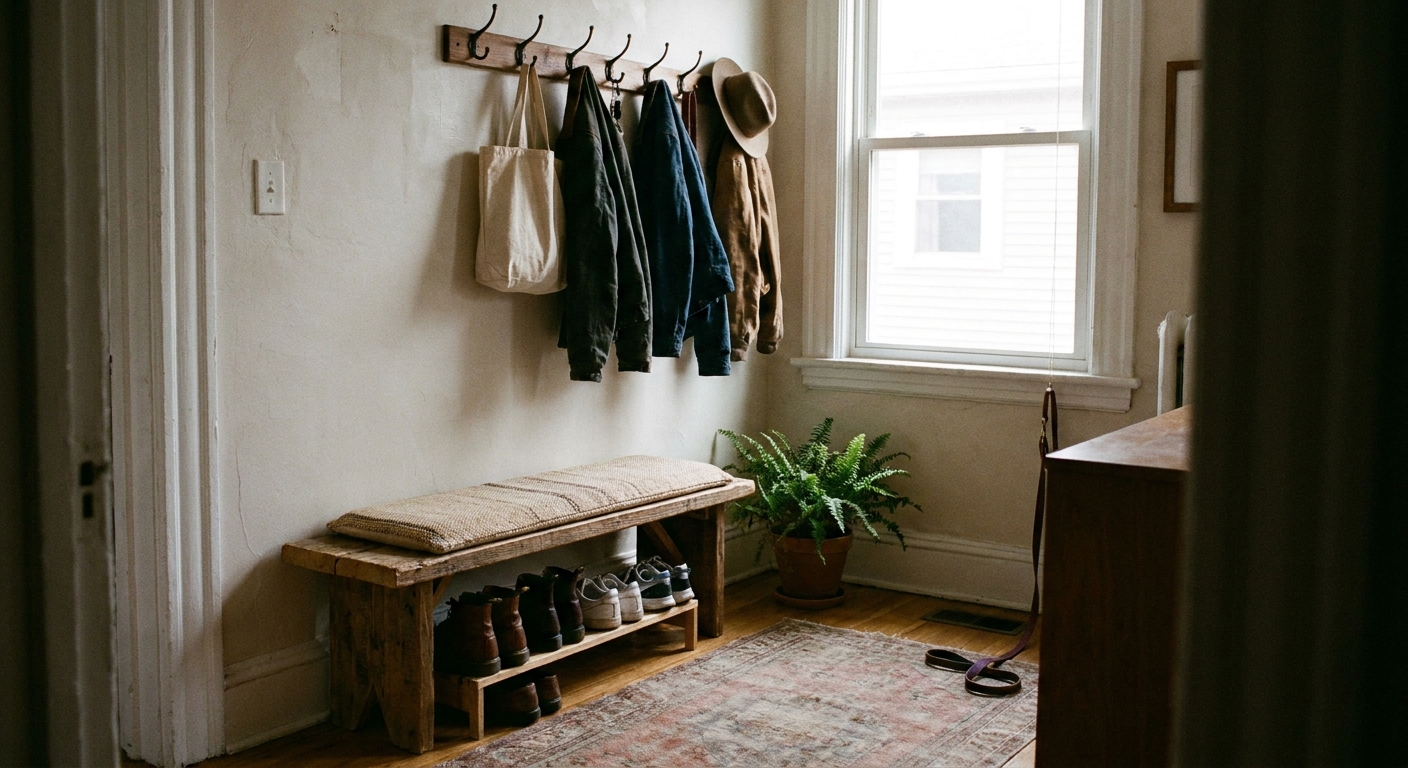
6) A mini mudroom on a closet door
If you do not have a real mudroom, the back of a coat closet door can do a lot of heavy lifting. The goal is to keep the closet floor clear so you are not stepping over shoes and sports gear.
My simple combo
- Over-the-door hooks for coats and bags
- A shoe organizer for the most-worn pairs
- A slim bin at the bottom for gloves and hats
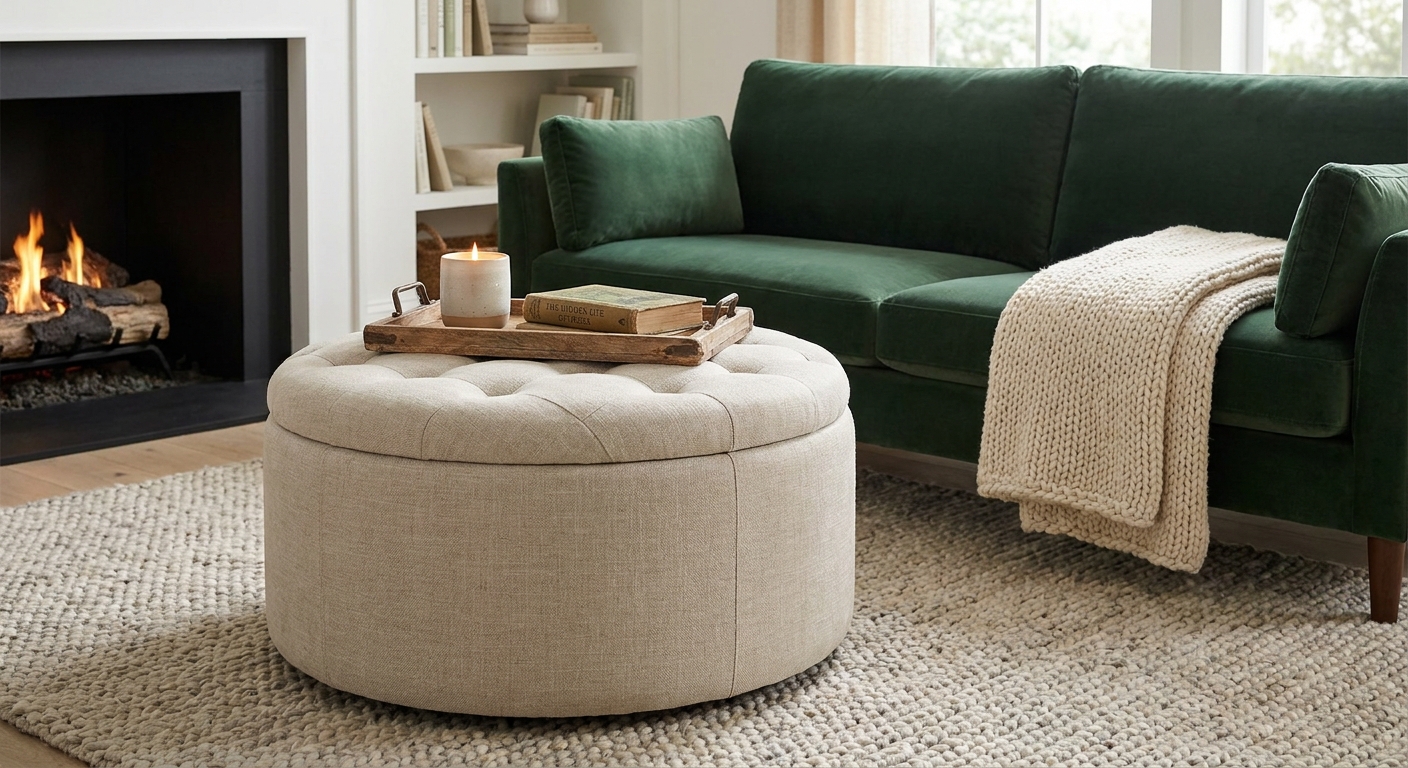
If the entry still overflows, I like adding one living-room piece that can quietly absorb the extras. 10 Stylish Coffee Table Alternatives With Hidden Storage has options that hide the stuff that migrates, like hats, dog gear, and the random pile that forms near the front door.
7) Magnetic strips for tiny metal essentials
A magnetic strip on the back of a utility door is a surprisingly clean way to store small metal items. Think of it as “vertical drawer space.”
What to store
- Tweezers, nail clippers, and small grooming scissors
- Small screwdrivers or a basic tool set
- Bobby pins in a small magnetic tin
Important: Tool-style magnetic strips can be very strong, so mount them securely and keep them high. Avoid storing sharp items at kid height, and keep strong magnets away from anyone with medical devices like pacemakers.
8) Hanging file pockets for paper clutter
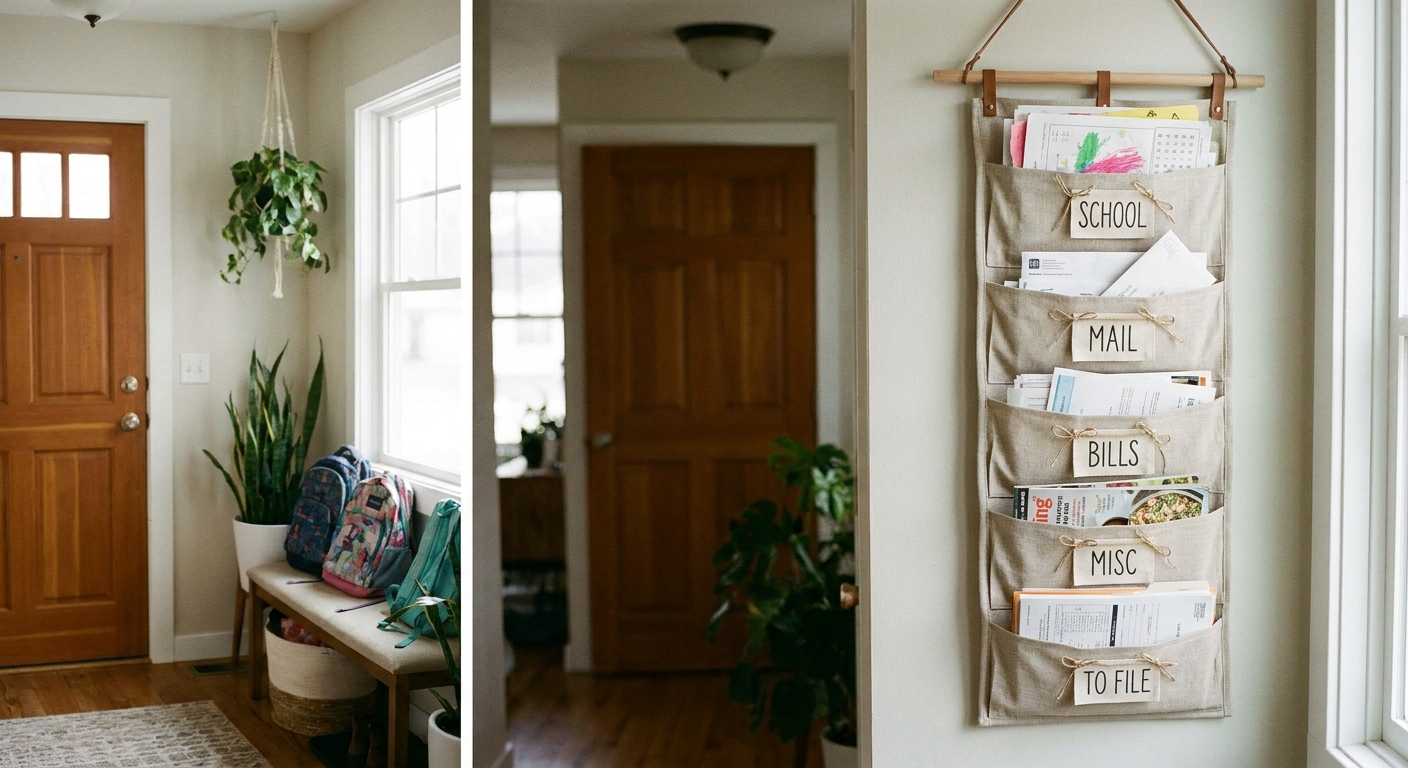
If paper piles breed on your kitchen counter, behind-the-door file pockets can be a game changer. I like putting these on the inside of a pantry door or a home office door.
Smart categories
- School forms to sign
- Coupons and gift cards
- Takeout menus (if you still get them)
- Instruction manuals you actually reference
Pair this with a calmer counter setup. I keep my kitchen “landing zone” strategies in Beautiful Kitchen Countertop Organization.
9) Two-step hooks for jewelry and accessories
Necklaces and belts love to tangle, especially when they are tossed into a drawer. Behind-the-door hooks keep them visible and separated.
How to set it up
- Use a top row of hooks for longer items (belts, long necklaces).
- Add a second row underneath for shorter pieces.
- Leave a small gap between hooks so chains do not overlap.
Quick win: Put tomorrow’s accessories on one dedicated hook. It is a tiny habit that makes mornings calmer.
10) A hidden gift-wrap station
Gift wrap is bulky, awkward, and one of those categories that tends to explode right before a birthday party. The back of a guest room or office door can hold a whole wrapping station without taking up a closet shelf.
What to hang
- Over-the-door hooks for gift bags
- A tall pocket organizer for ribbon, tape, tags, and scissors
- One vertical strap or two hooks for wrapping paper rolls
Keep it from feeling like “stuff”: Limit it to one door. When it outgrows the door, it is your sign to purge half-used rolls.
Common mistakes and fixes
- Too much depth. If the door cannot open fully or it rubs, go slimmer. Shallow beats bulky behind doors.
- Everything at eye level. Put daily items at chest height, and backups lower or higher.
- Overloading with heavy items. Doors are great for light to medium storage. For very heavy items or anything valuable, move to shelving or a cabinet.
- No category boundaries. Behind-the-door storage gets messy fast if it becomes a random catchall. One door, one purpose works best.
A simple plan to choose the right door
- Pick one problem category: shoes, cleaning, hair tools, papers, or pet stuff.
- Choose the best door: the one closest to where you use the items.
- Match the tool to the items: pockets for small things, racks for bottles, hooks for straps.
- Set a “full” line: when the organizer is full, something has to leave before something new comes in.
If you are organizing a small home overall, my favorite place to start is our Small Spaces guide. It is full of little changes that add up fast.