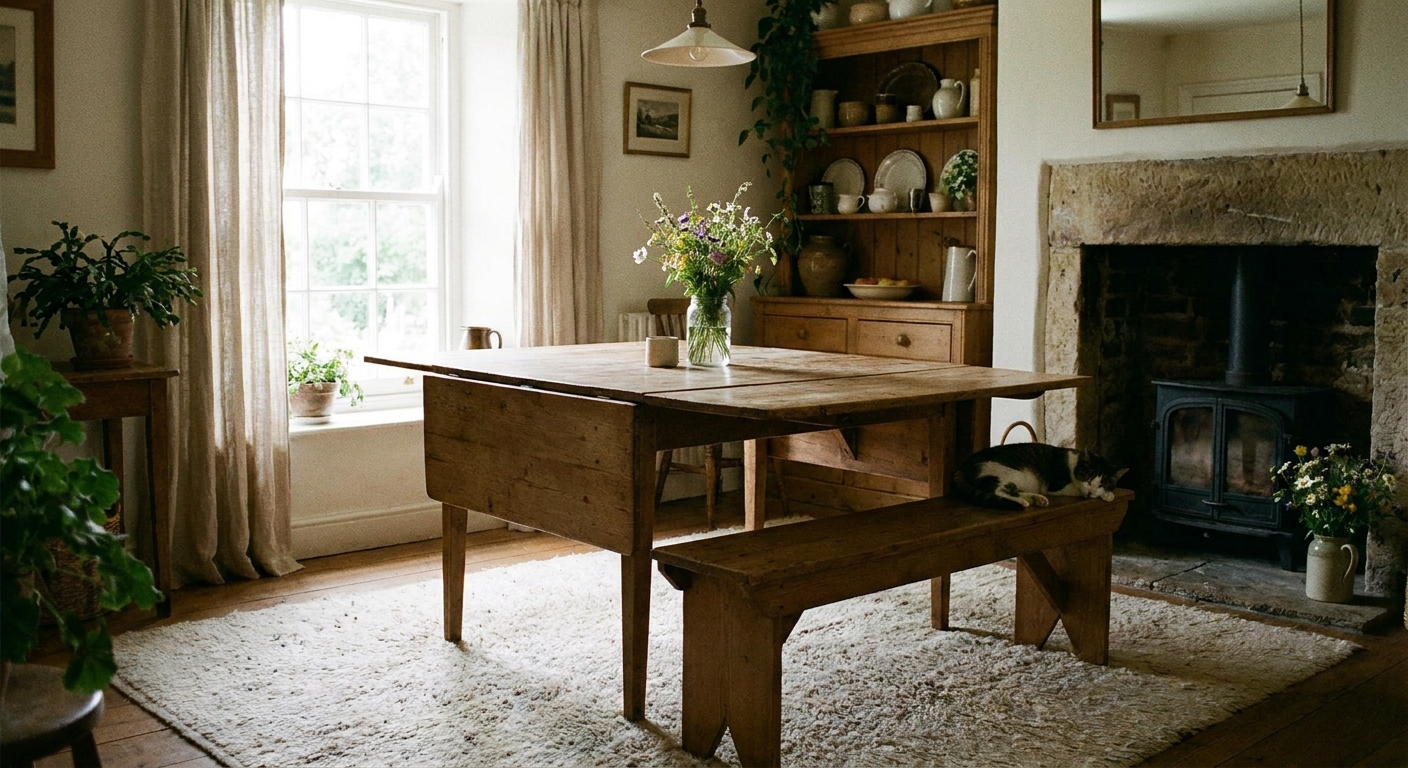
Want farmhouse warmth without a bulky dining set? Learn how to choose a sturdy drop-leaf table and benches that truly tuck, plus sizing, layout, and clutter-...
Minimalist Holiday Table Settings for Small Drop-Leaf and Round Tables

Published · Last updated
I love a holiday table, but I do not love playing dinner Tetris. Most years, my “dining room” has been a drop-leaf table shoved against a wall or a little round table that becomes everyone’s landing pad. The trick that finally made holidays feel calm in small spaces was going minimalist on purpose: fewer objects, better placement, and a centerpiece that leaves room for actual food.
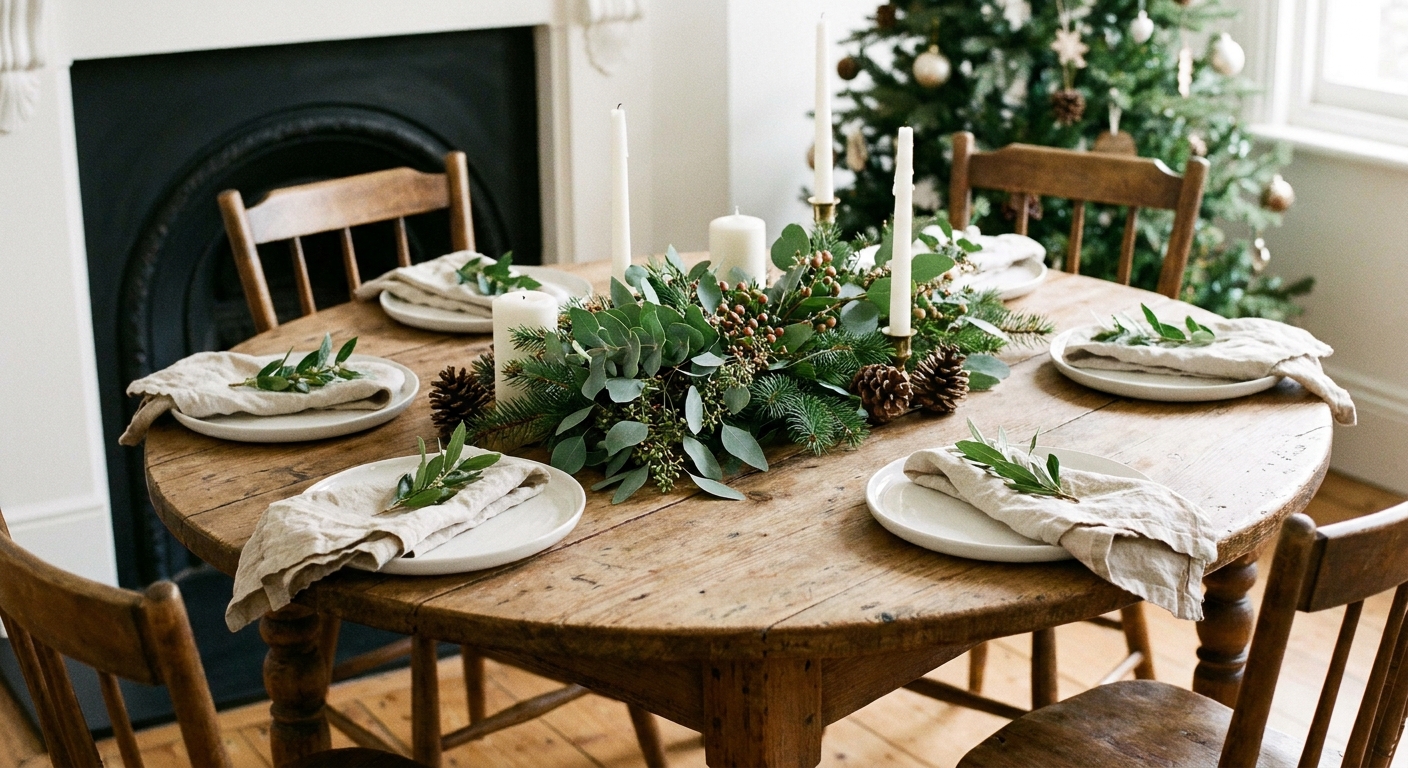
Below are my go-to table setting formulas for small drop-leaf and round tables, plus centerpiece ideas that look festive without stealing elbow room.
The small-table rules I follow every holiday
- Keep the centerpiece low or narrow. If it blocks faces or forces serving dishes onto laps, it is too big.
- Build around a “landing lane.” On a drop-leaf, I keep a clear strip down the center. On a round table, I keep the centerpiece compact so the perimeter stays open for place settings and glasses.
- Use one metal, one neutral, one seasonal color. That is the whole palette. It reads intentional, not sparse.
- Choose a napkin moment over extra decor. A folded napkin and a sprig of something green often replace place cards, chargers, and scatter pieces.
- Limit each place setting to what you actually use. Plate, fork, knife, spoon if needed, one glass. Extras can wait on a side surface.
If you are also trying to keep surfaces from piling up before guests arrive, you will probably like my approach to reset routines in the one-in, one-out rule for small homes. Less in the room means your table can shine.
Measure first: a centerpiece size guide
These numbers are my personal starting points after a lot of trial-and-error on small tables. Use them as a guide, then adjust based on how you serve (family-style needs more open space than plated meals).
| Table type | Best centerpiece shape | Comfortable footprint | Max height target |
|---|---|---|---|
| Small round (36–42 in) | Low bowl or tight cluster | About 10–14 in wide | About 6–10 in |
| Small drop-leaf (leaves up) | Narrow runner-style line | About 6–8 in wide | About 6–10 in |
| Drop-leaf (one leaf down) | Offset centerpiece | About 8–12 in wide | About 6–10 in |
My personal test: set the table with plates first, then put painter’s tape down where you want the centerpiece to live. If you cannot comfortably set down a serving bowl without bumping decor, shrink the footprint.
Minimal centerpieces that still feel festive
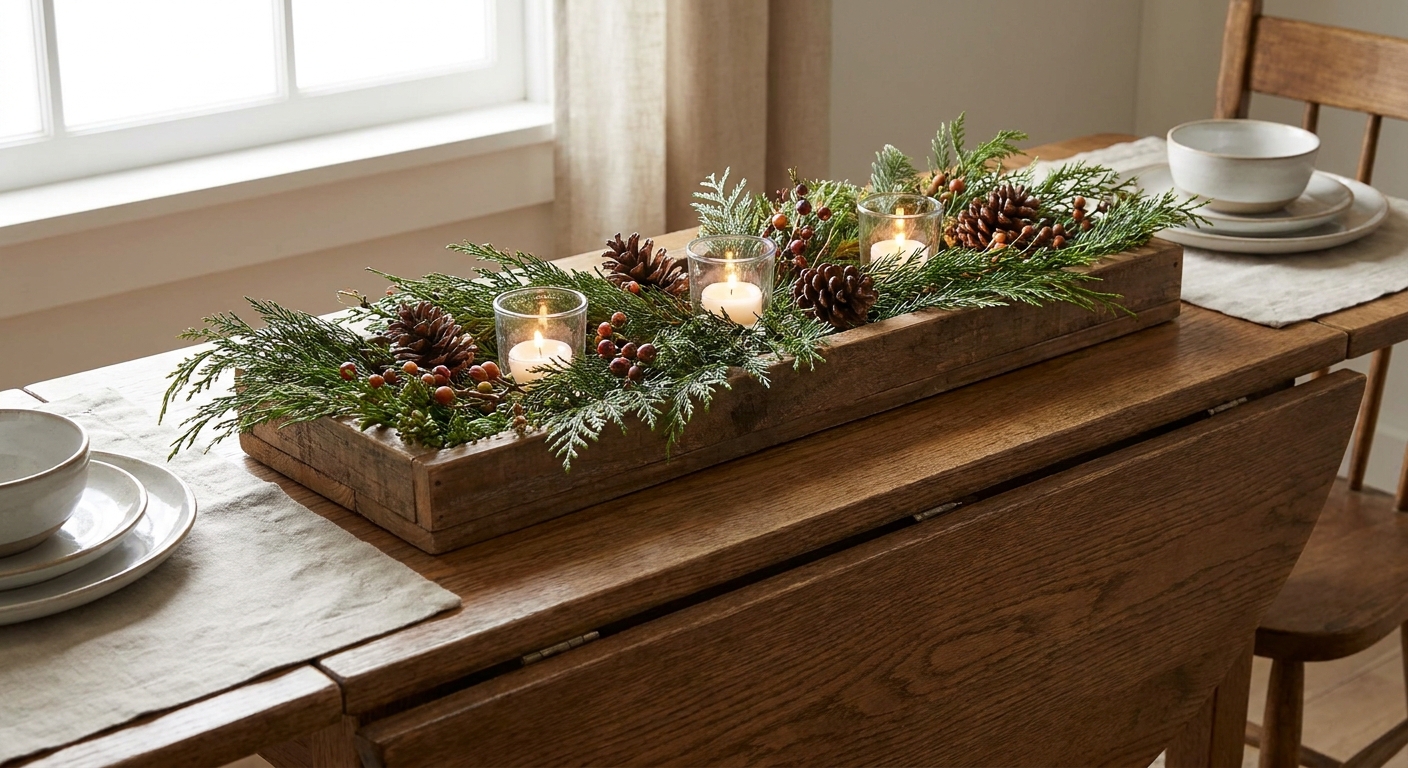
1) The “low evergreen trough” (best for drop-leaf tables)
This is my favorite for narrow tables because it reads lush but stays slim.
- Base: a long, low tray or narrow board
- Greenery: a single type (cedar, pine, or eucalyptus)
- Glow: 3 to 5 tea lights or short votives
- Accent: a handful of dried orange slices or cinnamon sticks
Small-space tweak: keep it to the middle third of the table, not the full length, so serving dishes can park at each end.
Safety note: if you use real candles near greenery, keep flames in sturdy holders and away from dry foliage. LED votives are a stress-free swap.
2) One statement vase, nothing else (best for round tables)
A single vase can look incredibly finished on a small table, especially when everything else stays simple.
- Choose a short, wide vase or a low bowl so guests can see each other.
- Use one stem type: white flowers, bare branches, or eucalyptus.
- Skip the runner. Let the tabletop be the negative space.
3) The “three-object cluster” (when you have almost no room)
If your table is truly tiny, a trio looks intentional and easy to move.
- One small candle (or two short ones)
- One mini greenery bundle
- One small bowl for nuts, cranberries, or wrapped chocolates
Keep the cluster tight, like it is one unit. When food arrives, pick up the whole cluster and set it on a counter.
4) A napkin-and-greenery “centerpiece” (zero footprint)
This is my secret weapon for drop-leaf tables during big meals. Instead of decorating the center, I decorate each setting.
- Fold a neutral napkin (linen, cotton, or paper)
- Tuck in a rosemary sprig, tiny pine clipping, or a cinnamon stick
- Add a plain tag if you need names, or skip it
The table still feels festive, but the center stays open for platters.
Place settings that look elevated
Formula A: Cozy minimal
- Plain dinner plate
- Neutral napkin (folded simply)
- One fork, one knife
- One water glass
- Optional: one tiny sprig of greenery on the napkin
Why it works: it reads calm and classic. No chargers, no stacked plates, no extra clutter.
Formula B: Modern farmhouse minimal
- White or cream plate
- Natural element: wood board in the center or a woven runner
- Matte black or brushed metal flatware if you have it
- Simple candlelight
If you like that lived-in farmhouse feel, our farmhouse style guide has more ideas for keeping it cozy without crowding your space.
Formula C: Kid-proof festive
- Plates only (skip extra layers)
- Water glasses that are sturdy, or use stemless
- Paper napkins dressed up with greenery or twine
- Centerpiece that is unbreakable: greenery on a board, LED votives, or a low bowl
In my house, this is the difference between enjoying dinner and hovering like a nervous waitress.
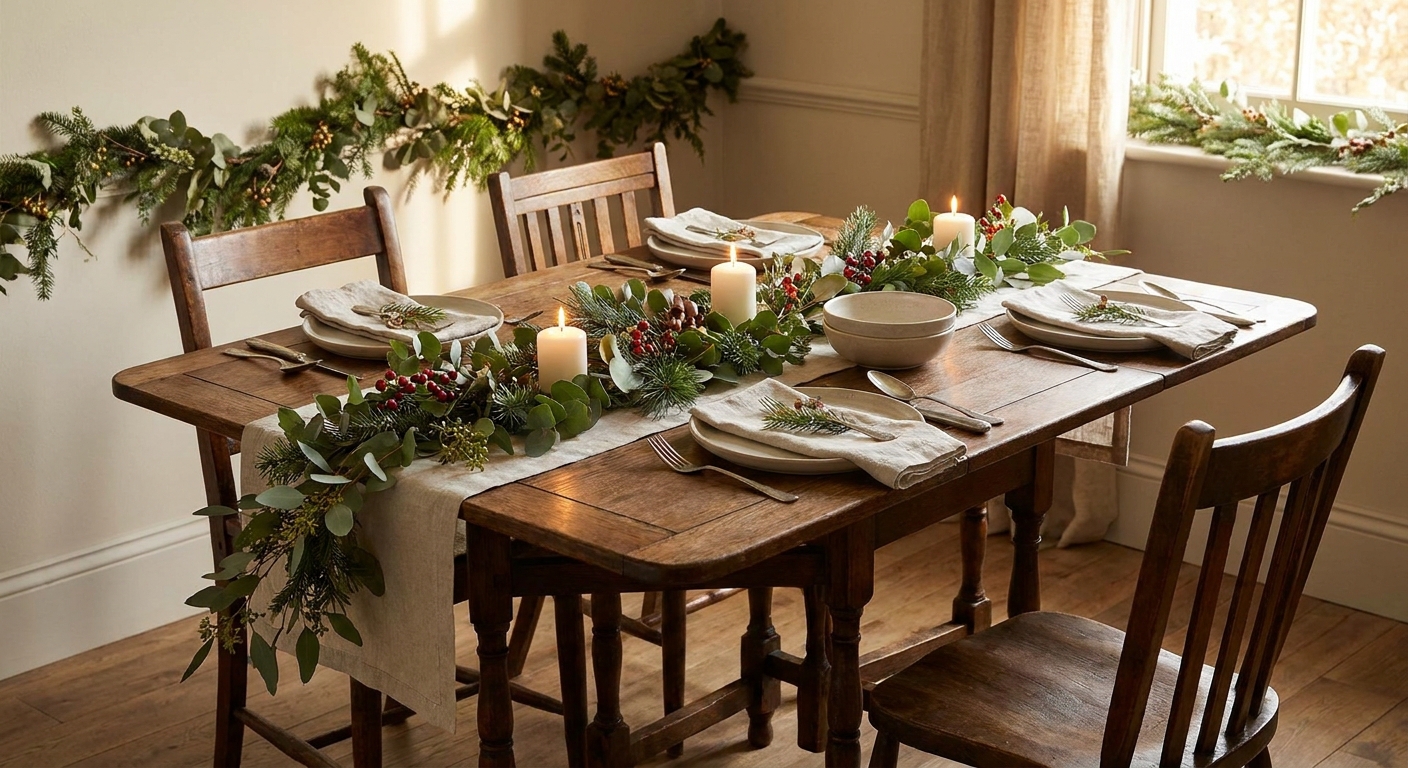
Set a small drop-leaf table
Drop-leaf tables are amazing, but only if the leaf math matches your meal.
- Decide what the table needs to hold. If you will serve family-style, leave more open space. If you will plate in the kitchen, you can decorate a little more.
- Pick one centerpiece lane. Either a narrow strip down the middle (when both leaves are up) or an offset cluster (when one leaf is down).
- Use the ends as parking. I keep salt, pepper, and one small serving utensil crock at one end so the center stays less busy.
- Plan your overflow surface. A nearby cart or counter is your best friend for extra serving pieces. If you are working with a compact kitchen too, slim butcher block carts can be a lifesaver during holiday meals.
Set a small round table
Round tables are naturally social, but they get crowded fast. Here is what helps most:
- Keep the centerpiece compact. Think low bowl, not tall arrangement, so the perimeter stays usable for plates and glasses.
- Skip the runner unless it is very small. A runner on a round table often eats visual space and makes the surface feel busy.
- Use a lazy Susan only if it replaces clutter. A rotating tray can be great for condiments, but not if it becomes a decor shelf.
- Angle place settings slightly. A small rotation can create more breathing room between glasses.
Quick seating reality check: a 36 to 42 inch round often feels best with about 3 to 4 adults for a full meal, especially if you are doing family-style serving. If you need to squeeze in more people, I switch to plated service or set up a small buffet on the counter so the table can stay simple.
And if your dining area is part of your living room, lighting matters too. Swapping bulky table lamps for wall lighting can make the whole corner feel calmer. See wall sconces vs floor lamps for small rooms.
Simple holiday color combos
- Evergreen + white + brass: classic, warm, and bright for dim winter afternoons.
- Natural linen + wood + deep red accents: use cranberries, red apples, or one red candle.
- All neutrals + candlelight: cream, tan, and black flatware. Let texture do the work.
- Green + clay tones: terracotta napkins or rust candles with cedar.
I keep the “holiday” element to one or two things: greenery, candles, and maybe one seasonal accent. Anything beyond that starts to feel like clutter, especially on a small table.
Quick fixes when it feels crowded
- Trade the centerpiece for place setting details. Napkins and a sprig beat a bulky arrangement.
- Move drinks off the table. A pitcher and extra glasses can live on the counter or a cart.
- Serve in courses. Put the salad bowl away before the main course hits the table.
- Use smaller serving pieces. Two medium bowls often fit better than one huge one.
- Declutter nearby surfaces first. When counters are calm, it is easier to stage the meal. I keep a running list of what actually helps in beautiful kitchen countertop organization.
FAQ
How do I make a holiday table look special without a centerpiece?
Lean on candlelight and textiles. A simple napkin fold plus a sprig of rosemary at each place setting reads festive immediately. If you want one focal point, use a single low bowl with greenery and call it done.
What centerpiece height is best for conversation?
My default is under 10 inches so it is easy to see over. If you want height, go very tall and narrow so sightlines still work around it, and keep the base footprint small.
Can I use a runner on a drop-leaf table?
Yes, but keep it narrow and avoid anything too thick. A slim runner that is about 6 to 8 inches wide helps define the centerpiece lane without stealing space from plates.
A calm holiday table is functional
The most beautiful small-table holiday setup is the one where people can actually eat, pass dishes, and relax. If you are choosing between more decor and more breathing room, I vote breathing room every time. The cheer shows up in the candlelight, the shared meal, and the fact that nobody is balancing a plate on the edge of their knee.
If you want more small-space seasonal ideas that stay practical, you can browse our Seasonal Decor guide.