
Space-Saving Farmhouse Dining With Drop-Leaf Tables and Tuckaway Benches

In my smallest apartment, the “dining room” was the three feet between the kitchenette and the sofa. I still wanted that warm farmhouse feeling, though. Real wood. A simple table. A place where you can drop keys, do homework, and actually sit down for a meal. The trick was choosing furniture that could disappear the second we were done eating.
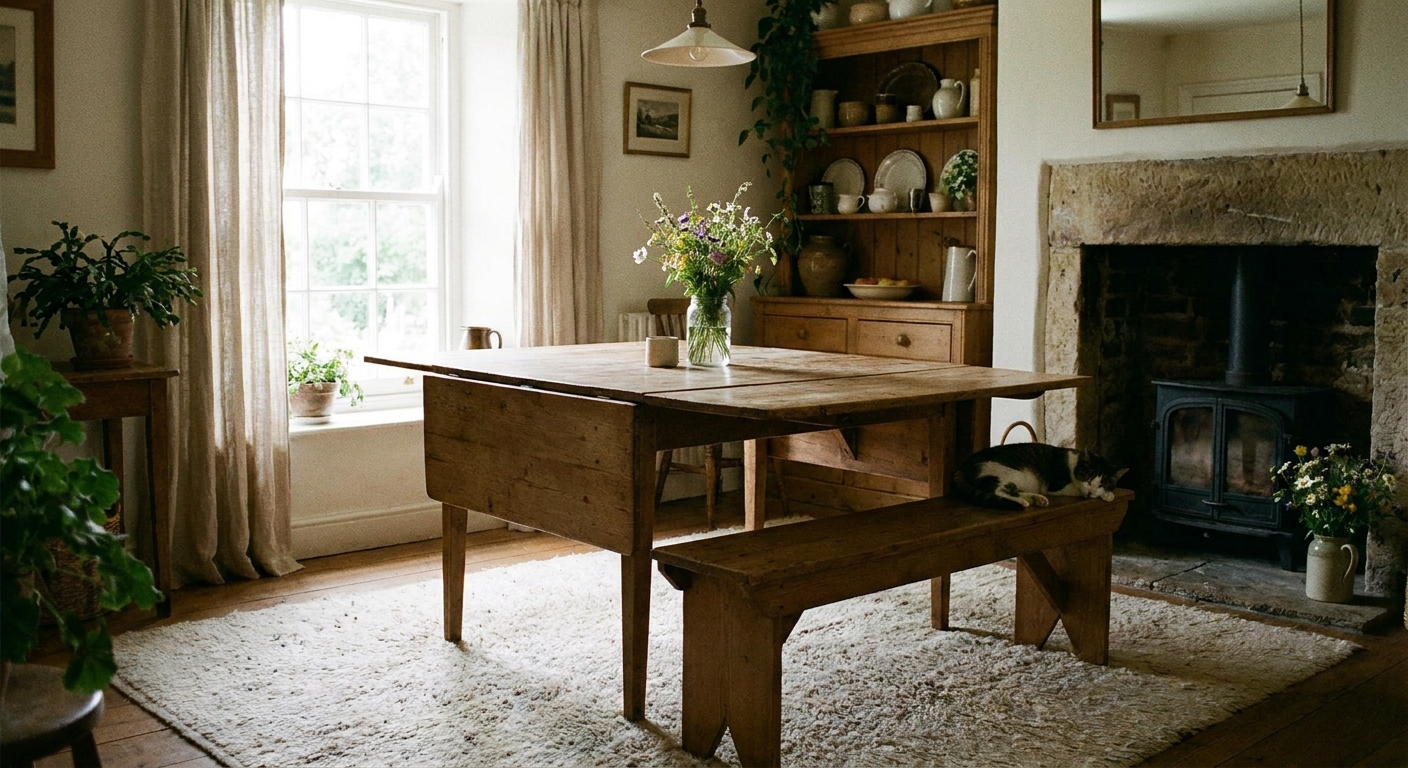
A farmhouse look does not have to mean a big, heavy trestle table that dominates the room. If your space has to work hard, a drop-leaf table plus tuckaway benches can give you that rustic, gathered-around-the-table vibe without permanently giving up your floor.
Why this combo works
Drop-leaf tables and slide-under benches are basically the farmhouse version of a fold-away desk. They let you keep a real dining setup, but only claim the space when you need it.
- Drop-leaf tables flex with your day. One leaf up for breakfast, both down for puzzles, both up when guests come.
- Benches tuck fully away. Chairs demand a pull-back zone. Benches can often slide under the table so the walkway stays open.
- Farmhouse style is forgiving. Wood grain, light wear, and simple silhouettes hide everyday life better than glossy modern finishes, at least in my experience.
If you are also trying to squeeze work or homework into the same area, the approach is very similar to what I use in a living room office setup. I wrote about that in Fold-Away Desk Setup for a Multi-Use Living Room.
Shopping guide: drop-leaf tables
Not all drop-leaf tables feel sturdy, and in a busy household you will notice fast if the leaves wobble or the hinges pinch.
Pick a shape for your traffic flow
- Round or oval drop-leaf: Softer edges for tight walkways and fewer bruised hips. Great when the table sits near a main path.
- Square or rectangular drop-leaf: Best if you want the table to sit against a wall most days, then pull out when needed.
Check the leaf support style
You are aiming for a leaf that feels like part of the table, not an afterthought.
- Gateleg supports (swing-out legs): Usually very stable and classic farmhouse. Make sure the legs swing smoothly without scraping the floor.
- Bracket supports: Cleaner look and often lighter weight, but can feel less solid if the table is budget-made.
- Pedestal styles: Great knee clearance, but double-check the mechanism. Some pedestal tables use drop leaves, and others use a butterfly or extension leaf instead. They shop differently, and the wrong listing can be an annoying surprise.
Farmhouse finishes that live well
- Solid wood, or quality veneer over a stable core: Both can hold up well. If it is veneer, I look for a thicker feel and a base that does not flex.
- Matte or satin finish: These usually show fewer fingerprints and water spots than high-gloss, especially in family zones.
- Distressed or wire-brushed texture: If you have kids, this can be a best friend. It tends to blend little dings into the patina.
My quick stability test
If you can test in person: extend a leaf, press down with one hand near the outer corner, and gently wiggle side to side. A tiny bit of movement is normal. A shudder or shift at the hinge is a red flag.
Quick safety check
Before you bring it home, run your hand along the underside where the leaf folds. If there are exposed hinges or a gateleg that snaps into place, make sure there is enough clearance that little fingers are not naturally landing right at the pinch points. At home, I remind kids that only adults flip the leaves, and I keep the swing-out legs fully locked before anyone leans.
Shopping guide: tuckaway benches
Benches are not automatically space-saving. The magic is when they slide fully under the tabletop so you get your walkway back.
Measure for a true tuck
Before you buy anything, measure these three things:
- Table underside clearance: From floor to the lowest apron or support bar.
- Bench seat height: Leave about 1 to 2 inches of extra clearance so the bench can slide under without catching, especially if you plan to add a cushion.
- Bench depth: A deep bench might still stick out and steal your walking lane even when pushed in.
Backless vs. backed benches
- Backless benches: Easiest to tuck away and best for tight rooms.
- Benches with backs: Comfortable, but they rarely slide under fully. If you choose one, make sure you have extra clearance behind it.
Farmhouse details that stay light
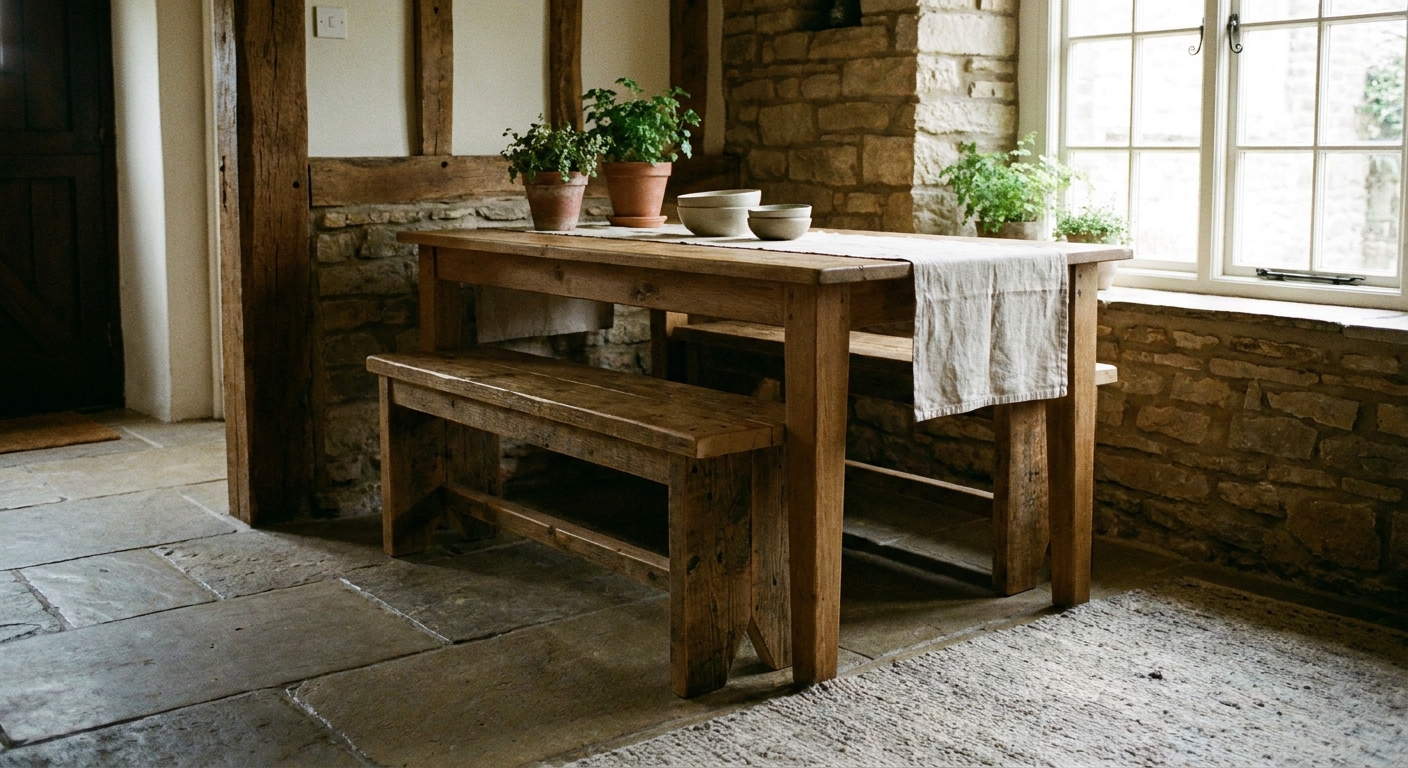
- Simple plank tops
- Turned legs or trestle bases that echo rustic style
- Warm wood tones or painted bases (cream, soft black, sage)
Floor protection and noise
Because you are sliding seating in and out a lot, I always plan for floor-friendly feet:
- Felt pads under the bench feet make the biggest difference for noise and scuffs.
- Chair socks or soft glides help if your bench has a tendency to scrape.
- If you use a rug, consider placing it so only the front legs of the table sit on it, or choose a low-pile rug that still lets the bench slide. If the rug grabs, the bench will never tuck smoothly.
Size it right
When people tell me “I do not have room for a dining area,” it is usually because the spacing is off. Here is what tends to work in real-life small rooms.
Comfort spacing targets
- Tabletop height: Most are around 29 to 30 inches, which is standard.
- Seat height: Many benches land around 17 to 19 inches.
- Space between seat and tabletop: About 10 to 12 inches is typical, but check your specific setup. Thick cushions and chunky table aprons can steal comfort fast.
Walkway planning
In a perfect world you would keep about 36 inches for a walkway. In a tight apartment, you can often make about 30 inches work if your seating tucks away and you are not trying to pass behind someone seated. If people need to walk through while someone is eating, that is when the extra inches really matter.
If your dining setup shares a living room, you might like the rug spacing ideas in Area Rug Size and Placement Rules for Small Living Rooms. The same keep-pathways-clear principle applies.
Seating capacity reality check
This is the part listings rarely make clear. In most small homes, I plan like this:
- Leaves down: 1 to 2 people comfortably, plus it works as a desk or landing zone.
- One leaf up: usually 2 people comfortably, sometimes 3 if you do not mind cozy.
- Both leaves up: often 4 in a pinch, especially if one side is a bench and you can scoot. Comfort depends on table width and where the legs land.
Bench length matters more than you think. If the bench is too short, you lose the whole point. If it is too long, it will not tuck and you will hate it. I like a bench that leaves a little breathing room near the table legs so it slides in straight without angling.
Style without clutter
Farmhouse style can turn into stuff-on-surfaces really quickly. In a small home, I try to keep the vibe warm and rustic, but the table still needs to fold down without moving fifteen decorative items first.
Keep the centerpiece movable
- A shallow tray with salt, pepper, and a small bud vase looks intentional, and you can lift it off in one move.
- A folded runner instead of a full drape keeps the leaves from bunching and catching.
- A low bowl for fruit or napkins adds farmhouse charm without blocking sightlines.
Lighting that saves floor space
If you cannot hardwire a pendant, a wall-mounted plug-in sconce can give you that cozy dining glow without sacrificing room to a big floor lamp. I break down the tradeoffs in Wall Sconces vs. Floor Lamps for Small Rooms.
Textiles that are not precious
If your table is doing double duty as homework central, skip anything that needs constant fussing. Washable cotton napkins, a simple runner, and wipeable placemats go a long way.
Parking spots that stick
The reason this setup stays pleasant is that everything has a home when the table is folded down. These are my favorite little systems.
A seating plan you can maintain
- Bench under the table: Default position when not eating.
- Two lightweight chairs stored elsewhere: Bring them in only when you have company. A narrow hall wall or bedroom corner can work if you have a plan.
- One wall hook or basket for linens: So the runner and napkins do not live on the tabletop.
Keep the tabletop clear with a stash basket
If crayons, chargers, and dog leash odds and ends keep landing on the table, give them a container that can be lifted off instantly when you need to eat. I use small fabric bins on shelves and consoles constantly. If you want to sew one, my step-by-step guide is here: DIY Fabric Storage Basket for Shelf Clutter.
Layout ideas
1) The wall-hugger
Keep the table against the wall with both leaves down. Use a bench that fully tucks under. When you need a proper meal, pull the table out a foot or two and flip one leaf up.
2) The corner nook
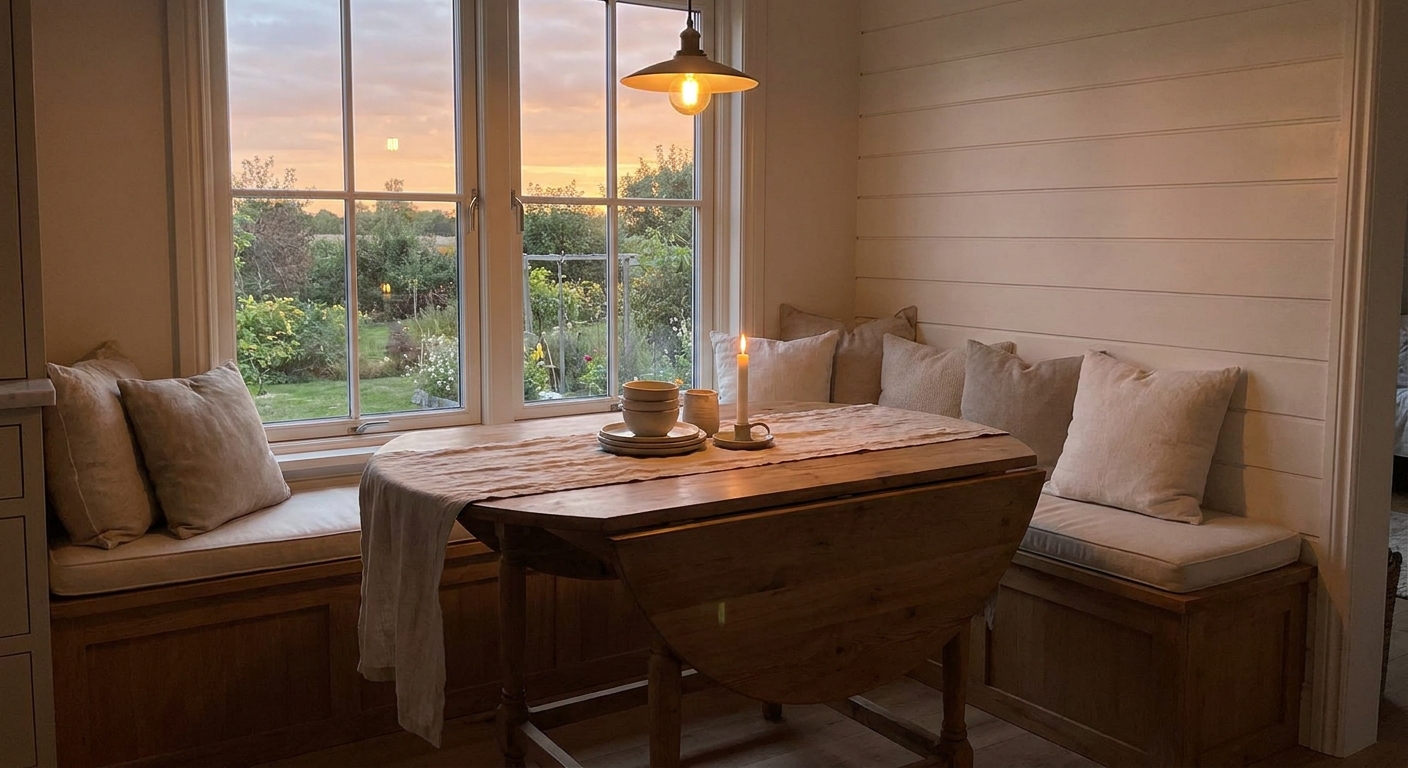
If you have one decent corner, a drop-leaf table can act like a mini nook without permanent banquette seating. The key is choosing a table that still gives knee room when placed near walls.
3) The open-plan landing zone
In open layouts, the dining surface often becomes the dumping zone. A tray centerpiece and a basket system help, but so does improving nearby kitchen storage so items have somewhere else to go. If your counters are part of the dining clutter problem, start with Beautiful Kitchen Countertop Organization.
Common problems
The leaves feel wobbly
- Check that the support legs or brackets are fully locked into position.
- Add small felt pads under support legs if the floor is uneven.
- If the hinges are loose, gently tighten hardware. Do not overtighten and strip the wood.
The bench will not slide smoothly
- Measure the tight spot. It is often the table apron catching the bench edge.
- Add felt pads to bench feet so you are gliding, not dragging.
- Consider a slightly shorter bench that fits between table legs without angling.
Farmhouse looks messy
- Limit your tabletop decor to one movable piece.
- Choose one wood tone as the main tone and let other pieces be supporting players.
- Use closed storage nearby for paper clutter. Even one basket can change the whole feel.
FAQ
Are benches comfortable for long dinners?
They can be, especially if the bench depth is not too shallow and you add a thin cushion. For everyday family meals, I love benches. For marathon board game nights, I usually pull in two chairs for back support.
What is the biggest mistake when buying a drop-leaf table?
Buying based on the fully extended size without considering how it lives day to day. If you hate the collapsed footprint or it blocks your path even with leaves down, you will resent it.
Can I do farmhouse dining in a studio apartment?
Yes. Treat it like a flexible zone. A drop-leaf table becomes your desk and dining spot, and the benches become your secret weapon for keeping the floor clear when you are not eating.
If you want to lean further into rustic style without turning your small room into a themed set, my broader approach is in Farmhouse Style.