
Slim Butcher Block Carts for Small Kitchens

In my first tiny city apartment, I fell in love with the look of a chunky farmhouse island. I also learned the hard way that what looks charming in a wide-open kitchen can feel like a boulder in a galley. If you have ever had to do that sideways shuffle past an open dishwasher, you know what I mean.
A slim butcher block cart is the small-space compromise I actually recommend. You still get warm wood, that practical “work surface” feeling, and a bit of rustic character, but you can move it, tuck it, and live around it. The goal is not to recreate a magazine kitchen. It is to chop an onion without blocking the whole family’s path to the fridge.
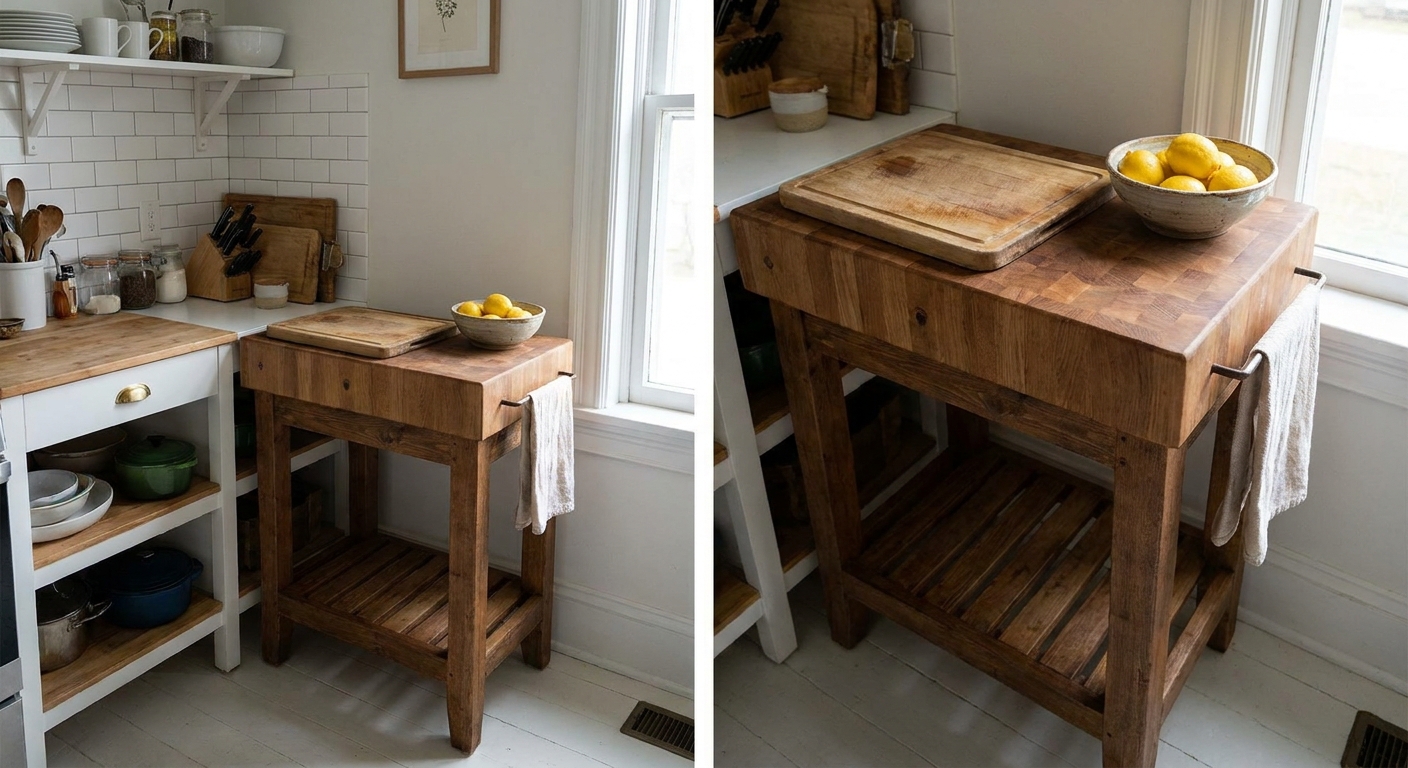
Cart vs island: the small-space difference
Both a stationary island and a mobile prep cart can add storage and work surface. The difference is what they do to your traffic flow and how much commitment they require.
Why a slim cart usually wins in a compact kitchen
- It is forgiving. If you misjudge the placement, you can roll it six inches and suddenly the kitchen works again.
- It can live “off duty.” Park it tight to a wall when you need a clear walkway, then pull it out when you are actually cooking.
- It is a better fit for rentals. No anchoring, no electrical work, no permanent layout change.
- You can size it to the problem. In a narrow kitchen, depth is the enemy. Slim carts tend to focus on the surface you need without the bulk you do not.
When a stationary island can still make sense
I am not anti-island. I am anti-island-in-the-way. A fixed island tends to work best when you have generous clearance on all sides and you want it to be the anchor of the room. If you regularly cook with two people, use stools daily, or want to add major cabinetry storage, a well-sized island can be worth it.
If your kitchen already feels tight, though, a cart is the low-risk way to add function without permanently shrinking the room.
Measurements that matter
Here is my practical rule: measure for walking first, then measure for storage.
Clearance targets I use at home
- Main walkway: A common target is about 36 inches of clear space where people pass through. In some tight layouts, 32 to 36 inches can still function, but if two people cook together, 42 inches or more feels noticeably easier.
- In front of appliances: Make sure you can open the oven or dishwasher without the cart forcing you into a corner. If your dishwasher drops open into the path, a movable cart is your best friend.
- Depth check: As a rule of thumb, many people find a cart around 14 to 18 inches deep easier to live with than something closer to 24 inches, especially in a galley.
My little reality check: put painter’s tape on the floor to “draw” the cart footprint before you buy. Live with that taped rectangle for a day. If you keep stepping over it, you have your answer.
What to look for in a slim cart
Not all carts are created equal. Some are genuinely helpful. Others are basically a wobbly table with wheels.
Stability first
- Locking casters on at least two wheels. If you plan to chop, mix, or do light kneading, you want the cart to stay put.
- For heavier work, upgrade the locks. If you knead aggressively or you know you will lean your weight into it, look for four locking casters, or a cart that can brace with rubber feet once it is parked.
- A solid base. A lower shelf or side rails often help reduce wobble.
- Weight capacity that matches your habits. If you will store a stand mixer, small appliances, or a stack of pots, you need a sturdier frame.
A height that feels like real counter space
If you want the cart to function like an actual prep zone, aim for one that lands close to standard counter height, around 36 inches. Too low feels like a kid table. Too high gets awkward fast when you are chopping.
Wheels that roll well on your floors
Carts behave very differently on tile versus wood, and tiny wheels can catch on grout lines or thresholds. If your kitchen has transitions, look for slightly larger, rubber or soft-tread casters so the cart rolls smoothly without rattling across the floor.
A top that fits how you cook
- Real wood butcher block or thick wood top feels warm and farmhouse-friendly, but how it wears depends on the finish and how you treat it.
- Know what “butcher block” means here. Some tops are sealed and meant for serving and prep, not for cutting directly. Others are unfinished or more porous and need more regular oiling. Either way, if you cut right on the top, it will show marks over time.
- Edge detail you can wipe. Fancy grooves can trap crumbs. If you have kids, you will notice.
Storage that does not become clutter storage
The cart should earn its footprint. I like one main “job” per level, such as:
- Top: prep zone
- Middle shelf or drawer: everyday tools (towels, foil, measuring cups)
- Bottom shelf: heavy, contained items (small appliances in bins, or a basket of snacks)
If you know you are prone to visual clutter, prioritize closed storage. Even one drawer can make a cart look calm instead of chaotic.
How to use a slim cart like a mini island
The biggest win is using the cart for “task zones” instead of letting it become the kitchen’s junk magnet.
Zone ideas that work in real life
- Prep station: Keep a cutting board, knife block alternative, and a small compost bowl. Roll it next to the sink while you chop.
- Coffee station overflow: If your counter is crowded, park mugs, pods, tea, or a grinder on the cart. For other clever surface-saving swaps, I like the thinking in Beautiful Kitchen Countertop Organization.
- Baking buddy: Store mixing bowls and baking sheets below, then pull the cart out only when you bake.
- Weeknight serving spot: Roll it to the dining area as a simple buffet so the kitchen stays clear.
The “park position” matters
I always choose a default home for the cart, like a wall by the pantry or the dead space at the end of a cabinet run. If the cart has no clear home, it will constantly be “in the way,” which is exactly what we are trying to avoid.
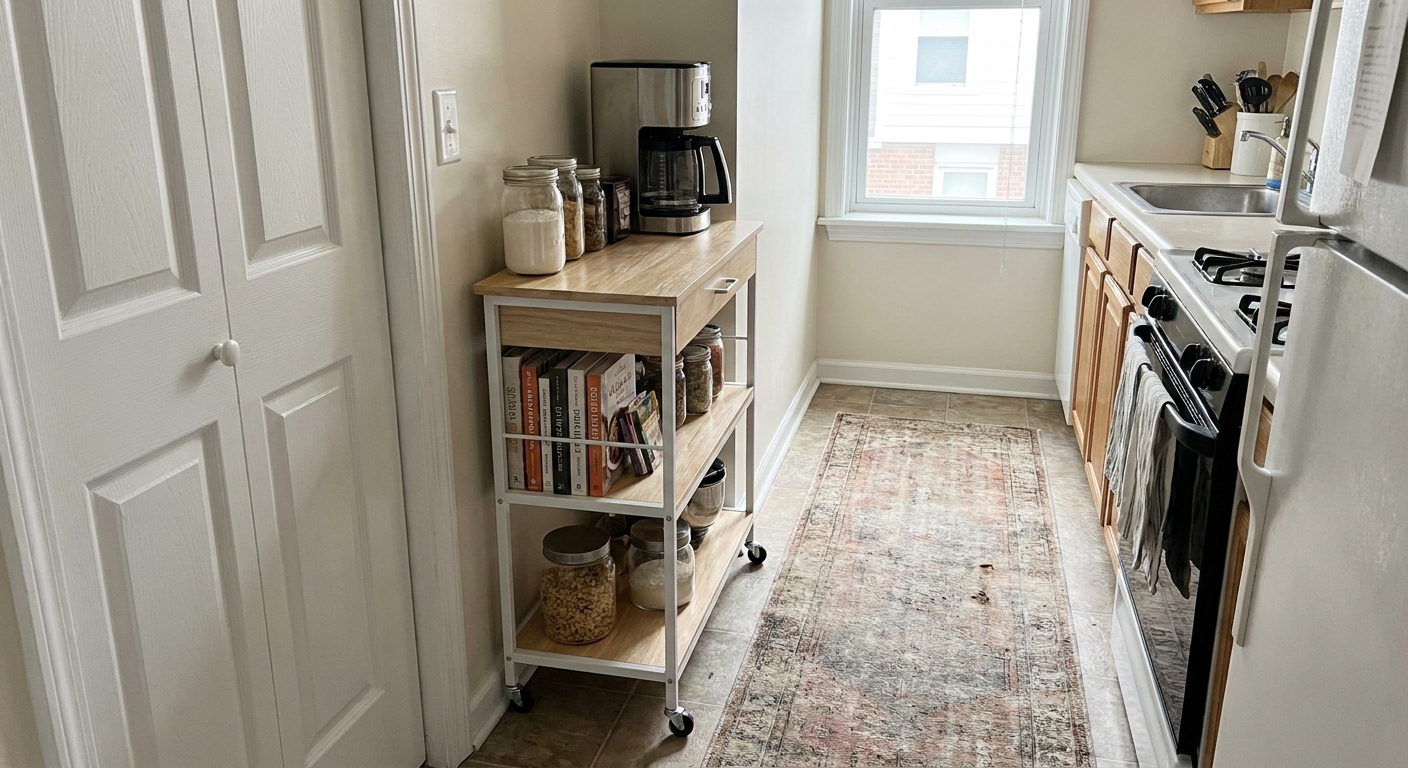
Farmhouse style without the bulk
Farmhouse style is more than oversized furniture. In a small kitchen, the vibe comes from texture, warmth, and honest materials.
Easy ways to style a butcher block cart
- Keep the top mostly clear. One crock of wooden utensils and a small tray reads intentional. Five random bottles reads stressful.
- Add a soft layer. A folded cotton towel or a small runner on the lower shelf can warm up metal frames without looking fussy.
- Use baskets to hide the not-pretty stuff. If the cart has an open shelf, corral snacks, linens, or spare tools in a basket so it looks calm. If you enjoy a simple weekend project, my step-by-step basket tutorial is here: DIY Fabric Storage Basket for Shelf Clutter.
- Repeat your wood tone. If you already have wood cutting boards or floating shelves, echo that tone on the cart so it feels like it belongs.
If you want more farmhouse direction overall, I keep a broader style overview here: Farmhouse Style Guide.
Wood top care
A butcher block top stays pretty when you treat it like wood, not like stone.
- Wipe up water quickly. Standing water is what causes swelling and dark rings.
- Use a board for messy prep. Especially with sealed tops, a cutting board keeps the finish looking cleaner longer.
- Oil when it looks dry. If your top is unfinished or oil-finished, a food-safe mineral oil refresh now and then goes a long way. How often depends on your climate and how hard you are on it.
Common cart mistakes
Buying a cart that is too deep
Depth is what steals your walkway. In narrow kitchens, a shallower cart almost always feels better, even if it means slightly less storage.
Using it as a permanent dumping ground
A cart top is basically a magnet for mail, school papers, and mystery items. If your kitchen doubles as a family landing zone, consider creating an actual drop zone elsewhere so the cart can stay functional. This is exactly why I like having a dedicated entry system: Plan a Small Entryway Drop Zone.
Forgetting about locks
If the wheels do not lock, the cart will scoot at the worst possible moment, usually when you are chopping something slippery.
Overdecorating
Farmhouse touches are lovely, but in a compact kitchen, visual noise makes the space feel smaller. Let the wood top be the star and keep the rest hardworking.
Quick checklist
- You need more prep space but your kitchen cannot spare the floor area of an island.
- Your appliance doors already open into your walking path.
- You want farmhouse warmth, but you also want to move through the kitchen without turning sideways.
- You like the idea of storage that can shift with your routines.
If you nodded along, a slim cart is one of those rare small-space upgrades that feels instantly practical. It adds that cozy wood-and-workmanship charm, but it still lets your kitchen breathe, which is the real luxury in a compact home.